01 / ПАСПОРТ
- Категория
- Блюда из свинины
- Страна
- Южная Корея
- Регион
- не указан
English · русское название ещё не добавлено
О БЛЮДЕ
Исходное описание на английском языке. Русский перевод ещё не добавлен.
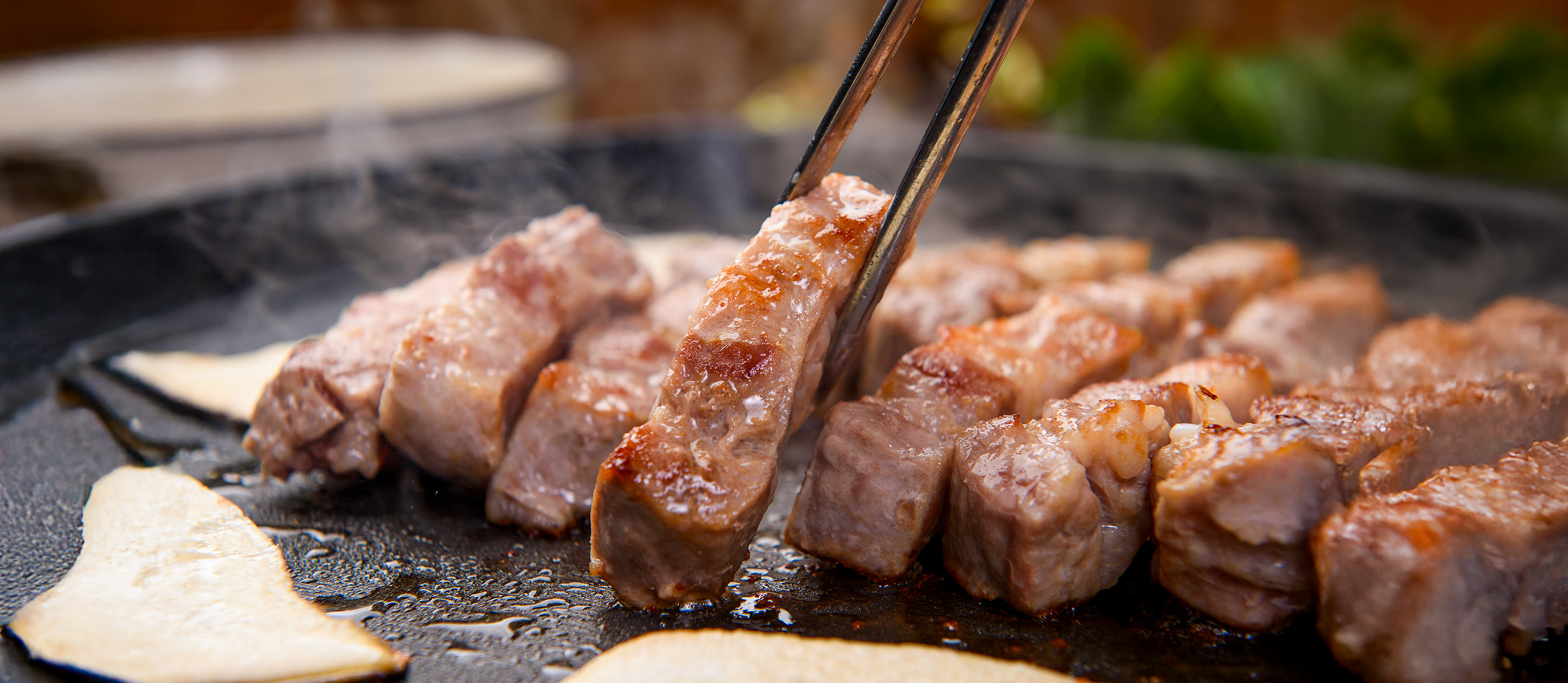
Samgyeopsal is a grilled meat dish featuring thick slices of unmarinated pork belly cooked directly on a hot metal pan at the dining table. The uneasoned pieces of pork belly are placed on a very hot grill, often set at a slight tilt to allow the rendered fat to slide downward and pool in a small collection cup. To maximize flavor, thick wedges of raw garlic, sharp white onions, enoki mushrooms, and deeply fermented sour kimchi are deliberately positioned at the lower end of the sloped metal to fry aggressively in the dripping pork fat. Once the meat develops a deeply browned, crispy exterior, individuals utilize metal tongs and large kitchen scissors to snip the long strips into bite-sized squares right on the hot surface. Samgyeopsal is eaten wrapped in lettuce, either green lettuce or perilla, known as ssam. A piece of the sizzling meat is dragged through gireumjang, a simple mixture of toasted sesame oil, coarse sea salt, and black pepper, or heavily coated in ssamjang, a thick, spicy paste combining fermented soybeans and chili. The dipped pork goes into the leaf alongside the grilled garlic, raw green chilies, and a sharply dressed scallion salad, before the entire bundle is folded tightly and eaten in a single, massive bite. Cold shots of clear distilled liquor, specifically soju, almost universally accompany the heavy meal to cut through the intense grease. While the plain, unseasoned slabs represent the absolute standard, there are massive variations in thickness and marinades. Daepae samgyeopsal uses freezing temperatures to slice the belly remarkably thin, resembling wood shavings, which crisp up rapidly over heat in mere seconds. Ogyeopsal leaves the chewy skin fully attached, offering a five-layered cut with significantly more bounce and texture. Other modern iterations soak the raw meat in red wine, coat it heavily in green herbs, or entirely ditch the unmarinated rule by submerging the strips in sweet soy sauce or fiery red chili paste before hitting the grill. The name of the dish consists of three words: sam (three), gyeop (layered), and sal (meat), so it can be literally translated as three-layered meat, referring to the three visible layers of the meat. The massive surge in this specific fatty cut dates to the late 20th century, accelerating during the economic boom of the 1980s and 1990s. During this era, export markets heavily favored lean pork cuts, leading to massive quantities of the rejected fatty belly sections flooding the domestic market at incredibly low prices. Concurrently, a widespread belief emerged among coal miners and construction workers that consuming the heavily greasy meat effectively washed away toxic dust accumulated in the throat and lungs after a long shift. This combination of cheap abundance and perceived health benefits firmly cemented grilled meat as an absolute staple, so much so that March 3rd is universally celebrated as a dedicated holiday for eating samgyeopsal, a date that mirrors the three layers in the meat. The dish is most commonly accompanied by lettuce, raw garlic, green chili peppers, kimchi, and green onions. Two dipping sauces are traditionally served on the side: one is ssamjang, consisting of sesame oil, chili paste, and soybean paste, and the other is gireumjang, consisting of sesame oil, salt, and black pepper.
03 / РЕЦЕПТ
Рецепт для этого блюда пока не добавлен.