02 / ОСНОВНЫЕ ПРОДУКТЫ БЛЮДА
ещё не извлечены
English · русское название ещё не добавлено
01 / О БЛЮДЕ
Исходное описание на английском языке. Русский перевод ещё не добавлен.
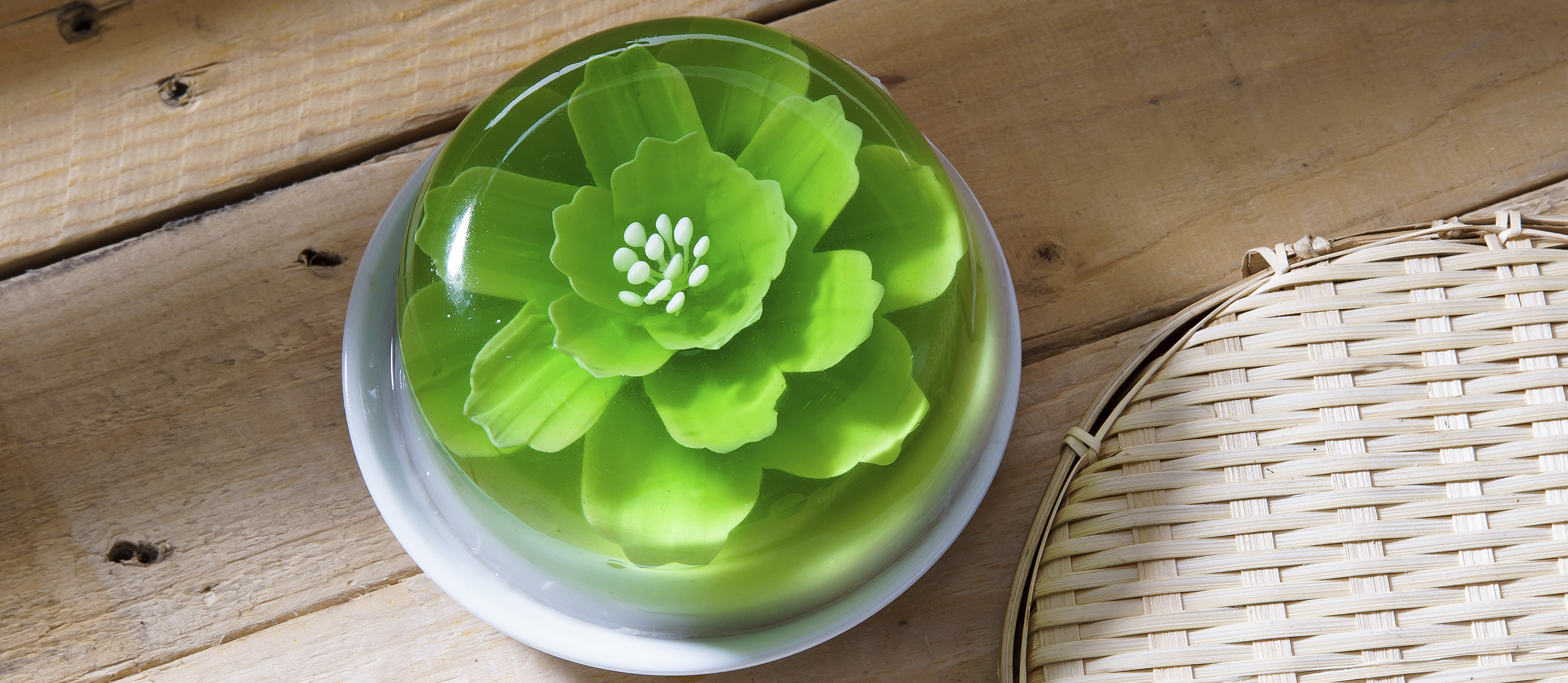
Rau câu is a firm, bouncy jelly dessert constructed entirely from agar-agar—a plant-based gelling agent extracted from red algae—mixed with rich coconut milk, clear coconut water, and sugar. Because the agar sets firmly at room temperature but tastes best heavily chilled, the dessert always arrives directly from the refrigerator. It is sliced into small, bite-sized diamonds or long rectangular bars, frequently using a crinkle-cut knife to produce a textured edge. It is eaten by hand or with a small fork, as an intensely refreshing, cooling agent during sweltering summer afternoons or as a light, palate-cleansing finale at large banquet gatherings. Beyond the basic white and clear coconut tiers, there are also colorful, distinct flavor additions. Vibrant green pandan leaf extracts lend a sweet, grassy aroma, while instant coffee granules add a deep, earthy bitterness to offset the sugar. Other versions incorporate purple ube, mashed mung beans, or tropical fruit juices like mango and passionfruit. A highly complex visual variation involves injecting colored milk jelly into a fully clear agar dome with medical syringes, creating hyper-realistic, three-dimensional blooming flowers or swimming koi fish suspended entirely within the transparent block. Making rau câu requires an exact sequence of heating and cooling to activate the seaweed extract. The dry agar powder must first soak in cold liquid to bloom before being heated to a rolling boil on a stove, which permanently unlocks its binding properties. Sugar and thick coconut cream are vigorously whisked into the hot mixture. Creating the iconic striped aesthetic demands strict timing and patience; a thin layer is poured into a silicone mold or glass dish and left to cool until the surface barely thickens. The next hot, contrasting layer is then poured gently over the top. This alternating sequence repeats, allowing the hot liquid to fuse perfectly with the slightly cooled tier below without bleeding together, resulting in distinct, sharp stripes when cut. The roots of using gelatinous seaweed in sweets trace back to early coastal regions of East Asia, where extracting natural hydrocolloids from marine algae offered a cost-effective way to create cooling sustenance for agricultural workers battling heatstroke. As maritime trade routes expanded, the ingredient's reach across Southeast Asia merged directly with local tropical agriculture. Specifically within Vietnam, the sheer abundance of fresh coconuts fundamentally transformed the plain algae blocks into a rich, multi-layered staple, eventually evolving into the highly decorative, technically demanding jelly art forms celebrated globally today.
02 / ОСНОВНЫЕ ПРОДУКТЫ БЛЮДА
ещё не извлечены
03 / РЕЦЕПТ
В сохранённых данных рецепта нет.
Запись · 1630