01 / ПАСПОРТ
- Категория
- Блюда из курицы
- Страна
- Мозамбик
- Регион
- Zambezia Province
English · русское название ещё не добавлено
О БЛЮДЕ
Исходное описание на английском языке. Русский перевод ещё не добавлен.
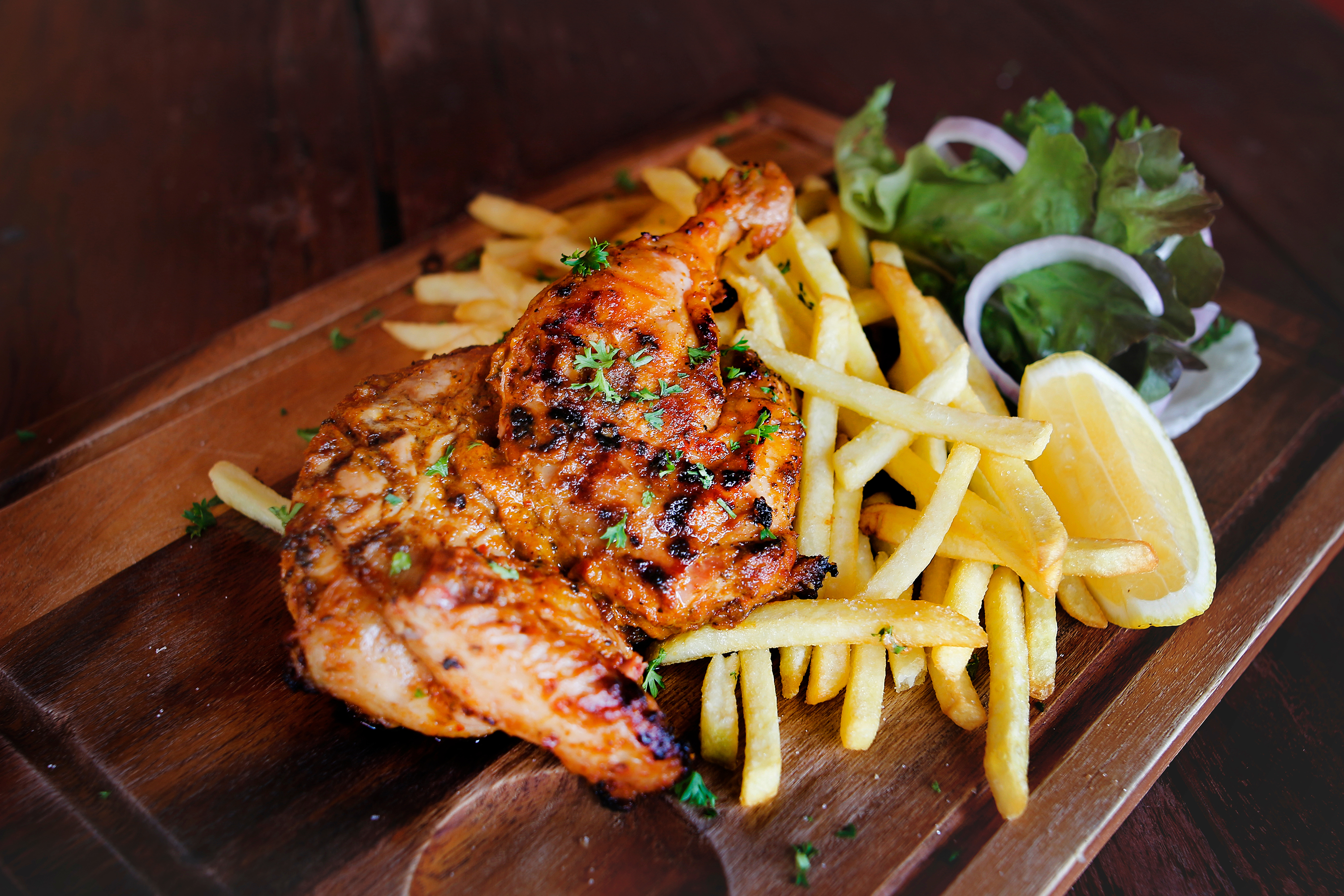
Peri peri chicken is a butterflied, charcoal-grilled poultry main course coated in a fierce, acidic marinade built around crushed African bird’s eye chilies. The history of peri peri chicken is best understood in several stages. The chili itself belongs to the Capsicum genus, which originated in the Americas and spread across the world through early modern trade. By the late 15th and early 16th centuries, Portuguese maritime explorers traveling to India were active along the southeastern coast of Africa, especially in the coastal territories of present-day Mozambique and Angola. In these regions, small, extremely hot bird’s eye chilies became established in local cultivation and cooking. The name piri-piri, peri-peri, or pili-pili comes from Bantu-language words for pepper. The sauce developed from this contact zone between local chilies and Portuguese pantry ingredients. Fiery bird’s-eye chilies were combined with garlic, olive oil, vinegar, salt, and citrus to create a sharp, hot, acidic sauce that could be used as both a marinade and a table condiment. Over time, this sauce became especially associated with grilled meats, including chicken cooked over open flames. The globally recognizable grilled chicken version became commercially prominent much later. In 1987, Robbie Brozin and Fernando Duarte bought a small takeout restaurant called Chickenland in Rosettenville, Johannesburg, after tasting its peri-peri-marinated chicken. They built that charcoal-grilled formula into Nando’s, turning the sauce-and-grilled-chicken combination into a major international restaurant format. Preparation begins by flattening a whole chicken through a technique called spatchcocking. The backbone is removed with heavy shears, and the breastbone is pressed flat. This allows the bird to cook evenly over direct heat. The defining wet paste is made by aggressively blending handfuls of small red chilies with fresh lemon juice, white or red wine vinegar, large amounts of raw garlic, smoked paprika, coarse salt, and olive oil. The flattened chicken is fully submerged in this acidic marinade for at least 24 hours, allowing the sharp liquids to penetrate the meat and break down the muscle fibers. The raw bird is then transferred directly from the marinade onto blistering hot charcoal grates. During grilling, the skin is brushed repeatedly with extra marinade, causing the sugars and acids to caramelize over the intense flames and form a dark, blistered crust. However, there are many different versions of peri peri chicken. A coastal version of peri peri chicken blends thick coconut milk directly into the crushed chilies, creating a rich, opaque sauce that softens the initial burn. Herb-heavy adaptations add fresh oregano, parsley, and dried bay leaves to the blender, giving the marinade a sharper, earthier background note. To control the heat more strictly, the chilies may be stripped of their seeds and inner membranes before blending. Another common adjustment is to add generous spoonfuls of dark brown sugar to the acidic liquid, creating a sticky, sweet glaze that strongly masks the underlying burn. Piri piri chicken is usually served split cleanly down the middle or chopped into bone-in quarters, arriving hot, smoky, and intensely spicy. A large pile of thick-cut, salt-dusted potato fries almost always accompanies the meat, acting as a starchy buffer against the sharp heat. A small glass cruet filled with extra chili-infused oil is typically placed nearby, allowing more drops of fiery sauce to be added directly onto the white meat. Because the chicken is sticky, smoky, and served on the bone, it is commonly eaten by hand, with the joints pulled apart and the meat torn straight from the bone.
03 / РЕЦЕПТ
Рецепт для этого блюда пока не добавлен.