02 / ОСНОВНЫЕ ПРОДУКТЫ БЛЮДА
ещё не извлечены
English · русское название ещё не добавлено
01 / О БЛЮДЕ
Исходное описание на английском языке. Русский перевод ещё не добавлен.
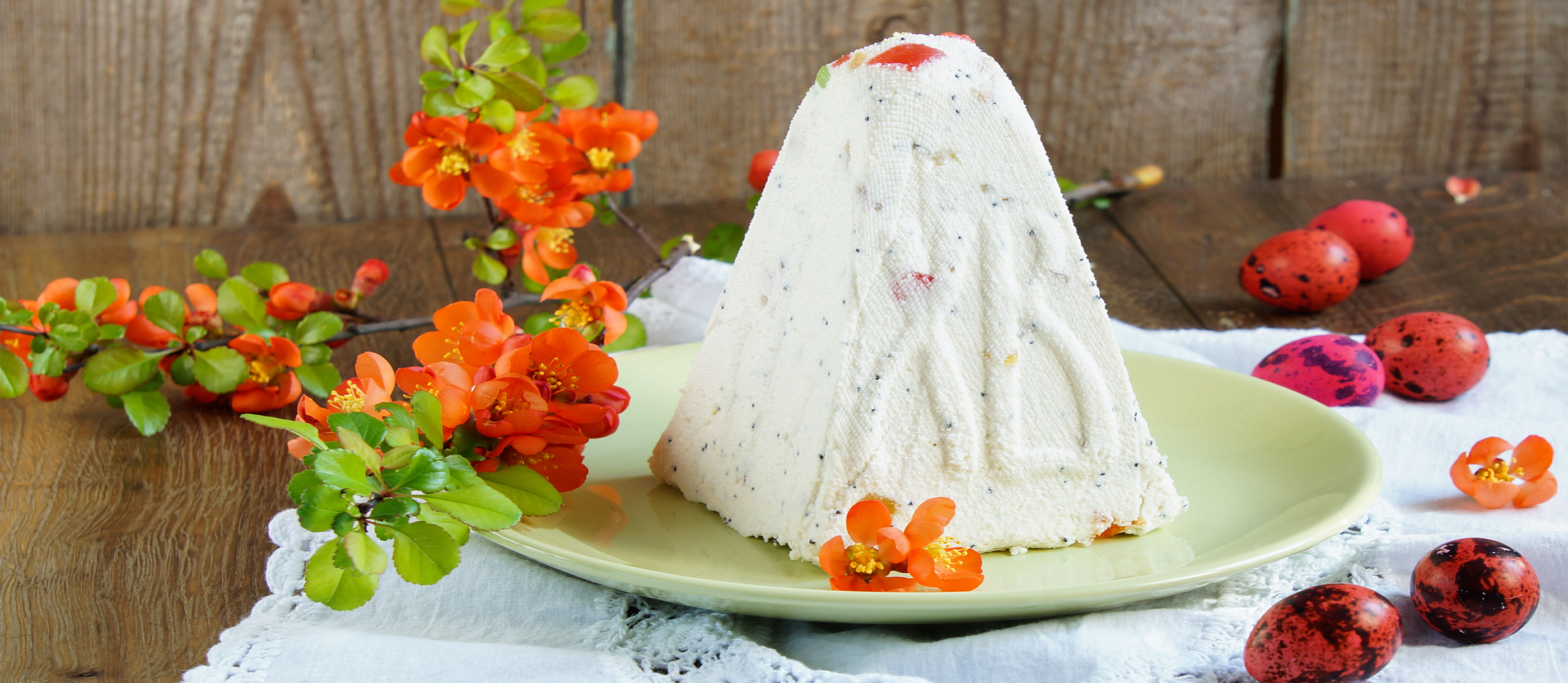
Paskha is a rich Easter dessert made from pressed tvorog, or farmer’s cheese, combined with butter, sugar, eggs or egg yolks, cream or sour cream, and often raisins, nuts, vanilla, and candied fruit. It is not baked. Instead, the sweet cheese mixture is pressed and chilled in a special mold until it forms a firm, tall truncated pyramid. Paskha is closely associated with the Eastern Orthodox Easter celebration and is made during Holy Week. Its name comes directly from pascha, the Orthodox name for Easter. Along with kulich and decorated eggs, it is commonly placed in an Easter basket and taken to church for blessing before being served during the Easter feast. Its unusually rich concentration of butter, eggs, cream, and cheese also reflects the end of Great Lent, when these foods return to the table after weeks of fasting. The exact origin of modern cheese paskha is difficult to date. The 16th-century household manual Domostroy, compiled during the reign of Ivan IV, contains extensive instructions and menus for religious seasons and mentions curd-based foods around the Easter period. However, it does not provide a clearly identifiable formula for the molded sweet cheese dessert in its modern form. The claim that Domostroy documents the precise method for making modern paskha is therefore too strong. The familiar molded form developed later. Until around the 18th century, Easter curd foods could be much simpler fermented-milk mixtures. Wooden molds became associated with paskha as firmer pressed curd was increasingly used. These molds, called pasochnitsas, were usually made from four removable trapezoidal wooden panels that formed a truncated pyramid and allowed liquid to drain from the cheese. Linden, birch, beech, and alder were among the woods used. The shape carries Christian symbolism. The truncated pyramid is most commonly interpreted as representing Christ’s tomb or the Holy Sepulcher, although it has also been associated with Calvary and the Church itself. The inside surfaces of a pasochnitsa are carved so that symbols appear in relief on the finished dessert. The most important inscription is ХВ, the Cyrillic abbreviation for Христос Воскресе — “Christ is Risen.” Crosses, flowers, vines, doves, ladders, and other Christian motifs may also appear. The base ingredient is fresh tvorog with as little excess moisture as possible. It is first drained or pressed, then rubbed through a fine sieve, often twice, until the grainy curds become smooth and uniform. This step gives paskha its unusually fine, dense texture. Soft butter is worked with sugar until smooth and pale. Egg yolks may be incorporated, followed by cream or sour cream. The sieved cheese is then blended into the mixture. Raisins, toasted almonds, chopped nuts, candied citrus peel, vanilla, and other dried fruits are common additions. Golden raisins are especially well suited to the pale cheese mixture, while candied orange or lemon peel provides a sharper citrus note. The pasochnitsa is lined with damp cheesecloth or muslin, leaving enough fabric hanging over the sides to fold across the top. The cheese mixture is packed firmly into the mold, the cloth is folded over it, and a plate or other flat surface is placed on top. A weight presses down on the mixture as it chills. Excess whey and other liquid drain through the openings in the mold, gradually producing a firmer block that can stand upright after unmolding. Pressing usually continues for about 12 to 24 hours in a refrigerator or another cold environment above freezing. Once set, the mold is dismantled or inverted, the cheesecloth is carefully removed, and the pyramid is transferred to a serving platter. The carved letters and decorative motifs remain visible across its sides. There are two major methods. Syraya paskha, or raw paskha, is made by mixing the cheese with the other ingredients without heating the completed mixture. Some formulas contain uncooked egg yolks, while others omit eggs entirely. The result is especially soft, rich, and fresh-tasting but also highly perishable. Varenaya paskha, or cooked paskha, involves heating the cheese mixture or a custard-like combination of eggs, cream, sugar, and dairy before cooling and pressing it. Heating gives the mixture a firmer, smoother body and reduces some of the risks associated with raw eggs. It also keeps somewhat better than the uncooked form, but the claim that it can safely remain refrigerated for several weeks is incorrect. Both forms are highly perishable dairy products and should remain refrigerated and be eaten within a short period. A chocolate variation incorporates melted dark chocolate or cocoa into the cheese mixture, changing the white or ivory color to light or dark brown and adding bitterness to balance the sugar and butter. Other versions may include pistachios, walnuts, hazelnuts, dried cherries, cranberries, vanilla, cardamom, citrus zest, or additional candied fruit. The finished paskha is usually decorated further after unmolding. Almonds, raisins, candied citrus peel, glacé fruit, nuts, or fresh flowers may be arranged around the surface, sometimes repeating the cross or the letters ХВ already pressed into the cheese. Paskha is rarely eaten in large portions on its own because of its concentrated richness. It is especially closely paired with kulich , the tall, sweet yeasted Easter bread filled with raisins or candied fruit. A thick slice of kulich provides a sturdy base for a generous spoonful or slice of paskha, combining soft bread with dense, buttery sweet cheese.
02 / ОСНОВНЫЕ ПРОДУКТЫ БЛЮДА
ещё не извлечены
03 / РЕЦЕПТ
В сохранённых данных рецепта нет.
Запись · 2964