02 / ОСНОВНЫЕ ПРОДУКТЫ БЛЮДА
Гарниры
Непереведённые названия показаны на языке сохранённых данных.
- Pork Rinds
- Maple syrup
English · русское название ещё не добавлено
01 / О БЛЮДЕ
Исходное описание на английском языке. Русский перевод ещё не добавлен.
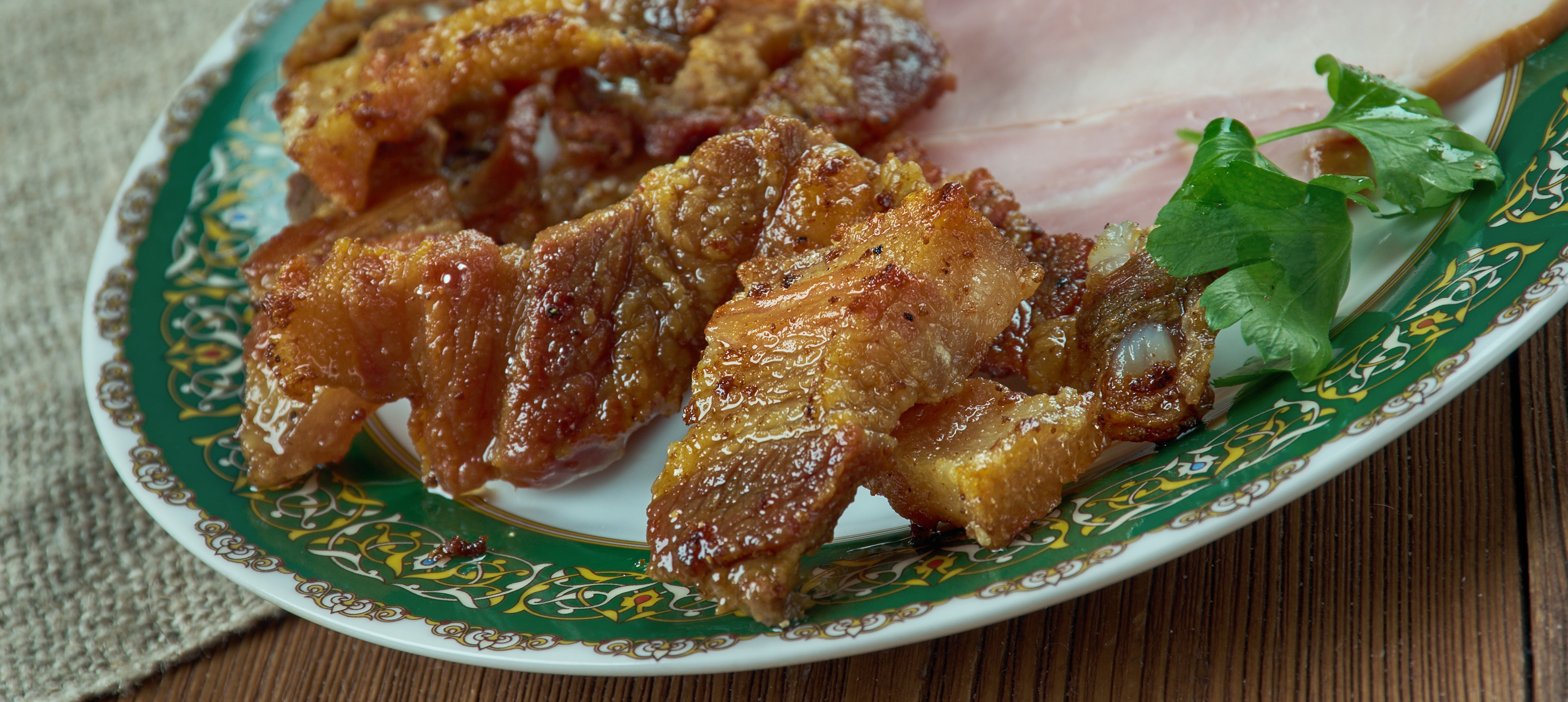
Oreilles de crisse are made from strips of salt-cured pork fatback, cooked until much of the fat renders out and the remaining pieces become deeply browned and crisp. They are especially associated with cabanes à sucre, or sugar shacks, where their intense saltiness contrasts with the maple syrup and other sweet elements throughout the meal. The pieces often twist or curl as they cook, giving them an irregular shape that helps explain their comparison to ears. Despite occasionally being described in English as pork rinds, oreilles de crisse are more accurately made from salted fatback, usually with the rind attached, rather than from pieces of skin alone. Oreilles de crisse are closely connected with the food culture of rural Québec and with the logging camps that operated throughout the province during the 19th and early 20th centuries. Salt pork was particularly useful in logging camps because it kept well, was inexpensive, and provided a lot of energy to workers doing strenuous physical labor during the winter. Fried or grilled salt pork consequently became a familiar part of camp cooking, and oreilles de crisse are commonly linked with this environment. However, the frequently repeated story that the name originated in a logging camp along the Saint-Maurice River cannot be established as historical fact, and the true origin of the expression remains uncertain. The name comes from Québécois French. Crisse is a Québec swear word derived from Christ and belongs to the distinctive group of religious profanities known as sacres. The expression can therefore be translated approximately as “Christ’s ears,” although the Québécois term carries a stronger colloquial and profane tone than a literal English translation suggests. The resemblance between the curled pieces of fried pork and ears probably contributed to the name. A milder form, oreilles de Christ, is also used. The classic ingredient is salt-cured pork fatback, preferably with the rind attached and with little or no lean meat. Pork belly can be used, but its muscle layers produce a meatier, chewier result and make it noticeably different from the classic version. Smoked pork is likewise a variation rather than a requirement. The characteristic flavor of oreilles de crisse comes primarily from cured pork, rendered fat, and browning rather than smoke. The fatback is cut into strips or small rectangular pieces. Because salt pork can be extremely salty, some recipes soak the pieces or briefly blanch them in water before cooking. This removes some excess salt and can also help the pieces cook more evenly. They can then be fried in a heavy skillet, deep-fried, or roasted in the oven. Pan-frying is particularly common and doesn't necessarily require extra oil because the fatback releases a substantial amount of its own fat as it heats. When cooked in a skillet, the pork is generally started over moderate heat rather than immediately exposed to extremely high temperatures. The fat slowly renders into the pan while the remaining tissue, rind, and small amounts of meat become progressively firmer. The pieces are turned as they cook so that they brown evenly. As moisture leaves and the fat renders away, they contract, curl, and become crisp. They are removed when golden to deep brown and drained before serving. Properly cooked oreilles de crisse are crunchy and brittle around the edges, although thicker pieces can retain a slightly chewy center or rind. They should not simply consist of solid pieces of hardened fat. Deep-frying produces another common version. The pieces can be partially cooked or rendered first and then placed in hot oil for a final frying, which produces a particularly crisp exterior. Commercial sugar shacks and restaurants sometimes use this method because it gives consistent results and allows the pork to be fried shortly before service. Oven-roasting is also used and produces the same basic combination of rendered fat, browned pork, and crisp texture without requiring the pieces to remain submerged in oil. Oreilles de crisse are most strongly associated with the Québec maple-sugaring season, which generally runs from late winter into spring as freezing nights and warmer days cause sap to flow in maple trees. A classic sugar-shack meal is deliberately rich and usually combines several savory foods with maple syrup. Pea soup, baked beans, ham, sausages, eggs or omelets, potatoes, pancakes, and oreilles de crisse are common components, followed by maple-based desserts and maple taffy on snow. The exact menu varies from sugar shack to sugar shack. Maple syrup is often poured over several foods on the plate, including oreilles de crisse. Still, the pork itself is usually cooked as a salty dish rather than coated in maple sugar. The combination works because the crisp, salty pork contrasts sharply with the syrup's sweetness. Tossing freshly fried pieces in maple sugar or glazing them with maple syrup is a modern variation, not a defining feature of the classic version. Oreilles de crisse can be eaten on their own as a snack or served alongside other accompaniments like stews, beans, or fried eggs, or as part of a sugar-shack meal. They are usually best when freshly cooked and crisp, although they don't have to arrive at the table piping hot. No particular serving vessel or utensil is required; people commonly eat the small pieces with their fingers or pick them up with a fork when they are part of a larger meal.
02 / ОСНОВНЫЕ ПРОДУКТЫ БЛЮДА
Гарниры
Непереведённые названия показаны на языке сохранённых данных.
03 / РЕЦЕПТ
В сохранённых данных рецепта нет.
Запись · 4188