01 / ПАСПОРТ
- Категория
- Блюда из риса
- Страна
- Япония
- Регион
- не указан
English · русское название ещё не добавлено
О БЛЮДЕ
Исходное описание на английском языке. Русский перевод ещё не добавлен.
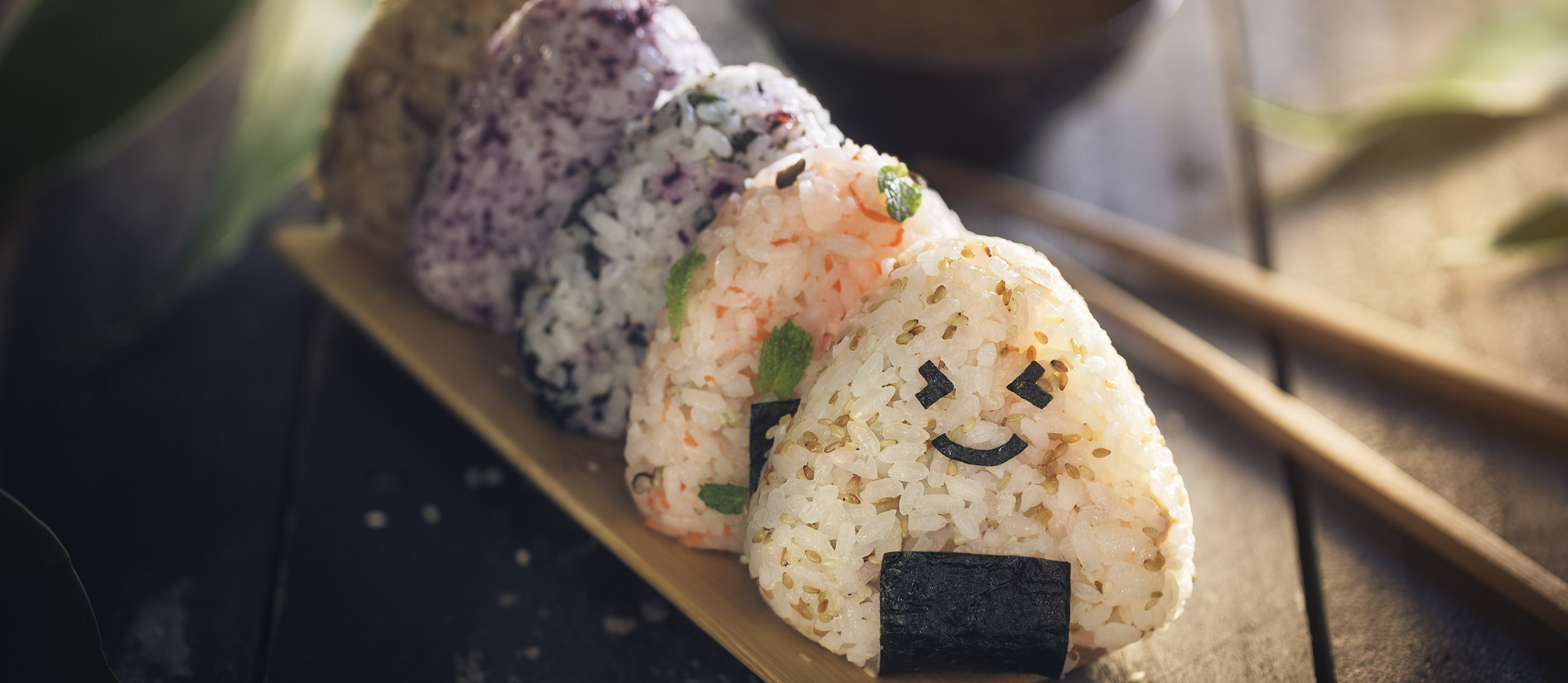
Onigiri are rice balls made with lightly salted short-grain white rice shaped into compact triangles or cylinders, typically concealing a savory filling and wrapped in a crisp sheet of nori seaweed. The history of this highly portable dish stretches back over two millennia in Japan, with archaeological evidence revealing carbonized clumps of hand-pressed rice dating to the Yayoi period. By the Heian period, these rice balls were known as tonjiki and were frequently consumed at outdoor picnics. During the Sengoku period, onigiri became wrapped in nori seaweed, and samurai relied on them as a vital, easily transportable field ration during military campaigns. The enduring appeal of onigiri stems from its remarkable simplicity and its fundamental recipe, which requires nothing more than high-quality Japanese short-grain rice—prized for its sticky, cohesive texture—alongside water, coarse sea salt, and a chosen filling. To construct the dish, the rice must be freshly cooked and still warm, as cold rice loses its essential stickiness. The maker first dampens their hands with water to prevent the grains from adhering to their skin, then rubs a generous pinch of salt onto their palms to season the exterior of the rice and act as a natural preservative. A portion of the warm rice is cupped in one hand, a small indentation is pressed into the center to accommodate the filling, and more rice is added to seal the pocket. Using a gentle but firm cupping motion, the hands press and rotate the rice, forming it into a distinct triangular prism, a flat disk, or a cylindrical barrel before finishing it with a strip or full wrapper of roasted nori. Because the rice itself serves as a neutral canvas, the variations of onigiri fillings are practically limitless, ranging from centuries-old traditional preserves to modern culinary adaptations. Classic, historically rooted fillings include intensely sour umeboshi (pickled plum), which historically served as an antibacterial agent; shake (salted and grilled salmon); katsuobushi or okaka (dried bonito flakes moistened with soy sauce); and sweet-and-savory kombu (simmered kelp). Modern flavor profiles such as tuna mixed with mayonnaise, spicy mentaiko (marinated cod roe), and even fried chicken (karaage) have become immensely popular staples. Additionally, a notable variation called yaki-onigiri skips the seaweed wrapper entirely; instead, the unadorned rice ball is brushed with soy sauce or miso and grilled over an open flame until a deeply savory, crispy crust forms. As a cornerstone of Japanese daily life, the onigiri serving style is inherently informal and highly functional, designed explicitly to be eaten entirely by hand without the need for chopsticks or other utensils. It is the ultimate convenience food, frequently packed into children's bento boxes, carried on hikes, and enjoyed at cherry blossom-viewing picnics (hanami). In modern Japan, convenience stores (konbini) have revolutionized the dish's accessibility and packaging, utilizing a specialized, multi-layered plastic wrapping system that physically separates the nori from the rice until the exact moment of consumption. This clever engineering ensures that the seaweed remains shatteringly crisp rather than becoming soggy from the moisture of the rice, preserving the crucial textural contrast.
03 / РЕЦЕПТ
Рецепт найден и ожидает загрузки.