02 / ОСНОВНЫЕ ПРОДУКТЫ БЛЮДА
Непереведённые названия показаны на языке сохранённых данных.
- Corn Starch
- Wheat Flour
- Grape Molasses
- Almonds
- Cinnamon
- Cloves
- Sesame Seeds
- Vanilla
- Sugar
English · русское название ещё не добавлено
01 / О БЛЮДЕ
Исходное описание на английском языке. Русский перевод ещё не добавлен.
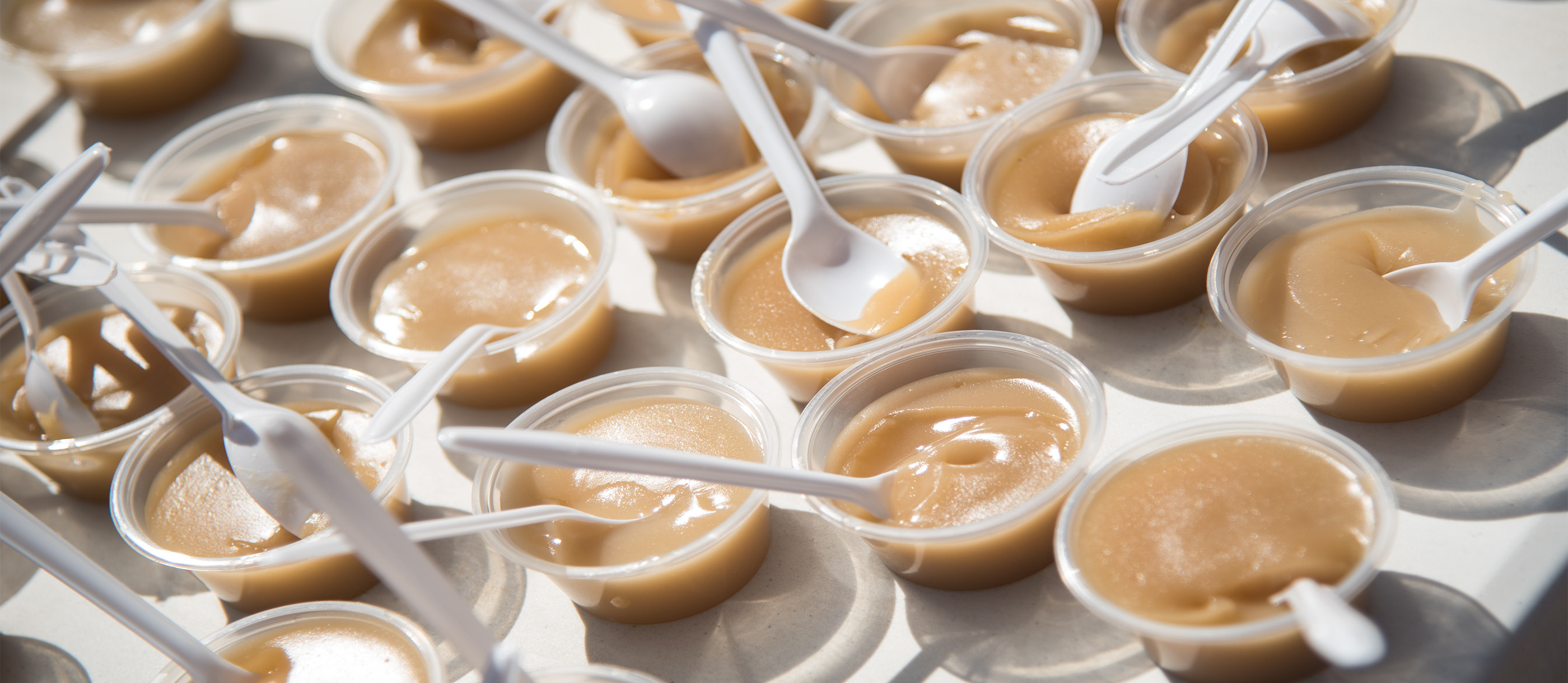
Moustalevria is a dense, sweet pudding made by boiling unfermented grape must with wheat flour until the liquid reduces and sets into a firm, gelatinous mass. Its roots trace back to Ancient Greece, where a similar mixture of grape juice and flour was known as oenouta. During the Byzantine era, the preparation evolved slightly and came to be known as mustalevria, securing its place as an autumn harvest staple. It remains a strictly seasonal dessert, made almost exclusively in late summer and early autumn, when vineyards press their annual grape harvest. The process begins immediately after the grapes are pressed. Raw, unfiltered must contains dirt and organic impurities that can cause premature fermentation, so the juice must first be clarified. Large quantities of the raw must are poured into a copper cauldron and heated over an open flame. A handful of clean wood ash or a specific white alkaline soil is added directly to the boiling liquid. This causes the impurities to rise to the surface as a thick scum, which is continuously removed with a slotted spoon. Once clarified, the must is left to cool completely before the final cooking stage. A measured amount of the cold, clean must is then returned to the stove. Sifted all-purpose wheat flour is slowly whisked into the liquid, along with whole cinnamon sticks and dried cloves. The heat is kept low, and the mixture is stirred constantly with a wooden spoon so the heavy starches do not scorch on the bottom of the pot. As it cooks, the dark purple liquid slowly thickens into a heavy, glossy paste. In island communities, coarse semolina often replaces wheat flour, producing a grainier, grittier pudding that can be sliced cleanly with a knife rather than scooped like a custard. Some mainland households add fresh rose geranium leaves or a generous splash of orange blossom water to the boiling must, giving the pudding sharp floral notes. When the grape must is especially tart, granulated sugar or dark honey may be dissolved into the hot liquid to balance its natural acidity. A separate shelf-stable version is made by pouring the hot pudding over long strings of threaded walnuts, then hanging them in the autumn sun to dry into a dense, chewy confection known as soutzoukos. The hot, thick paste is poured directly from the cauldron into shallow ceramic bowls or wide glass dishes. It rests on the counter for several hours, cooling to room temperature as the starches set the liquid into a rigid block. Once cooled, the surface is heavily covered with toasted sesame seeds, crushed walnuts, and ground cinnamon. Moustalevria is served either completely chilled or at room temperature. Its firm, jelly-like texture requires a small fork or a sturdy spoon to cut through, and it is eaten as a sweet ending to an autumn meal or as a calorie-dense afternoon snack.
02 / ОСНОВНЫЕ ПРОДУКТЫ БЛЮДА
Непереведённые названия показаны на языке сохранённых данных.
03 / РЕЦЕПТ
В сохранённых данных рецепта нет.
Запись · 2547