СОСТАВ РЕЦЕПТА
- 150g (5.3 oz) extra-dark chocolate (at least 60% cocoa)
- 80g (2.8 oz) butter
- 4 eggs
- 50g (1/4 cup) caster sugar
РЕЦЕПТ / ОДНА ИЗ РЕАЛИЗАЦИЙ
Adapted from CuisineLarousse.fr , this recipe shows a classic approach to preparing mousse au chocolat by melting the chocolate and butter in a bain-marie, and folding the egg whites gently by hand, so the bubbly texture of the mousse remains intact.
← Вернуться к устройству блюда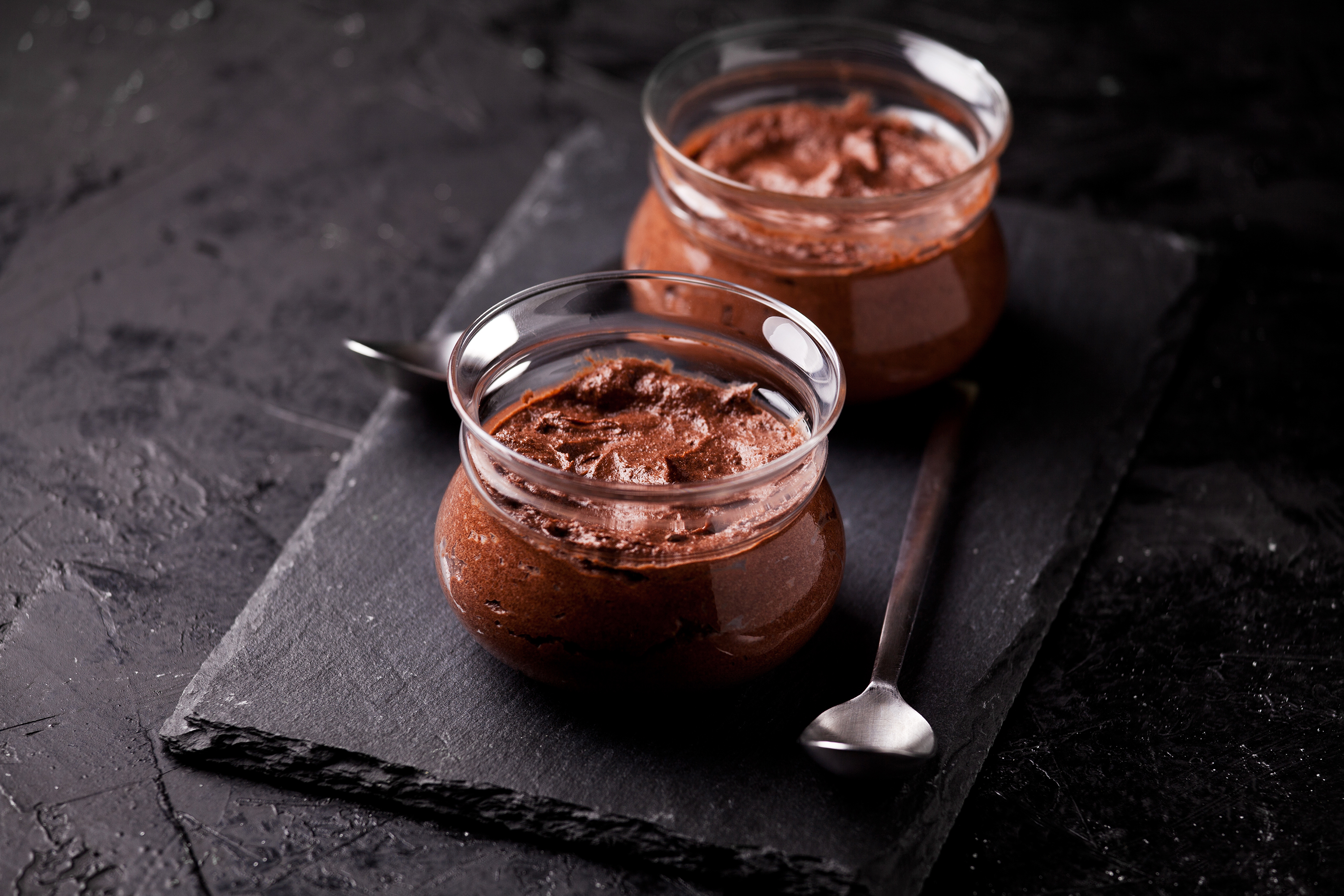
СОСТАВ РЕЦЕПТА
ШАГИ
To begin, break the chocolate and cut the butter into small pieces. Place them in a small saucepan, and put the saucepan in a bain-marie.
Melt the chocolate and butter on low heat, stirring gently, until melted and completely smooth. Then, remove the saucepan from the bain-marie and let it cool.
Separate the egg whites and the egg yolks.
In a large bowl, mix the egg whites with 1 tbsp of sugar into firm snow.
Mix the egg yolks with the rest of the sugar. Transfer this mixture to the melted chocolate with butter and combine.
Now, put 2 tbsp of mixed egg whites to the chocolate mixture and mix quickly, so the chocolate achieves a lighter texture.
Next, incorporate the rest of the egg whites into the chocolate mixture very gently, so you do not break the bubbles.
Transfer to a large bowl and cool in a refrigerator for 4 hours, and then serve.
ДРУГИЕ РЕАЛИЗАЦИИ
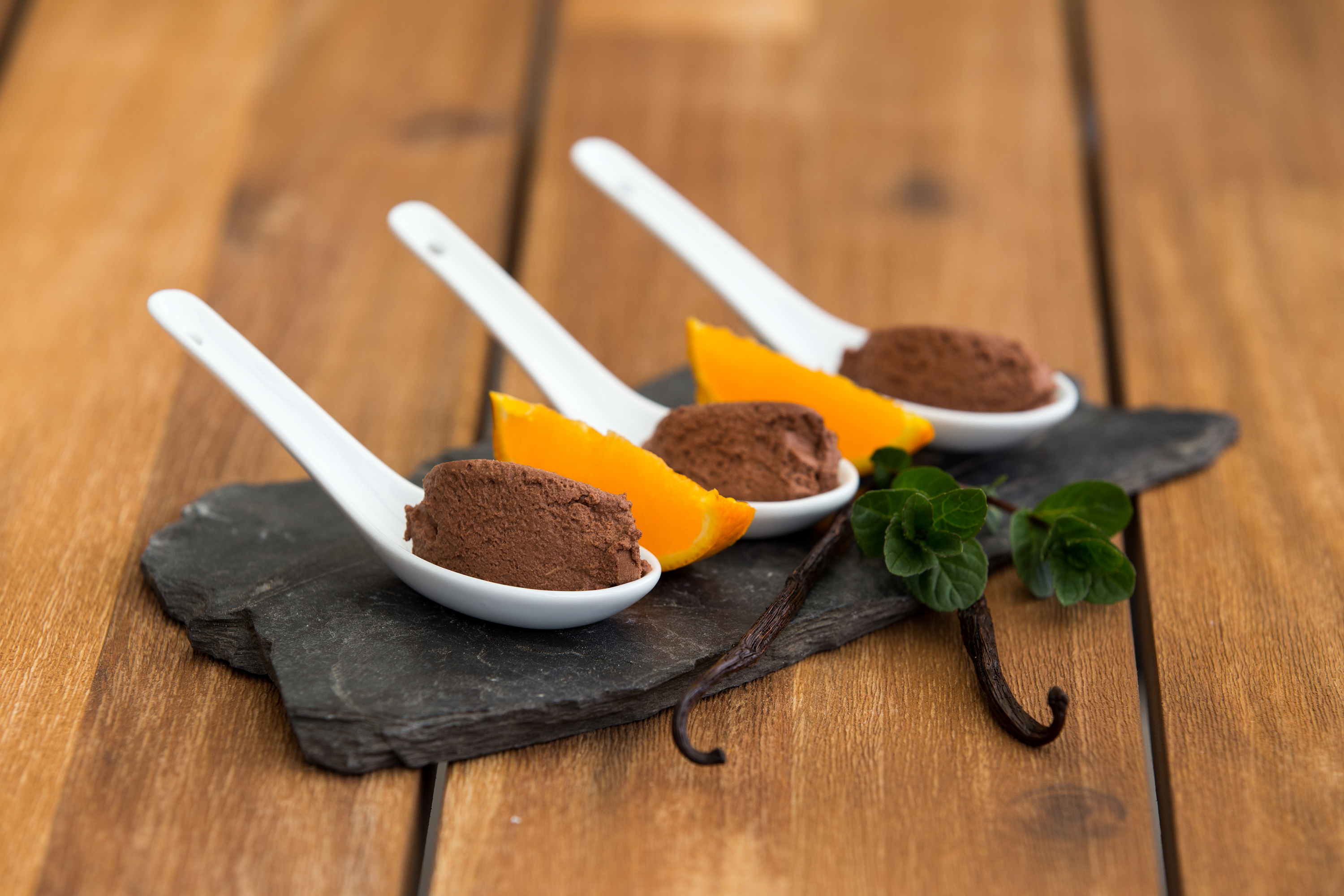
The orange-flavored chocolate mousse is the classic variant of the traditional chocolate mousse. Refreshing orange and orange-flavored Grand Marnier liquor are the star ingredients of this recipe.
ВАЖНЫЕ ДЕТАЛИ
To prevent any foodborne illness, make sure to use only clean, fresh, properly-refrigerated eggs with intact shells. Also, avoid contact between the yolks or whites and the shell. You can determine the freshness of the eggs by conducting a simple experiment. Place the eggs in a glass of water; if they sink, they are fresh, but if they float, it means the eggs are old. While separating the eggs, make sure that there are no traces of yolk left in the egg whites, since they will interfere with the beating process. Some sources suggest warming the egg whites over a warm bath to 140°F/60°C before beating them, for safety reasons. Beat the egg whites just before mixing the mousse. Make sure not to overbeat, as this will reduce the fluffiness and airiness of the mousse.
Whip the cream or the egg whites at a moderate speed since high speed generates big air balloons that develop chaotically, culminating in frail, nondurable produce. Beating at medium speed ensures little bubbles and considerable shock resistance of the batter. Some suggest beating the egg whites to soft peaks only, claiming they are lighter and more stable than ones beaten to stiff peaks. Beat the cooled whipping cream lightly and shortly, since overbeating causes the cream’s volume to diminish and makes the dish feel a bit grainy.
If the recipe calls for more than one aerator, for example, both whipped cream and beaten egg whites, add them to the base one at a time, from the most stable to the least stable one. Whole eggs and/or egg yolks are the most stable aerator, followed by whipped cream, and finally, egg whites. When folding the aerators into the base, first take up to a third of the mixture and combine it gently with the base purée or custard. This way, the base mixture becomes lighter and can blend more easily with the remaining aerators. Try using a rubber spatula and make sure to preserve the air bubbles contained in the aerators by folding in big, circular motions.
Instead of using bowls, try serving mousse in martini glasses, espresso cups, champagne flutes, cappuccino cups, or pastry shells. Another option is to squeeze it through the piping bag onto a piece of toast or a vegetable slice. You can also top your mousse according to its flavor – add a raspberry and a mint leaf to a fruit version, sprinkle some finely chopped nuts over a chocolate mousse, or maybe place a French macaron cookie on top of the caramel-flavored variation.