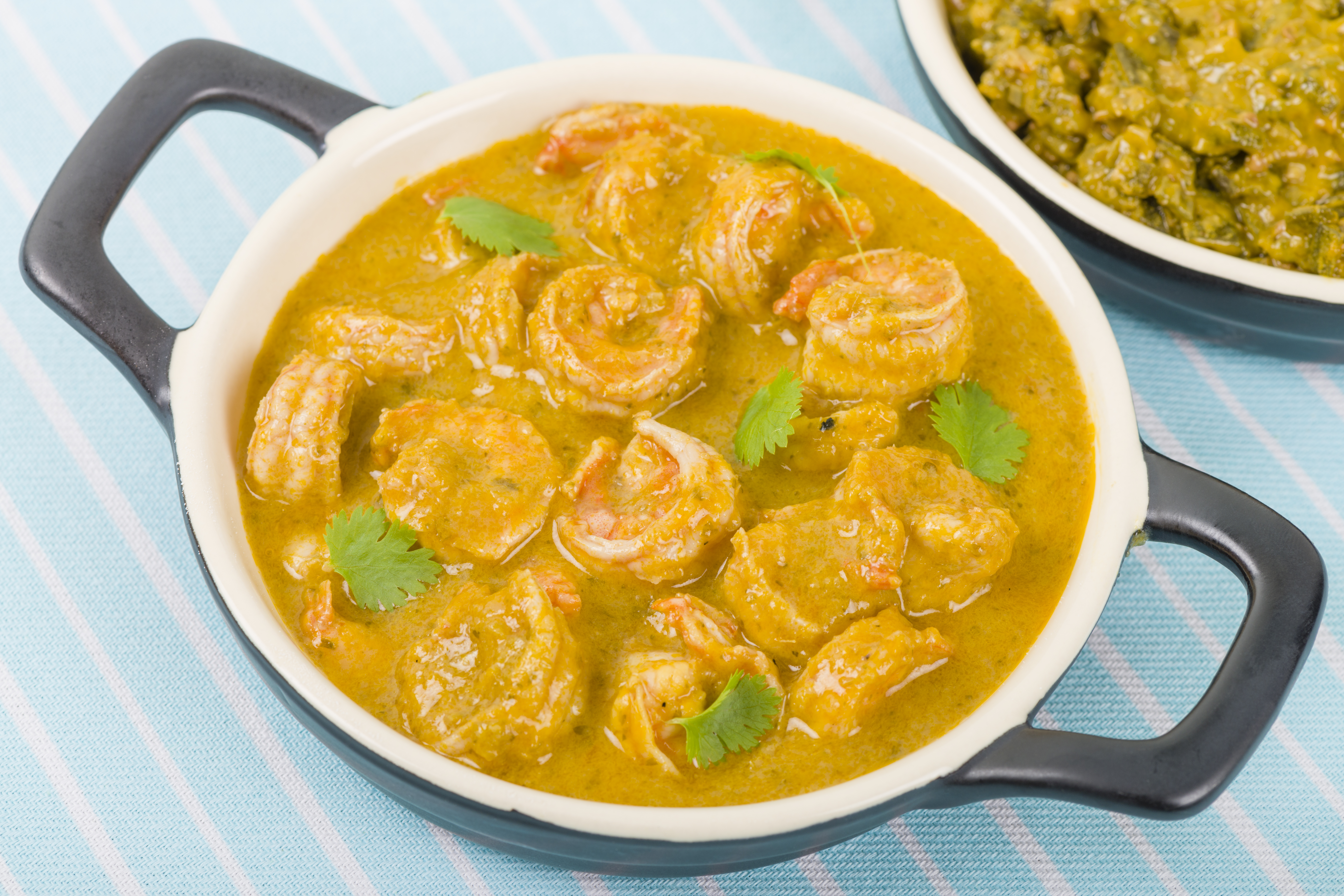
01what kind of fish to use
To withstand the simmering, white, firm-fleshed fish is used. Traditionally, moqueca is prepared with these kinds of fish — cação (sandbark shark), robalo (common snook), badejo (black grouper/black rockfish), pintado (pintado/kingfish/painted mackerel/cero mackerel), dourado, namorado (Namorado sandperch), filhote (dark caped goliath catfish/Peru piraiba catfish/false piraiba), dentão (lane snapper/Mexican snapper/redtail snapper/spot snapper), papaterra, and garoupa (red grouper). If these are not available, as stated earlier, go for white, firm-fleshed fish like seabass, haddock, and grouper. For cooking, the fish can be cut into fillets or slices, depending on preference.
02how to scale a fish
First, rinse the fish under running water, then place it in a bucket and leave it sitting there with water running to help loosen the scales. Meanwhile, cover your working surface with something protective that will catch the flying scales, and that will not be a problem to throw away later, such as newspapers or a plastic bag or parchment paper. Next, place the fish on the covered working surface, hold it firmly by the tail, and scrape the fish from the tail to the head with the blunt edge of the knife. Don’t apply too much pressure with the knife and scrape until there are no more scales left on either side of the fish. Rinse the fish again to remove all the scales if there are any left. Then, throw away the protective layer and any scales that maybe have ended up on the floor or around your working space.
03how to gut a fish
Place the fish on a working surface. Find the anal opening — it’s usually located in front of the anal fin, which is a single fin located at the underside of the fish, next to the tail. Pierce the opening with the tip of the knife. Slice up along the belly, stopping once you reach the head. Make sure not to pierce the fish deep. Keep it shallow so you do not cut into the intestines. Spread open the fish and cut out the intestines. If the fish has kidneys or a dark tissue lining its insides, scrape it out with your fingers or a spoon. Rinse the insides with water, as well as the outside. If desired, cut the heat off — cut with a knife at an angle behind the fin near the head. Dispose of the intestines and any other throwaways.
04How to fillet a fish
To fillet a fish, you will need to have a fillet knife, which has a point up at the end, is bendable, and can easily go around the bones. Alternatively, filleting a fish might be doable with a boning knife. In any case, the key is to use one that has a blade that points up at the end instead of down, is thin, and is bendable. Lay the palm of your hand flat on the fish to hold it in place (but do not put too much pressure on it!), then cut with the knife along the spine. When cutting along the spine, cut in long strokes, trying not to mess up the meat (do not saw the meat!). Continue cutting into the flesh in long strokes and until you reach the rib bone (at the center of the fish!). Also, constantly check to see if you’re making a clean cut — there should be minimal meat left on the bones. Then, about halfway along the fish, hold the knife flat against the rib bone and press on the fish firmly with the palm of your hand. Then, push the knife through so it comes out the other side and run it down the length of the tail. Place the belly of the fish towards you and expose the ribs of the fish by flipping open the cut section of the fillet. Then, using a knife, carefully, bit by bit, remove the fillet from the bones. With tweezers, remove any bones left on the fillet and also cut out any bits of bones, leftover fins, or fat that are possibly on the sides of the fillet. Repeat the same process on the other side to get the second fillet. Finally, rinse the fillets to remove any bits of blood or scales.
05cleaning the shrimp
To remove the shells, place your thumbs on the shrimp’s underbelly, crack it open, and then peel. You can also use kitchen shears and cut the shell on the top and then peel it. Also, you can use a pairing knife to cut along the back of the shell. Then, you also have to devein the shrimp. Look for the thin string along the back of the shrimp, then cut under it, and pull it out with a knife or your hands. Although not harmful and sometimes not even visible, it can contain grit which is why it’s better to remove it.
06method
The fish can be cut into fillet or slices, and some fry it beforehand to make it firmer, so it’s doesn’t fall apart during cooking. Also, the fish is marinated before cooking, typically in lime juice, salt, and pepper, but other ingredients can be used in the marinade, such as herbs and tomatoes, to make a paste to rub into the fish. The stew should not be stirred during cooking, so the fish doesn’t fall apart. Shrimps should be added near the end of cooking as they cook very fast and would turn hard if cooked for long. The same goes for squid. If making moqueca with octopus, use one that is already cooked, and add it near the end of cooking.
07equipment
Traditionally, moqueca is cooked in a clay pot called panela de barro, which transfers heat well and cooks the stew evenly. Iron and aluminum pots can be used as an alternative.
08variations
Besides regionally, moquecas can also differ based on their preparation. For example, some recipes go for layering all the ingredients first and cooking them together from the start. Others, first sauté a portion, if not all, the vegetables, and then add the fish to cook. Variations are also based on the type of ingredients used — besides fish, shrimps, squid, shellfish, and octopus are also used for making the dish, either in combination with fish or alone. Also, fish and seafood can be replaced with meat, like poultry, dried meat, or eggs.
09serving
Ideally, moqueca should be served in the clay pot it was cooked in. Apart from making it visually attractive, serving moqueca in a clay pot will ensure that the stew remains warm during the entire meal. Typical side dishes are rice, farofa, and pirão.