02 / ОСНОВНЫЕ ПРОДУКТЫ БЛЮДА
Непереведённые названия показаны на языке сохранённых данных.
- Pork Belly
- Hot Peppers
- Ginger
- Star Anise
- Cinnamon
- Light soy sauce
- Dark soy sauce
- Shaoxing wine
- Vegetable Oil
- Lard
- Sugar
- Salt
English · русское название ещё не добавлено
01 / О БЛЮДЕ
Исходное описание на английском языке. Русский перевод ещё не добавлен.
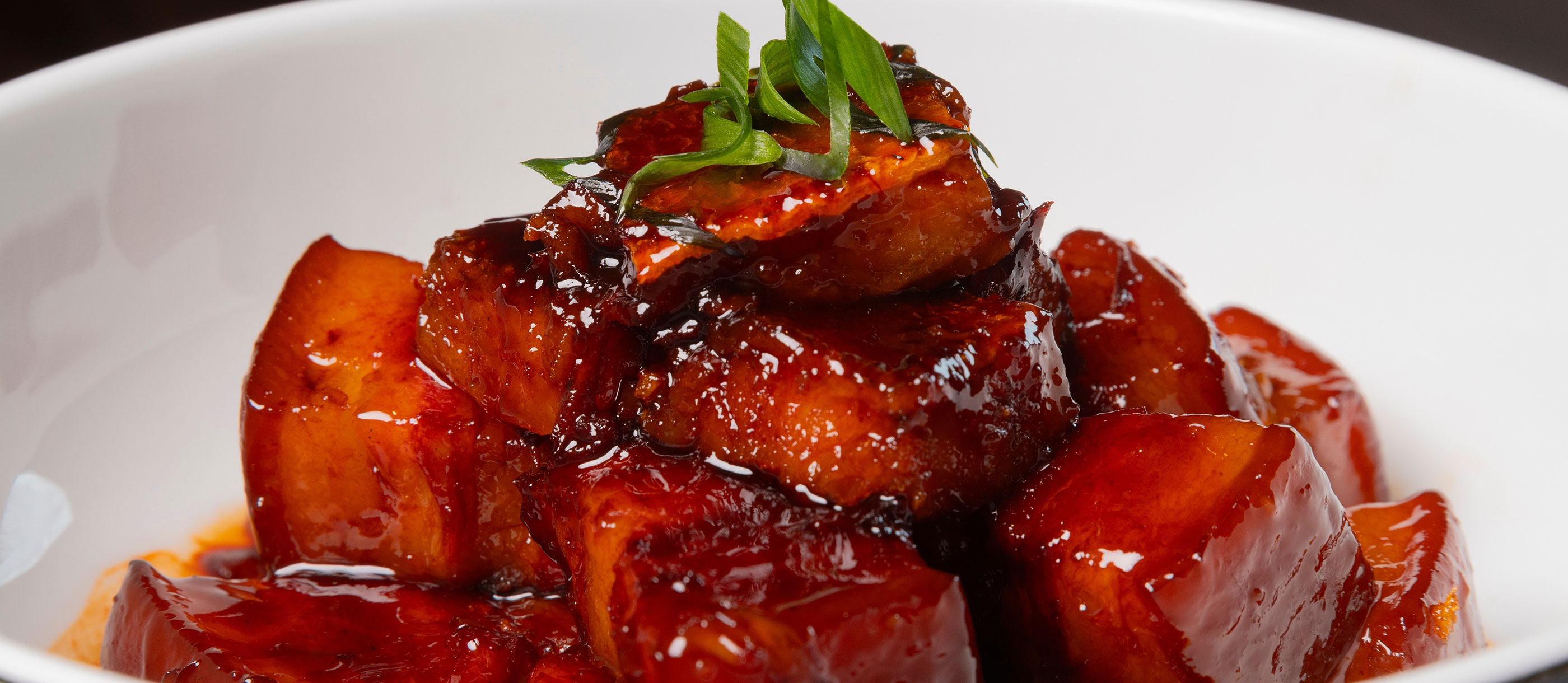
Máo Shì hóngshāoròu is a well-known Hunanese pork dish, consisting of braised pork belly cooked slowly with soy sauce, sugar, rice wine, and aromatics until it becomes tender, glossy, and deeply flavorful. It is a specific variation of the broader Chinese red-braised pork style, distinguished by its regional flavor profile and its association with Mao Zedong, who was known to favor this preparation. It became widely recognized during the mid-20th century when chefs in Mao’s hometown of Shaoshan refined the dish to his tastes, balancing savory depth with gentle sweetness and a hint of spice. Over time, this particular version gained cultural significance, appearing on restaurant menus and family tables across the region as a tribute to both its flavor and its historical connection. Preparation of Máo Shì hóngshāoròu begins with high-quality pork belly, cut into generous cubes to preserve the layers of meat, fat, and skin that give the dish its characteristic texture. The pork is briefly blanched to remove impurities, then caramelized with sugar to develop a deep amber color and a base layer of sweetness. Shaoxing wine or huangjiu is added along with light and dark soy sauces, sliced ginger, and star anise, and the mixture is simmered gently for one to two hours. Unlike some eastern Chinese versions, this Hunanese style often incorporates a small amount of dried chili or fermented bean paste to introduce subtle heat and complexity. The pork is cooked until the fat becomes silky, the meat tender but still cohesive, and the sauce reduced to a thick, glossy coating that clings to each piece. It is slightly less sweet than its Jiangsu or Zhejiang counterparts and more aromatic, with a savory backbone and a mild, lingering heat that reflects the preferences of Hunan cuisine. The dish is typically served hot as a centerpiece of a family-style meal, often accompanied by plain steamed rice, which absorbs the rich sauce, and lighter vegetable dishes such as stir-fried greens or pickled mustard stems to provide contrast. It is a popular choice at banquets, festive occasions, and everyday meals alike, and many restaurants in Hunan specialize in their own versions.
02 / ОСНОВНЫЕ ПРОДУКТЫ БЛЮДА
Непереведённые названия показаны на языке сохранённых данных.
03 / РЕЦЕПТ
В сохранённых данных рецепта нет.
Запись · 12201