01 / ПАСПОРТ
- Категория
- Блюда из яиц
- Страна
- Иран
- Регион
- не указан
English · русское название ещё не добавлено
О БЛЮДЕ
Исходное описание на английском языке. Русский перевод ещё не добавлен.
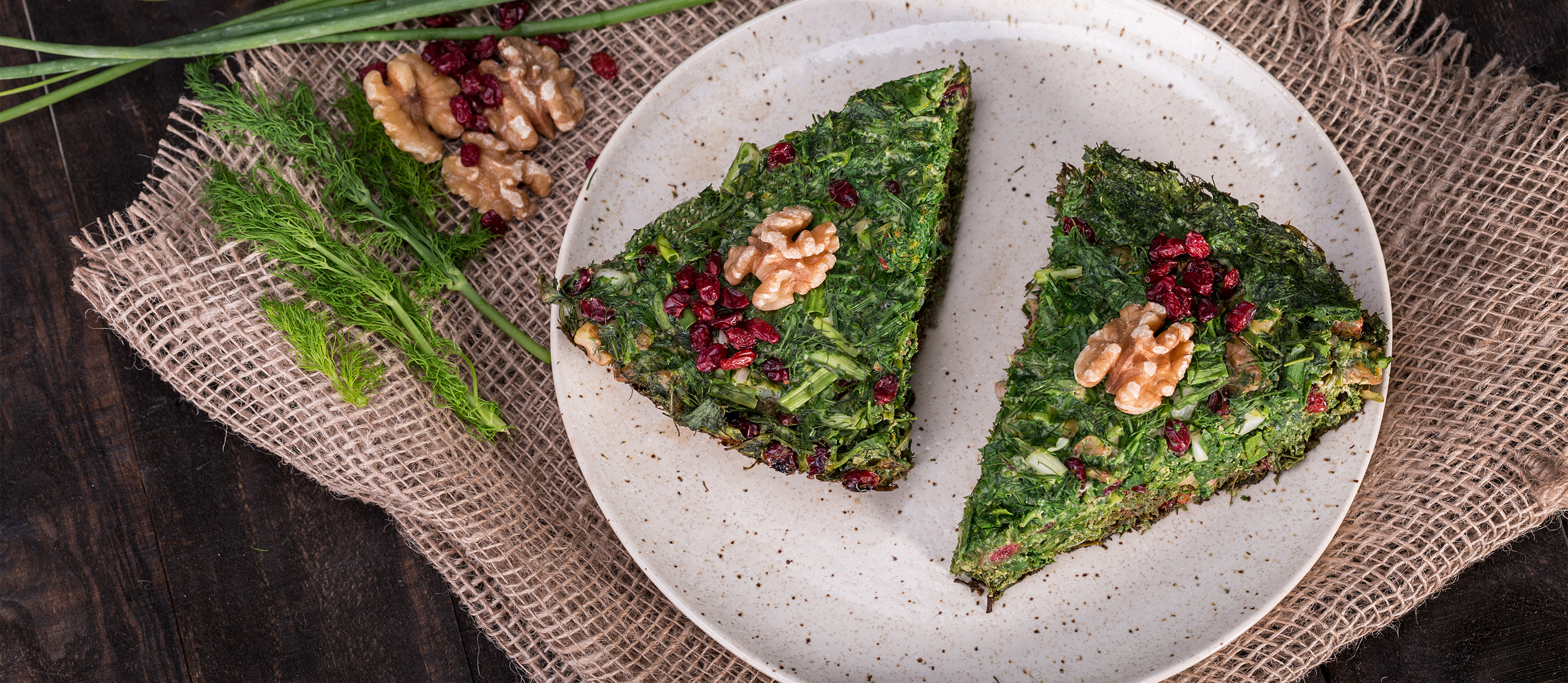
Kuku sabzi is a vibrant Iranian herb frittata that comes from Persian cuisine and is especially associated with Nowruz celebrations marking the Persian New Year. This dish relies on a mixture of finely chopped fresh herbs bound together with eggs and lightly seasoned with turmeric, walnuts, and barberries or dried berries for a bright, tangy contrast. The origins of kuku sabzi are centuries old, connected to the Persian use of herbs as both culinary and medicinal staples. Early references appear in Persian cookery texts that document recipes combining eggs with fresh vegetables and herbs as a way to create nourishing meals using whatever was locally available. Over generations, cooks refined the proportions to achieve a balance where the herbs remain dominant, and the eggs act more as a binder than a filling. While kuku sabzi is eaten year-round, it became particularly linked with the symbolic renewal of spring during Nowruz, when meals emphasize fresh greens as a sign of life and prosperity. Preparation begins by thoroughly washing and drying a variety of herbs, typically including parsley, coriander, chives or green onions, dill, and sometimes spinach or fenugreek leaves. These are chopped very finely by hand or with a food processor. Eggs are whisked separately and seasoned with salt, pepper, and turmeric. The herbs are folded into the eggs until the mixture is thick and vividly green. Some recipes add crushed walnuts for texture and soaked barberries or zereshk to provide a subtle tartness. The batter is then poured into a well-oiled pan and cooked gently over low to medium heat until the edges set. It can be finished by flipping or by baking briefly to firm the center. The result is a tender, cohesive cake that is rich in herbs with a golden crust. In Iran, kuku sabzi is commonly cut into wedges or squares and served warm or at room temperature. Some families garnish it with additional barberries or sprinkle it with ground walnuts before serving. During Nowruz, it often appears alongside rice, pickles, yogurt, and fresh flatbread. One aspect of kuku sabzi is how its preparation reflects personal and regional tastes: some cooks prefer it thick and dense with a soft middle, while others spread it thin for more browning and a crisp texture. Throughout Iran, kuku sabzi is enjoyed as a main dish, side, or mezze.
03 / РЕЦЕПТ
Рецепт для этого блюда пока не добавлен.