Исходное описание на английском языке. Русский перевод ещё не добавлен.
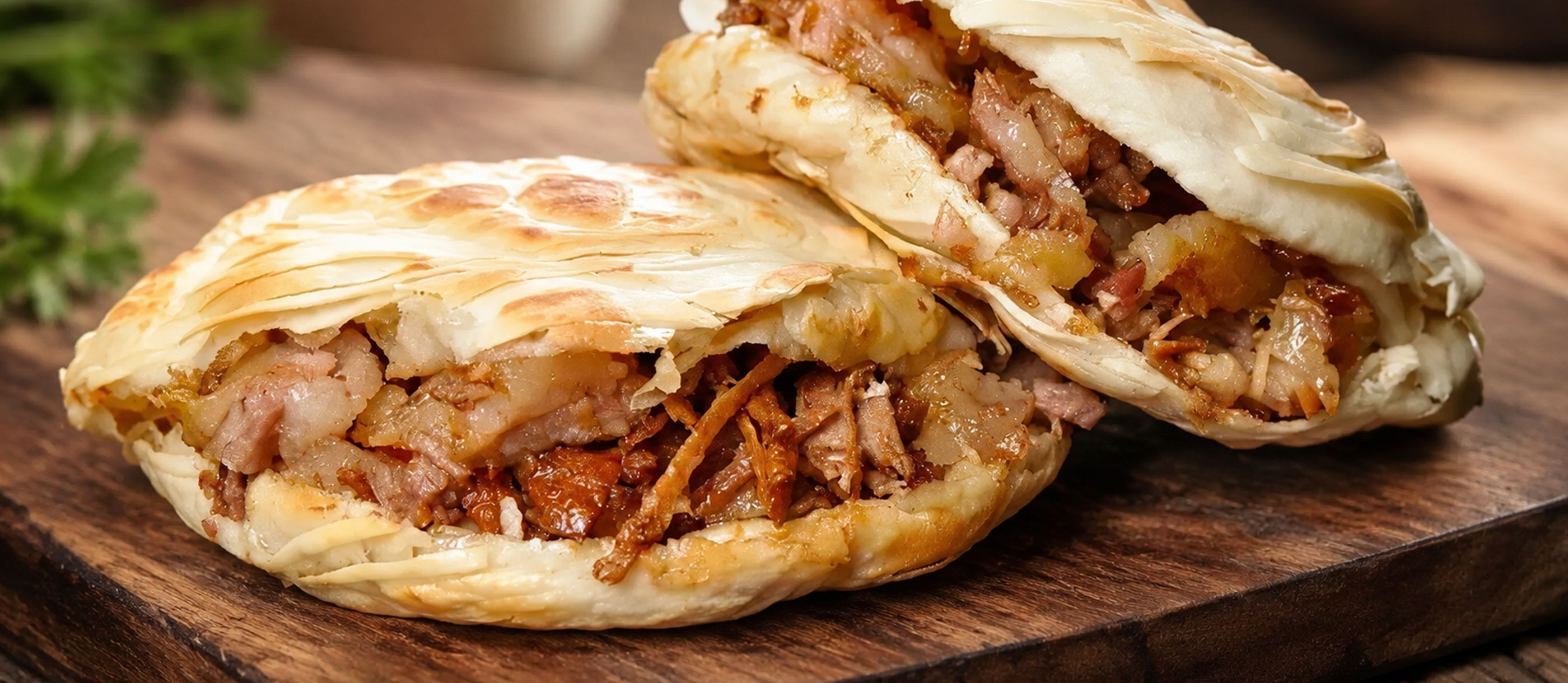
Kǎoyā ròujiāmó is a variation of the famous Shaanxi street food, ròujiāmó, where the usual braised pork or beef filling is replaced with roast duck, often inspired by Beijing’s renowned kǎoyā or Peking duck. It brings together two culinary traditions: the bread-centered snack culture of northwestern China and the rich, lacquered duck cooking of the capital. This hybrid form is less old than the pork-based original, but it has found a place in markets and casual eateries, especially in cities where regional Chinese cuisines blend and adapt to modern tastes. The preparation of the bread remains much the same, using wheat flour dough formed into discs and baked on a griddle or in clay ovens until crisp on the outside but pliable enough to split open. The duck, however, changes the profile of the dish. Instead of long-braised meat, the filling comes from roast duck with its rendered skin and tender flesh, chopped together with scallions, cucumber, and sometimes a brush of sweet bean sauce or hoisin-like condiments. This introduces both a smoky and slightly sweet note, contrasting with the denser, savory character of the original pork version. Kǎoyā ròujiāmó is usually eaten as a quick meal in food courts, markets, or roadside stalls, and it can serve either as a snack or as part of a larger spread that might include cold noodles, dumplings, or soups. It pairs well with sour plum juice, chrysanthemum tea, or even light lagers, all of which balance the richness of the duck.
02 / ОСНОВНЫЕ ПРОДУКТЫ БЛЮДА
Уличная еда · Блюда из утки
Непереведённые названия показаны на языке сохранённых данных.