01 / ПАСПОРТ
- Категория
- Сладкая выпечка
- Страна
- Босния и Герцеговина
- Регион
- не указан
English · русское название ещё не добавлено
О БЛЮДЕ
Исходное описание на английском языке. Русский перевод ещё не добавлен.
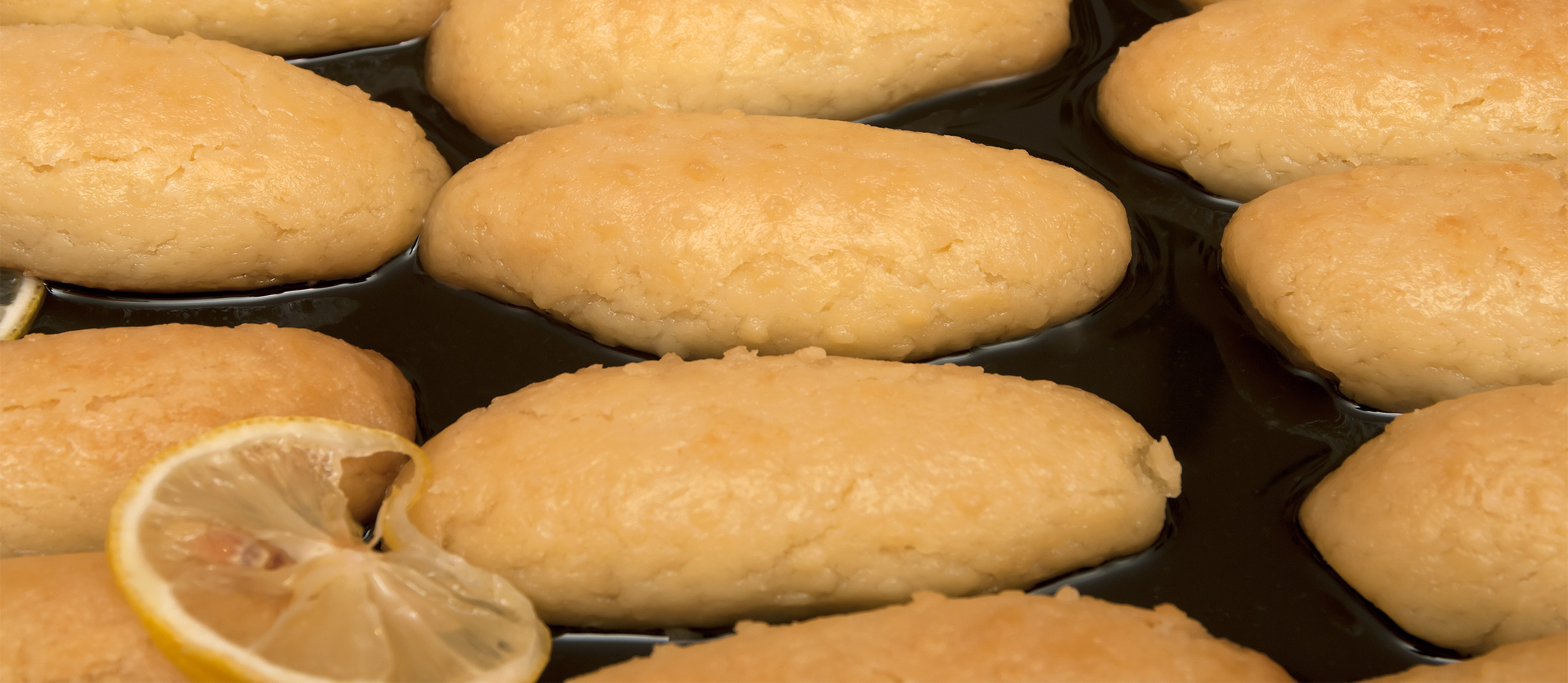
Hurmašice are dense, date-shaped pastries baked until golden brown and completely submerged in a heavy lemon-scented sugar syrup. Making the dough requires creaming soft butter vigorously with whole eggs and white sugar until pale and fluffy. All-purpose flour and a small pinch of baking powder are folded into the wet mixture, forming a smooth, pliable mass that holds its shape easily without sticking to the hands. Small chunks of the dough are pinched off, rolled into short cylinders, and flattened slightly. A distinct visual hallmark involves pressing the top of each unbaked cylinder against the fine side of a metal cheese grater, imprinting a rough, textured grid pattern. Ingredient substitutions and additions are common. Chopped walnuts heavily stud the dough in specific regional iterations, providing a harsh crunch against the otherwise soft crumb. Another adaptation entirely replaces the butter with neutral vegetable oil or rendered fat, yielding a much denser, heavier bite. A less common adjustment involves mixing desiccated coconut into the flour. The raw pastries are snugly arranged on a baking sheet and go into a hot oven to bake until the crust hardens and turns a dark mahogany. Concurrently, a massive volume of white sugar is dissolved into boiling water with thick slices of fresh lemon to create a clear, intensely sweet liquid known as agda. The hot syrup pours directly over the freshly baked, still-warm pastries right in the pan, initiating a loud sizzle. The entire batch rests at room temperature for several hours, allowing the porous baked dough to absorb nearly all the surrounding liquid. The exact shape and naming convention of this dessert originate directly from the 15th-century Ottoman expansion into the Balkan Peninsula. The Ottoman military and administrative presence introduced heavily syruped sweets to the region, and this pastry took its name from the Turkish word "hurma," meaning "date," solely due to its visual resemblance to the imported fruit rather than its containing any actual dates. In Türkiye, its relative is the almost identical kalburabastı . When served, usually a single hurmašica arrives on a small ceramic saucer, fully saturated and heavy with syrup, holding its shape just enough to require a fork. A strong cup of unfiltered black coffee always sits alongside the plate, providing a necessary bitter contrast that cuts sharply through the dessert's overwhelming sweetness.
03 / РЕЦЕПТ
Рецепт для этого блюда пока не добавлен.