02 / ОСНОВНЫЕ ПРОДУКТЫ БЛЮДА
Непереведённые названия показаны на языке сохранённых данных.
- Rice Flour
- Osmanthus
- Vegetable Oil
- Sugar
English · русское название ещё не добавлено
01 / О БЛЮДЕ
Исходное описание на английском языке. Русский перевод ещё не добавлен.
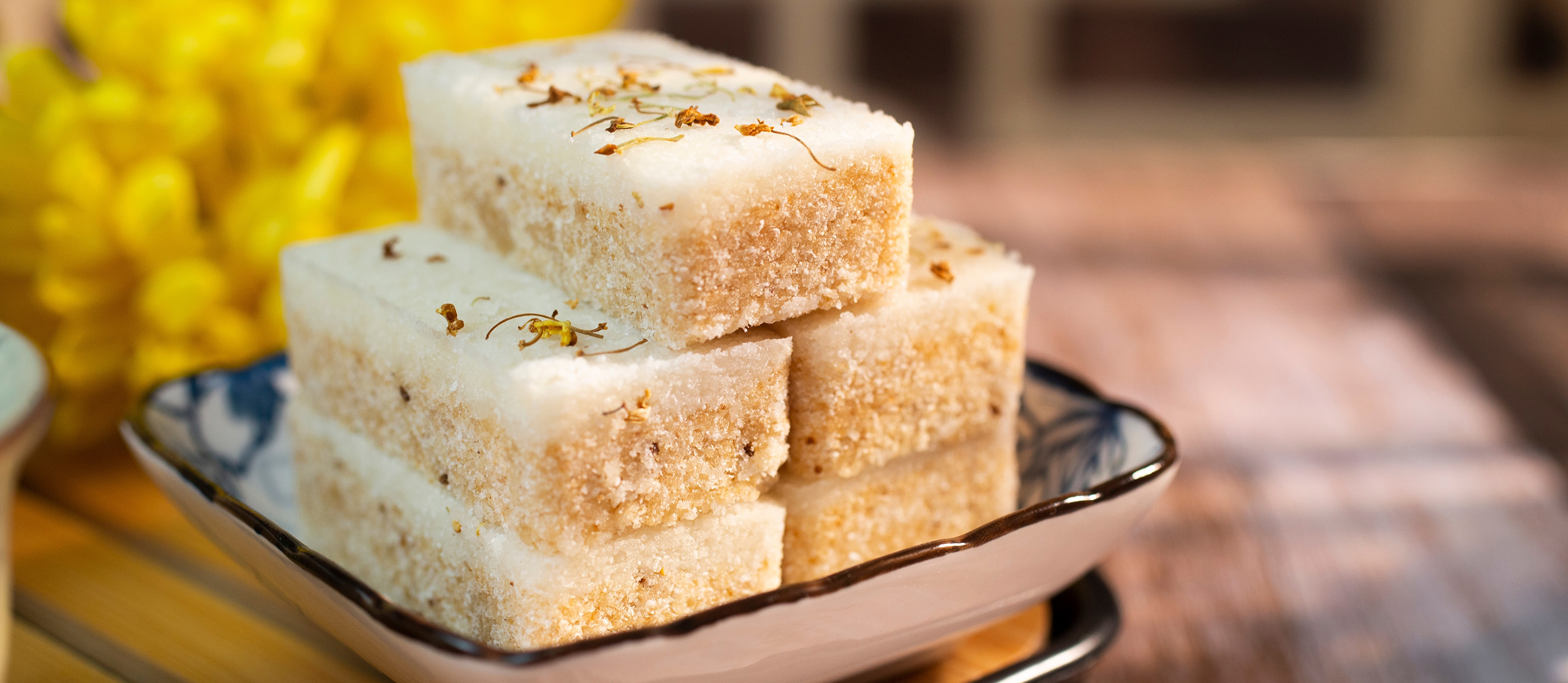
Guì huā gāo is a sweet pastry from China made with rice flour, sugar, and the blossoms of osmanthus, a fragrant flower long associated with autumn in Chinese culture. The name literally means “osmanthus cake,” and it is known for its light sweetness, delicate texture, and the floral aroma imparted by the blossoms. Its origins are linked to the Jiangnan region, where osmanthus trees bloom each year and their flowers are used not only for fragrance but also for food and drink. The cake has been made for centuries, with mentions appearing in local writings from the Ming and Qing dynasties that describe osmanthus as both a culinary and medicinal plant. When the blossoms were in season, they were preserved in syrup or honey and then added to cakes, wines, and teas. Over time, guì huā gāo became a recognizable pastry in regions where osmanthus trees grow, especially around cities such as Nanjing, Suzhou, and Hangzhou. The association of osmanthus with nobility, refinement, and seasonal celebration gave the cake a place not only in markets and teahouses but also in family gatherings and festive occasions. Preparation begins with glutinous rice flour mixed with sugar and water to form a batter. The mixture is poured into molds or trays and combined with osmanthus blossoms, often preserved in syrup, which lend fragrance and flavor. The cakes are then steamed until set, cooled, and cut into neat squares or slices. The result is soft, slightly chewy, and lightly perfumed, making it suitable for eating on its own or as part of a larger spread of snacks. Sometimes additional fillings like red bean paste are incorporated, but the defining feature remains the osmanthus flavor. Today, guì huā gāo is eaten across China, most commonly in Jiangnan and other areas where osmanthus is abundant. It appears in pastry shops, markets, and restaurants, often served with tea or given as gifts during the blooming season. While enjoyed year-round thanks to preserved blossoms, it remains most closely connected with autumn, when osmanthus is in the bloom.
02 / ОСНОВНЫЕ ПРОДУКТЫ БЛЮДА
Непереведённые названия показаны на языке сохранённых данных.
03 / РЕЦЕПТ
В сохранённых данных рецепта нет.
Запись · 12135