02 / ОСНОВНЫЕ ПРОДУКТЫ БЛЮДА
Непереведённые названия показаны на языке сохранённых данных.
- Eru
- Ukazi
- Spinach
- Waterleaf
- Dried Fish
- Beef
- Onion
- Dried Crayfish
- Bouillon Cube
- Palm Oil
- Black Pepper
- Salt
English · русское название ещё не добавлено
01 / О БЛЮДЕ
Исходное описание на английском языке. Русский перевод ещё не добавлен.
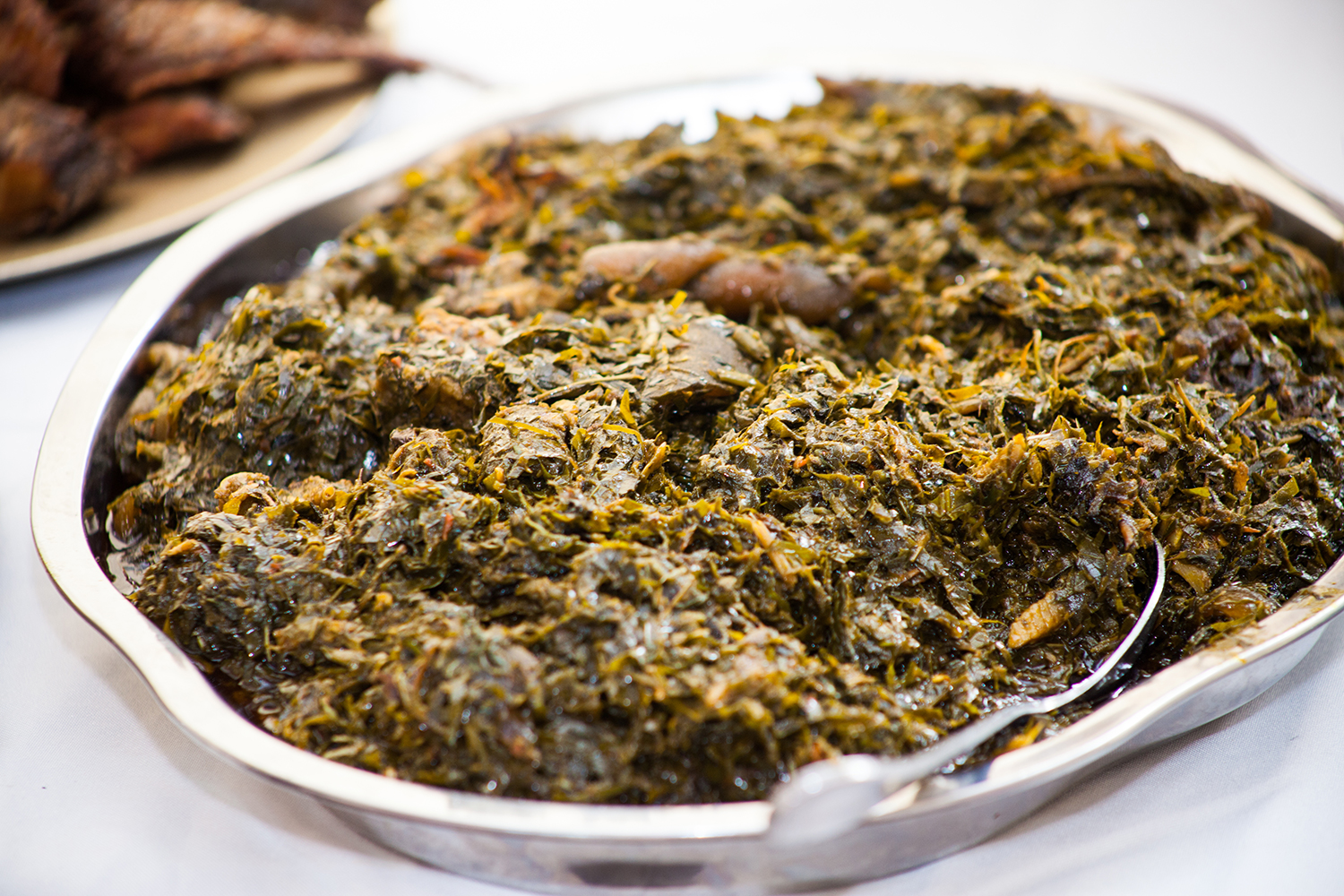
Eru soup is a thick vegetable soup made from finely sliced eru leaves cooked with waterleaf, red palm oil, crayfish, and a mixture of meat and dried or smoked fish. It is particularly associated with the Bayangi people of Manyu in the South West Region of Cameroon and is one of the best-known foods of the country's Anglophone southwest. The name eru refers to the tough leaves of African Gnetum vines, particularly Gnetum africanum and the closely related Gnetum buchholzianum. These climbing plants grow naturally in the humid forests of West and Central Africa. People have traditionally gathered their leaves from the forest, though cultivation and domestication have expanded over time. The exact age and origin of eru soup are not documented. Its strong association with the Bayangi people and the forest environment of southwestern Cameroon is well established. Still, it cannot reliably be traced to a specific invention or to the need for portable food for agricultural workers. Eru leaves are dark green, firm, and fibrous, so they are sliced very finely before cooking. Fresh leaves are usually best, while dried or pre-sliced eru is soaked first to soften it. The tougher eru is cooked with waterleaf, a soft, succulent leafy vegetable that releases enough moisture to help the greens cook without turning the dish into a watery soup. Outside Cameroon, people commonly use spinach when waterleaf is unavailable. The meat and fish are generally cooked first. Beef, goat meat, or cow skin, known as kanda or canda, can be used, often together with smoked fish or stockfish. Ground dried crayfish is especially characteristic and contributes much of the dish's deep savory flavor. Waterleaf is added to the pot and allowed to wilt, followed by the finely sliced eru. The vegetables cook down considerably, gradually forming a dense mass of greens rather than a loose broth. When waterleaf is used, little or no additional water is normally required at this stage. If spinach is substituted, a small amount of stock or cooking liquid may be needed. Red palm oil is added generously and mixed through the vegetables until the leaves become glossy and the oil is evenly distributed. Crayfish, salt, and hot pepper complete the basic seasoning. Whole or ground hot peppers can be used depending on the cook, and seasoning cubes are common in modern recipes. The finished dish should be moist and rich but not swimming in liquid. Balancing the two vegetables is important. Waterleaf is soft and juicy, while eru remains slightly chewy even after cooking. Together, they create the dish's characteristic texture: tender greens threaded with fine, firmer strips of eru and coated with palm oil, crayfish, and the flavors of smoked fish and meat. There are many household variations. Some versions contain mainly beef and cow skin, while others rely heavily on smoked fish, stockfish, or dried fish. Shrimp or snails can also be included. The amount of palm oil varies, but its reddish color and distinctive flavor are central to the classic preparation. When waterleaf is unavailable, spinach is the most common substitute, though the result differs slightly in texture and moisture. Eru soup is most famously served with water fufu, a smooth, slightly fermented cassava dough. Garri, made from processed cassava, is another common accompaniment. People take a portion of the starch by hand and use it to pick up the greens, meat, and sauce.
02 / ОСНОВНЫЕ ПРОДУКТЫ БЛЮДА
Непереведённые названия показаны на языке сохранённых данных.
03 / РЕЦЕПТ
В сохранённых данных рецепта нет.
Запись · 4313