01 / ПАСПОРТ
- Категория
- Тушёные блюда
- Страна
- Филиппины
- Регион
- не указан
English · русское название ещё не добавлено
О БЛЮДЕ
Исходное описание на английском языке. Русский перевод ещё не добавлен.
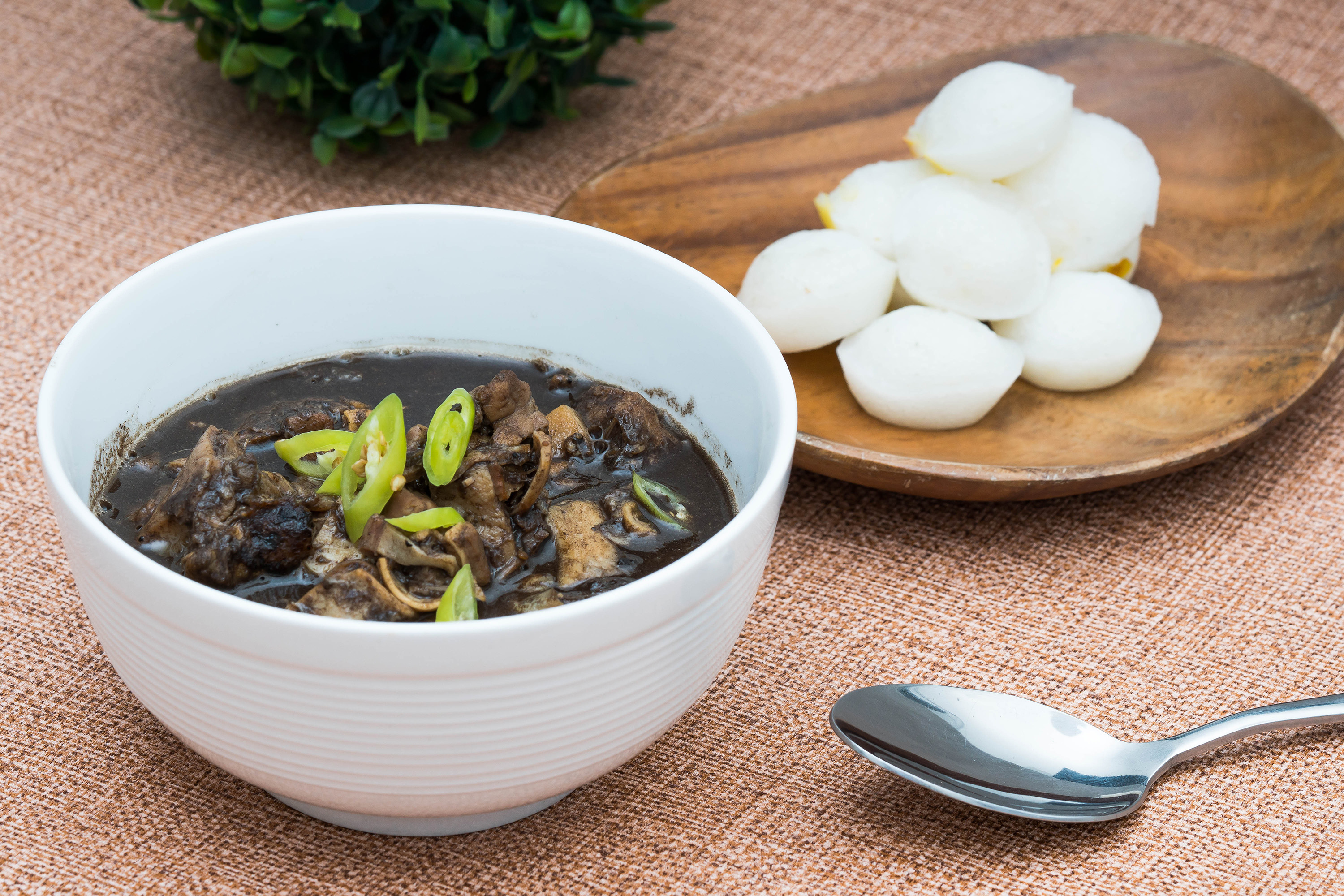
Dinuguan is a savory dark stew made from diced pork belly and offal simmered in a thick, highly acidic sauce of pig’s blood and cane vinegar. Thoroughly cleaning and dicing raw pork belly, snout, ears, and intestines is the first step in the recipe. These dense cuts are added to a wide hot pan coated with oil, where they render their heavy animal fat. Minced garlic and chopped red onions are then softened directly in the hot lard. A generous splash of sharp cane vinegar is poured into the pan, and the mixture is boiled aggressively, helping tenderize the tough cartilage while reducing any gamey odors. Fresh liquid pig’s blood is slowly poured into the simmering broth. During this step, the bottom of the pot must be scraped continuously with a heavy wooden spoon to keep the blood from curdling or scorching against the hot metal. The heat is then reduced, and the mixture simmers gently until the red liquid thickens into a glossy black gravy. Whole green chilies are added during the final minutes, giving the stew a mild vegetal heat. In the northern provinces, a dry version called dinardaraan is made by deep-frying the pork pieces until extremely crisp, then tossing them lightly in a heavily reduced blood glaze. In the central plains, a very different method involves boiling fresh blood on its own until it solidifies into rubbery cakes. These dark cakes are cubed and simmered in a clear, sour broth, producing a pale soup with dark chunks rather than a unified black gravy. Another common version replaces the pork with chopped chicken meat and chicken blood, which significantly shortens the cooking time. The origins of dinuguan trace back to pre-colonial indigenous cooking practices across the Southeast Asian archipelago. Sixteenth-century Spanish chroniclers, including Antonio Pigafetta during the 1521 Magellan expedition, recorded that local communities used every part of slaughtered livestock for economic reasons. Because of the intense tropical heat, highly acidic liquids such as fermented coconut sap or cane vinegar were needed to help preserve meat without refrigeration. This established the sharp, sour, metallic flavor profile that still defines the stew today. Dinuguan is served hot in a deep ceramic bowl. A large stack of puto, slightly sweet and spongy steamed rice cakes, is almost always served beside it. The soft white cakes are dipped directly into the thick black gravy, adding a necessary sweetness that cuts through the sharp vinegar and metallic iron flavor. The stew can also be poured over a wide plate of steaming white rice, turning it into a filling, standalone main course.
03 / РЕЦЕПТ
Рецепт для этого блюда пока не добавлен.