01 / ПАСПОРТ
- Категория
- Закуски
- Страна
- Франция
- Регион
- Provence
English · русское название ещё не добавлено
О БЛЮДЕ
Исходное описание на английском языке. Русский перевод ещё не добавлен.
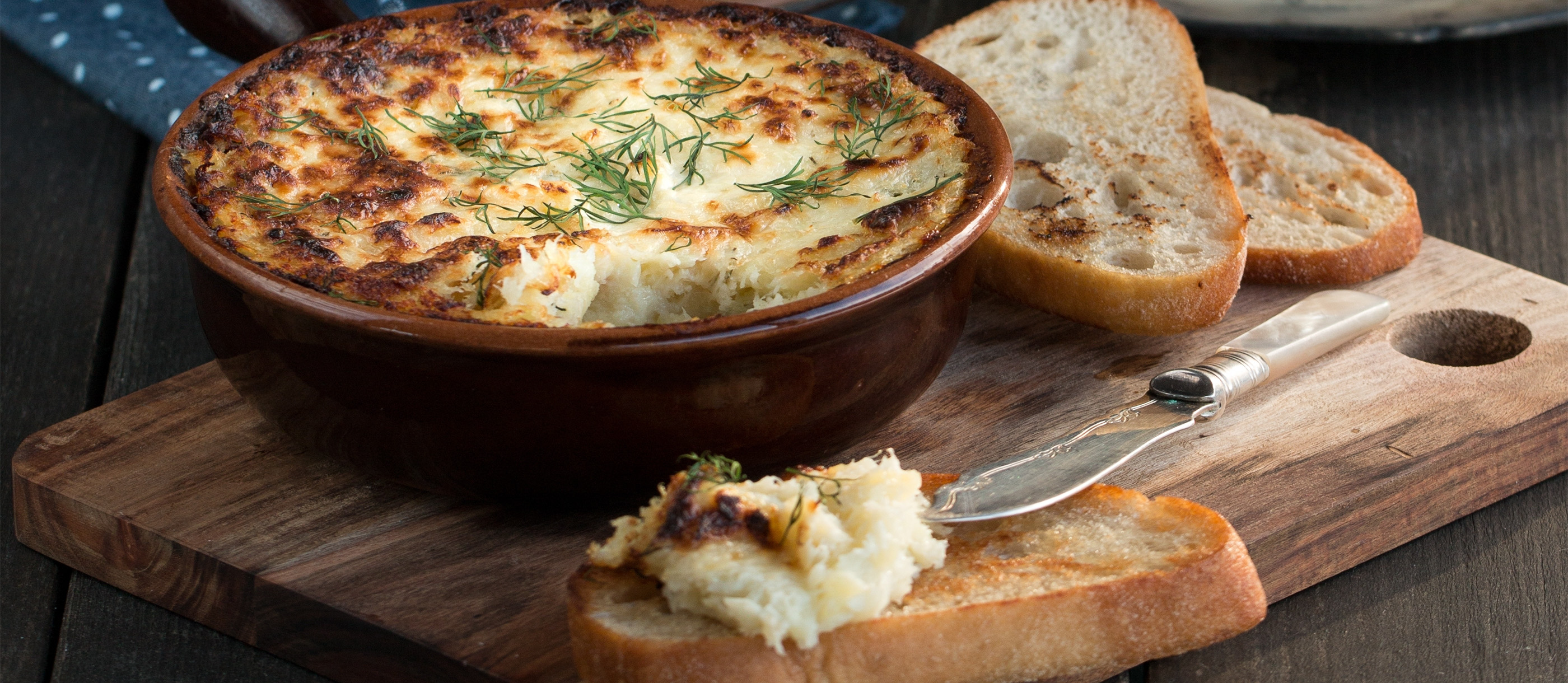
Brandade de morue is a velvety, whipped spread or paste of rehydrated Atlantic salt cod, warm olive oil, milk, and occasionally potatoes, originating in the city of Nîmes and present in the Roussillon, Languedoc, and Provence regions. The creation of this seafood spread stems directly from the region's historic geographic position within Mediterranean trade networks, where massive cargoes of heavily salted cod from the Grand Banks of Newfoundland were exchanged for the prized, high-quality sea salt extracted from the nearby coastal marshes of Aigues-Mortes. The first recipe dates from 1786, when imported salted cod flesh was first mashed with garlic, local olive oil, and a touch of milk to create the original regional preparation. The name derives directly from the Occitan verb brandar, signifying the vigorous shaking and continuous stirring required to mechanically bind the ingredients together. The Occitan specialty achieved massive success from 1830 onwards after being introduced and popularized within Parisian aristocratic circles by the celebrated chef Charles Durand, cementing the preparation into the broader canon of classical French gastronomy. Variations incorporating boiled and mashed potatoes emerged concurrently during this period as a widespread Parmentier modification designed to increase the yield and mellow the intense maritime salinity. Furthermore, this exact method of preparing emulsified cod is formally classified as Margot de morue within Alcide Bontou's seminal text, Traité de cuisine bourgeoise bordelaise. The recipe begins by submerging the rigid salt cod in cold water for twenty-four to forty-eight hours. Frequent water replacements are executed to aggressively extract the harsh curing minerals from the flesh. The rehydrated fish is gently poached in a bath of water or milk until perfectly tender, and all extraneous skin, cartilage, and pin bones are meticulously discarded. The hot, purified cod is transferred into a heavy stone mortar and pounded aggressively into a coarse paste with a wooden pestle. While maintaining a steady, vigorous agitation, warm extra-virgin olive oil and heated whole milk are introduced in alternating, slow streams. This continuous mechanical force causes the animal proteins, fats, and liquids to emulsify thoroughly, yielding a dense, airy paste structurally identical to a stiff mayonnaise. Flavoring components are strictly limited to the pounded garlic, freshly grated nutmeg, ground white pepper, and an occasional splash of citrus juice. The hot, savory mixture is served predominantly as a rich appetizer, spread generously over garlic-rubbed croutons, scooped with fried bread, or piped elegantly into baked puff pastry vol-au-vent shells. For opulent banquets and extravagant holiday feasts, fresh black truffle shavings are folded directly into the warm emulsion to elevate the aromatic profile. The heavy, calorie-dense paste is consumed in large quantities throughout the cold winter months. Due to strict Catholic dietary mandates that forbid meat on specific holy days, the seafood emulsion serves as an indispensable nutritional pillar during the somber fasting period of Lent and as a mandatory meatless centerpiece for the traditional Provençal Christmas Eve supper.
03 / РЕЦЕПТ
Рецепт для этого блюда пока не добавлен.