01 / ПАСПОРТ
- Категория
- Мясные блюда
- Страна
- Казахстан
- Регион
- не указан
English · русское название ещё не добавлено
О БЛЮДЕ
Исходное описание на английском языке. Русский перевод ещё не добавлен.
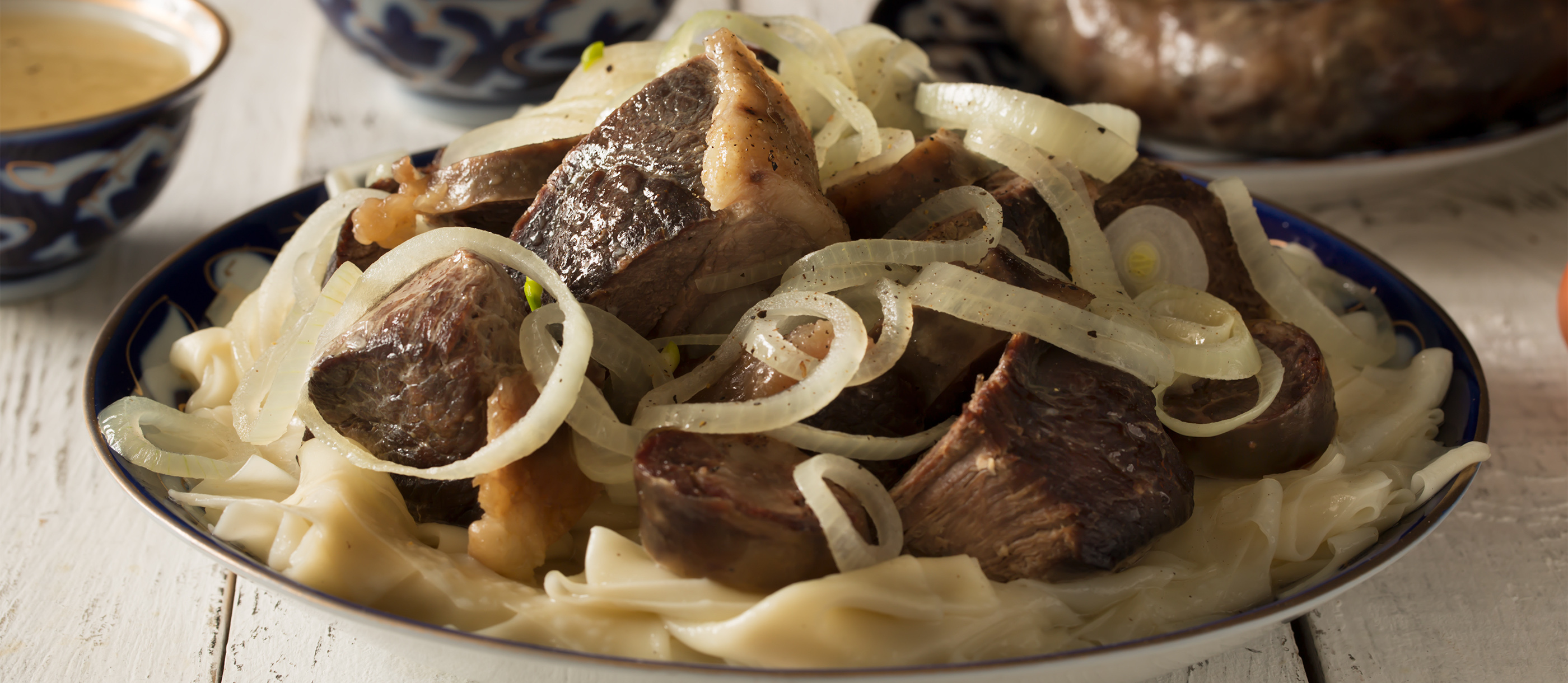
Beshbarmak is a meat-and-dough dish composed of boiled livestock meat served over wide flat noodles with broth and onions, identified as the national dish of Kazakhstan and prepared there as a central communal meal rather than an everyday side. It translates to five fingers, refering to the traditional practice of eating the dish with one's hands. Its formation is inseparable from Kazakh pastoral life centered on horse, sheep, and cattle herding, where large animals were slaughtered selectively, cooked whole or in large cuts, and shared according to social structure, and where boiling was the most efficient method for cooking tough meat while producing broth that could be reused within the same meal, with dough added as a filling and practical starch made from flour and water without ovens. Preparation begins by boiling substantial cuts of meat, most notably horse meat such as kazy, zhaya, or other sections, as well as lamb or beef depending on availability, slowly in water until tender, skimming and reserving the broth, while a simple dough of flour, water, and salt is rolled thin and cut into large sheets or diamonds that are cooked briefly in the same broth so they absorb fat and flavor, after which the meat is sliced or chopped and arranged over the noodles, topped with onions softened in hot broth or rendered fat, and moistened with additional liquid to keep the dish cohesive. Serving follows a defined order in which the platter is placed at the center and specific cuts may be distributed according to age, role, or guest status, while bowls of clear broth are served separately, reinforcing the structure of the meal as both solid and liquid drawn from a single cooking process. What distinguishes beshbarmak in Kazakhstan is the prominence of horse meat and the formalized etiquette surrounding carving and distribution, as well as the reliance on boiling alone without browning or layered seasoning, placing emphasis on texture, fat content, and the quality of the meat itself. It is eaten by hand or with minimal utensils during family gatherings, ceremonies, and guest meals, shared from a common platter, and commonly accompanied by raw or lightly dressed onions, simple salads, and beverages such as black tea, lightly salted broth, or fermented dairy drinks like kumys, which align with the dish’s richness without introducing sweetness or acidity.
03 / РЕЦЕПТ
Рецепт для этого блюда пока не добавлен.