02 / MAIN DISH INGREDIENTS
- Prune Plums
- Wheat Flour
- Eggs
- Yeast
- Butter
- Milk
- Sugar
- Salt
01 / ABOUT THE DISH
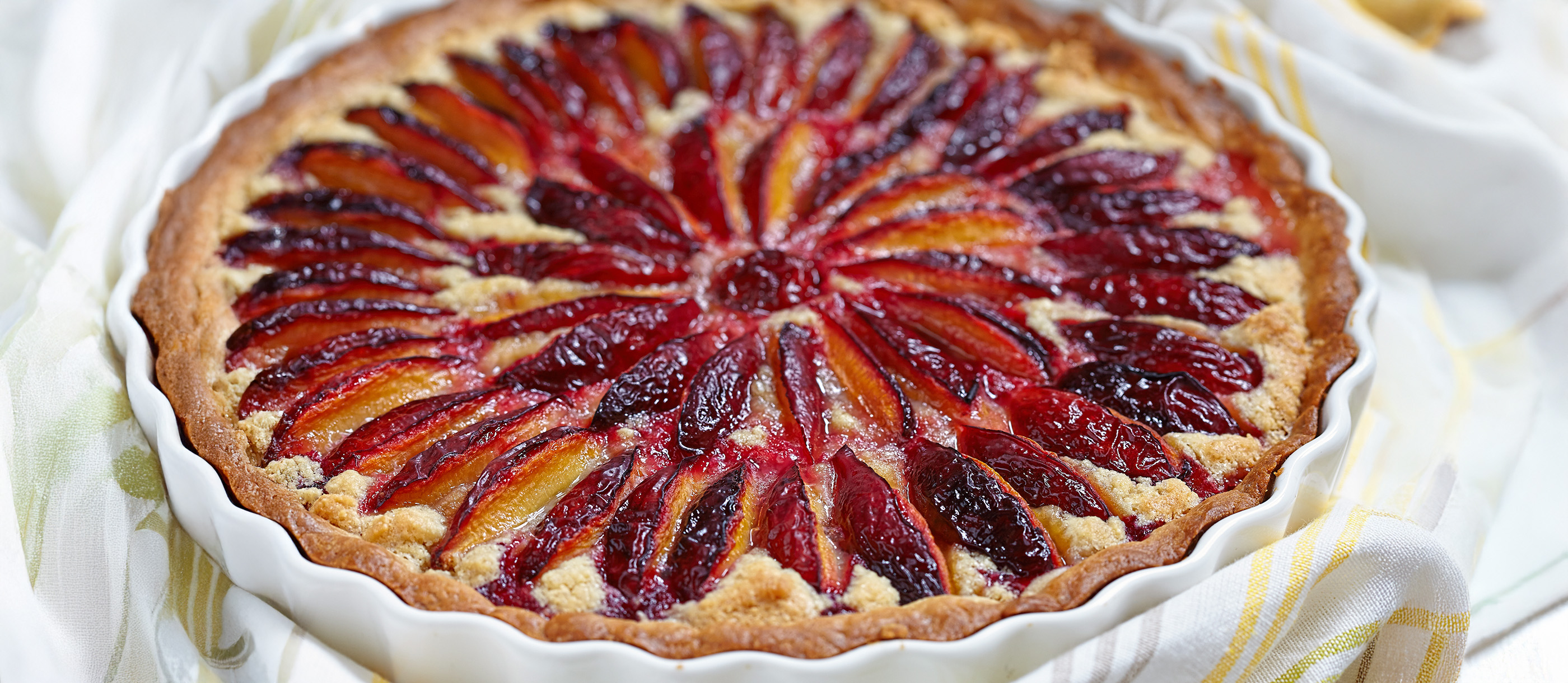
Zwetschgenkuchen is a beloved German sheet cake that epitomizes the country’s late summer and early autumn baking traditions. Its name, derived from “Zwetschge” meaning prune plum and “Kuchen” meaning cake, signals its starring ingredient: small, dark purple plums with firm flesh and a tart flavor that softens and sweetens when baked. This seasonal dessert is particularly popular in southern Germany, especially in Bavaria and Swabia, where it is also fondly referred to as Pflaumenkuchen or Zwetschgendatschi ("datschen" being a colloquial Bavarian word denoting the pressing of the prune plums into the dough), depending on the region. Among these regional variants, the Zwetschgendatschi from Augsburg holds a special place in culinary history. Often credited as the birthplace of this specific style of plum cake, Augsburg has helped popularize the sheet-baked version with a yeast dough base and meticulously arranged rows of plums. The city’s association with Zwetschgendatschi is so strong that many Germans consider it an essential part of Augsburg’s gastronomic identity, celebrated at local bakeries and seasonal festivals. The base of Zwetschgenkuchen can vary, with some versions using a rich, buttery shortcrust (Mürbeteig) and others relying on the traditional yeast-leavened dough (Hefeteig) that provides a tender but sturdy foundation for the fruit. The plums are halved and tightly arranged in rows, skin side down, covering the dough in overlapping patterns that resemble the scales of a fish, a signature detail of the Augsburg style. As they bake, the juices seep into the base, creating a harmonious balance of tartness and sweetness, and imparting a vibrant color and flavor. Traditional recipes often include a streusel topping made from flour, sugar, and butter, which adds a delightful crunch and richness, contrasting the juicy, slightly acidic plums beneath. In some variations, bakers might add cinnamon, ground nuts, or even a touch of cardamom for aromatic depth, while others prefer to keep it minimalist to let the plums shine. Zwetschgenkuchen is typically baked in a rectangular tray and cut into squares or slices, making it ideal for sharing at family gatherings, village festivals, or Kaffee und Kuchen (coffee and cake) afternoons. It is commonly served slightly warm or at room temperature, sometimes with a generous dollop of whipped cream or a scoop of vanilla ice cream to round out the experience.
02 / MAIN DISH INGREDIENTS
03 / RECIPE
There is no recipe in the saved data.
Record · 11997