02 / MAIN DISH INGREDIENTS
not yet extracted
01 / ABOUT THE DISH
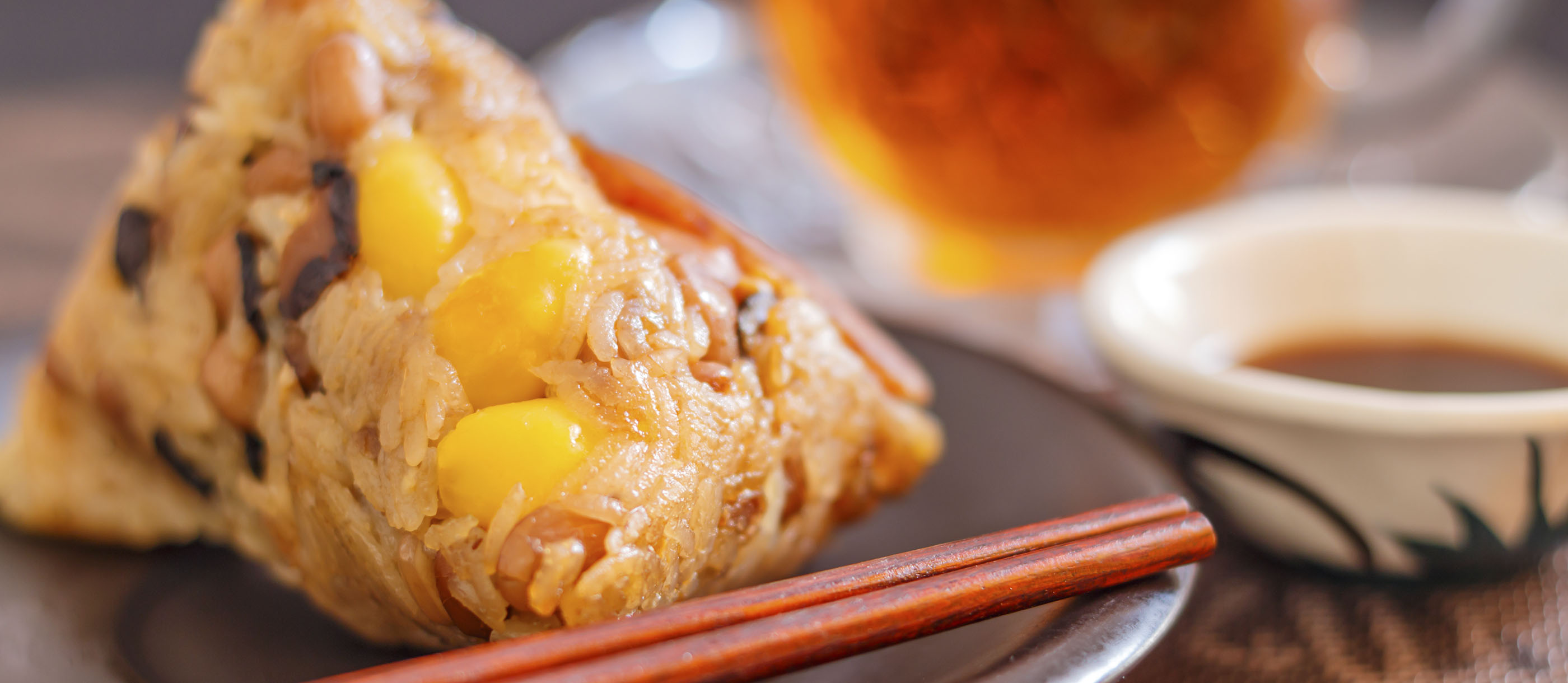
Zongzi is a stuffed glutinous rice dumpling, encased in bamboo or reed leaves and bound tightly with a string. The origin of the snack is directly tied to the Dragon Boat Festival, which occurs annually on the fifth day of the fifth month of the lunar calendar. Historical accounts tie this culinary practice to the death of Qu Yuan, a poet and minister of the State of Chu during the Warring States period. After Qu Yuan drowned himself in the Miluo River, local villagers threw packets of rice into the water to prevent fish from consuming his body. The modern preparation requires soaking short-grain glutinous rice in water until the grains soften. Large flat leaves from bamboo, reed, or lotus plants are washed and briefly boiled to increase their pliability. One or two leaves are folded into a hollow cone. The soaked rice goes into the base of the cone, followed by specific fillings, and another layer of rice covers the center. The remaining leaf edges are folded over the top to securely enclose the contents. Twine or natural plant fibers bind the entire package tightly to maintain its structural integrity. The wrapping process creates a tetrahedral, conical, or cylindrical shape. The bundled dumplings are submerged in boiling water and cooked for several hours. This prolonged boiling method gelatinizes the rice's starches and infuses the grain with the leaves' herbaceous aroma. The interior ingredients dictate the final flavor profile and differ significantly across regional lines. Northern variations are sweet and incorporate additions such as red bean paste, jujubes, or taro. Southern variations are savory, utilizing marinated pork belly, salted duck egg yolks, dried shiitake mushrooms, dried shrimp, roasted chestnuts, and peanuts. The cooked packages are removed from the hot water and drained. The string and leaves are stripped away just before eating, and the sticky-rice interior is consumed either warm or at room temperature.
02 / MAIN DISH INGREDIENTS
not yet extracted
03 / RECIPE
There is no recipe in the saved data.
Record · 666