02 / MAIN DISH INGREDIENTS
- Blueberries
- Wheat Flour
- Sugar
- Butter
- Salt
01 / ABOUT THE DISH
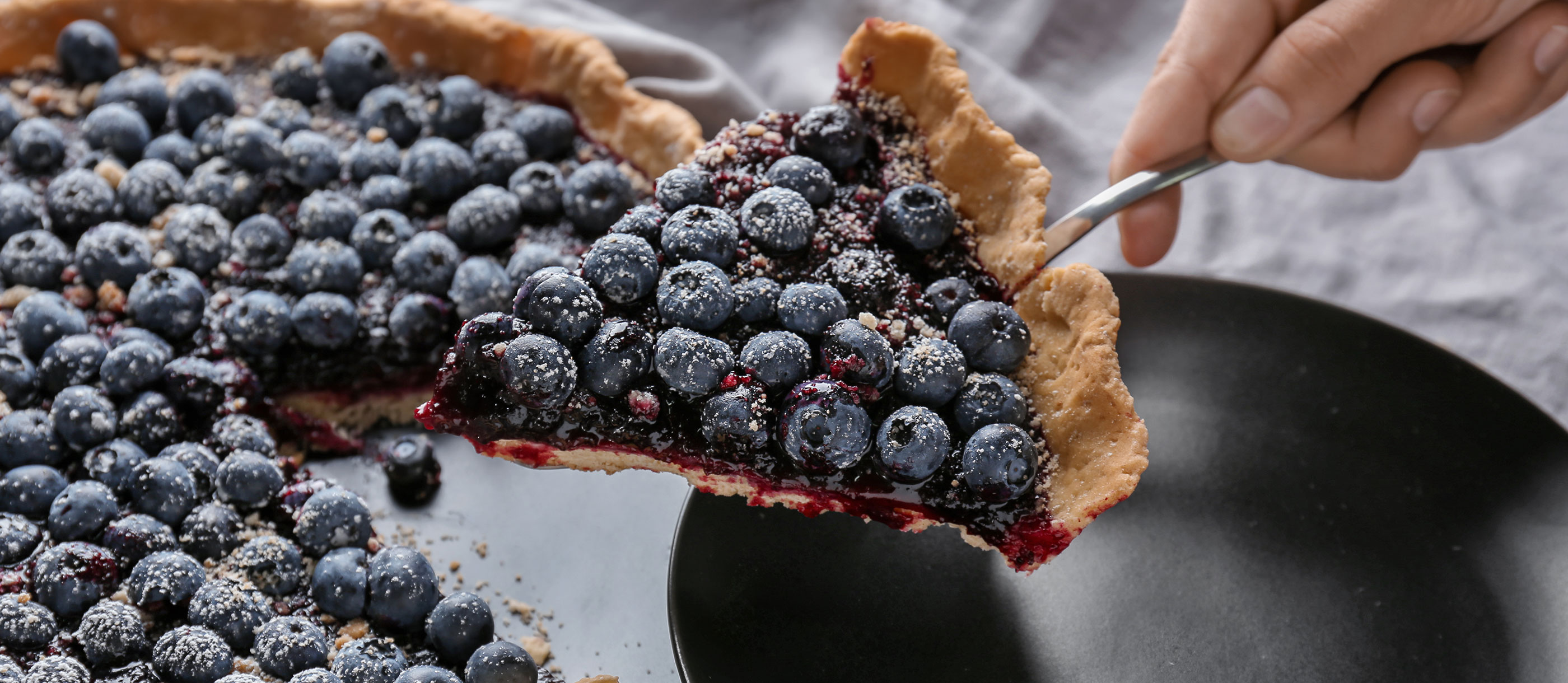
Tarte aux myrtilles is a blueberry tart from France known for its simple composition and deep, concentrated fruit flavour. It has long been associated with mountainous regions where wild blueberries grow abundantly, and its origins lie in rural communities that used the seasonal fruit in home baking as a way to preserve the harvest. Over time, it moved from farmhouse kitchens to patisseries and dining tables across the country, becoming a staple dessert during summer and early autumn when blueberries are at their peak. The preparation begins with a shortcrust pastry base made from flour, butter, sugar, egg yolk and a pinch of salt. The dough is mixed quickly to keep it tender, shaped into a disk, rested, then rolled out and fitted into a tart tin. It is often blind-baked until lightly golden to prevent sogginess when filled. The filling is composed of fresh or sometimes lightly macerated blueberries tossed with sugar and a small amount of flour or ground almonds to absorb juices during baking. The berries are spread evenly across the pastry shell and baked until they soften and release their juices, creating a glossy, deeply coloured layer. Once cooled, the tart is usually dusted with icing sugar, and in some versions a thin layer of apricot glaze is brushed over the surface to enhance shine. Variations can include adding a light layer of almond cream or frangipane beneath the fruit, which adds richness and depth of flavour without overpowering the berries. In some recipes, lemon zest or vanilla is mixed with the berries to brighten the taste, while others top the tart with a thin layer of crème fraîche or pastry cream after baking. A distinctive aspect of this tart is its reliance on the quality of the fruit: it is often made with wild blueberries, smaller and more intensely flavoured than cultivated varieties, which give the dessert a particularly vivid colour and pronounced aroma. Tarte aux myrtilles is most often served as a dessert but is also common at afternoon gatherings and family meals, especially in summer when the fruit is freshly picked. It can be enjoyed warm or at room temperature, often with a spoonful of whipped cream or a scoop of vanilla ice cream. The tart pairs well with light dessert wines, such as a late-harvest Muscat, or with black coffee or tea. Its straightforward preparation and focus on the natural flavour of the fruit have secured its place as a beloved seasonal pastry in French baking.
02 / MAIN DISH INGREDIENTS
03 / RECIPE
There is no recipe in the saved data.
Record · 12310