02 / MAIN DISH INGREDIENTS
- Wheat Flour
- Sugar
- Eggs
- Butter
- Whipped Cream
- Salt
01 / ABOUT THE DISH
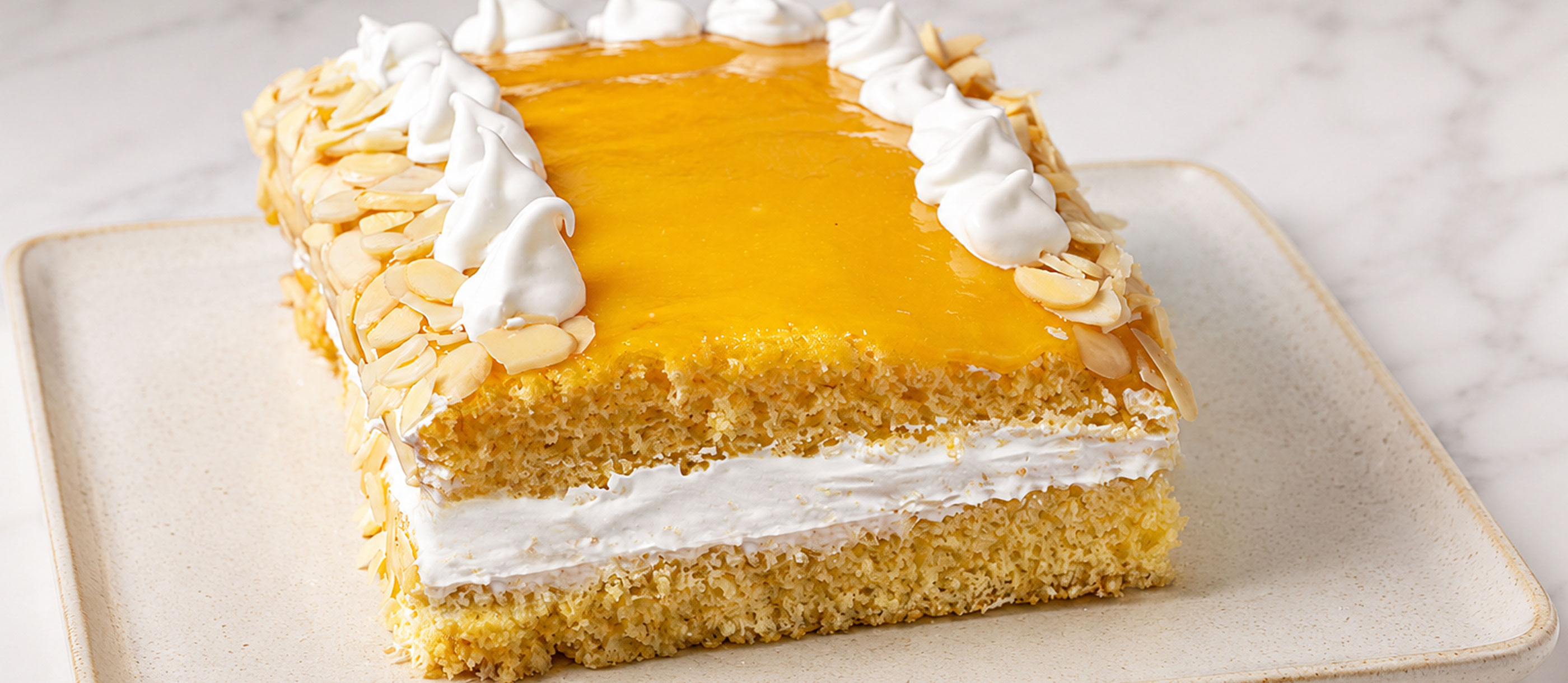
Tarta San Marcos is a layered sponge cake from the city of León in northwestern Spain, known for its airy texture, rich cream filling, and distinctive caramelized egg yolk topping. It holds a special place in Spanish pastry-making and is frequently served at celebrations, family gatherings, and festive occasions. The cake’s story begins in the 12th century, when Infanta Sancha Raimúndez of León visited the convent of San Marcos, one of the city’s most remarkable architectural sites and an important stop for pilgrims traveling along the French Way to Santiago de Compostela. The convent, originally dedicated to caring for pilgrims known as the “poor of Christ,” benefited greatly from the Infanta’s patronage, and in gratitude, the resident monks created a special dessert in her honor. This confection evolved into what is now known as tarta San Marcos, a cake that not only celebrated her contributions but also symbolized the region’s hospitality toward travelers. Over the centuries, it became one of the most renowned cakes in Spanish pastry, maintaining its prestige and association with special occasions. The preparation of tarta San Marcos begins with a soft sponge cake made with eggs, sugar, and flour, which forms the base and is typically divided into layers once cooled. Each layer is brushed lightly with syrup, sometimes scented with liqueur, to keep the cake moist and fragrant. Between the layers, a whipped cream filling is added. Sometimes a portion of it will be flavored with cocoa, creating two layers of whipped cream. Once assembled, the uppermost layer of sponge cake is covered with a mixture of egg yolks and sugar cooked into a smooth custard, which is then caramelized to form a glossy, golden crust. The sides and top of the cake will be decorated with swirls of whipped cream, and sometimes sliced almonds will be added to the sides. Tarta San Marcos is typically served cold, cut into slices, and often serves as the centerpiece of celebrations such as birthdays, weddings, or holiday meals. It pairs well with sweet dessert wines like Moscatel or Pedro Ximénez, which enhance its richness, or with strong coffee to provide contrast.
02 / MAIN DISH INGREDIENTS
03 / RECIPE
There is no recipe in the saved data.
Record · 12242