01 / ABOUT THE DISH
About the dish
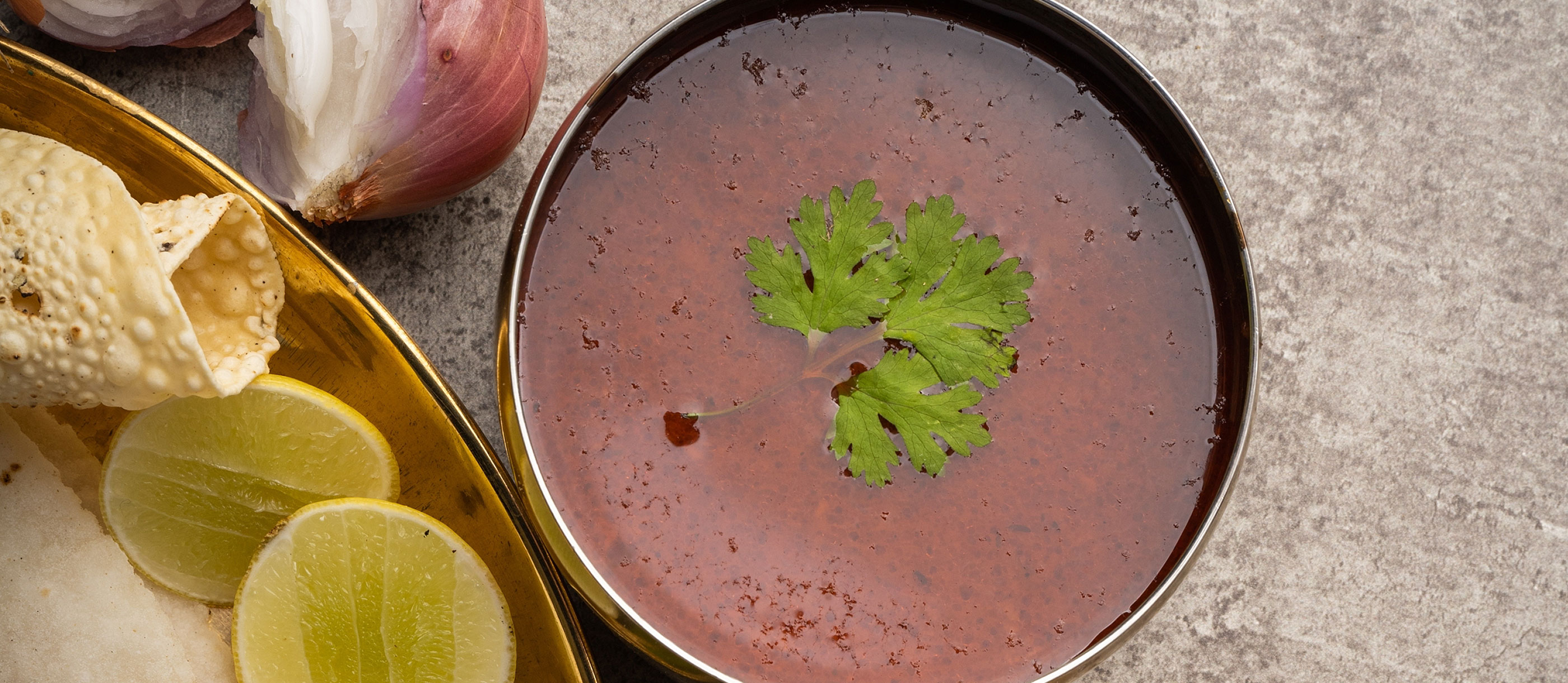
Tambda rassa is a hot red mutton gravy from Kolhapur in the western Indian state of Maharashtra. The Marathi word tambda refers to a copper-red or deep red color, while rassa means a thin gravy or broth. It is usually made from goat or mutton stock seasoned with red chilies, roasted coconut, onion, garlic, and a complex mixture of spices, producing a relatively thin but intensely flavored gravy rather than a dense curry. Tambda rassa is one of the defining meat preparations of Kolhapuri cuisine and is especially associated with pandhra rassa, a much paler and milder mutton broth. In a typical Kolhapuri meat meal, the two are served together with mutton fry or sukka, bhakri, chapati, or rice. There is no securely documented individual creator or precise date for tambda rassa. It developed within the meat cooking of Kolhapur and the surrounding region, where goat and mutton have long been important foods and where roasted spice mixtures, dried coconut, chilies, and onion-garlic masalas became defining elements of local cooking. By the twentieth century, the pairing of tambda and pandhra rassa was firmly established in Kolhapur’s restaurant culture and remains central to the city’s non-vegetarian thalis. Kolhapuri cooking is often reduced outside the region to extreme chili heat, but tambda rassa depends just as much on the handling of its masala. Red chili gives the gravy color and heat, while roasted coconut, onion, garlic, sesame, poppy seeds, coriander, cumin, black pepper, cloves, cinnamon, and cardamom provide depth. One important seasoning is kanda-lasun masala, an onion-garlic masala widely used in Maharashtrian cooking. Recipes vary between households and restaurants, but roasted coconut, onion-garlic seasoning, red chili, warming spices, and mutton stock are consistent elements. Preparation usually begins with bone-in goat or mutton, since the bones contribute flavor and body to the stock. The meat is commonly seasoned with turmeric, salt, and ginger-garlic paste and simmered until tender. Some cooks prepare the meat and stock together and then use part of the liquid for the rassa, while others make the gravy separately. This helps explain why tambda rassa is often served as a bowl of red gravy alongside a separate mutton preparation rather than as one curry containing large pieces of meat. The masala base is generally made by roasting or frying dried or fresh coconut, onion, sesame seeds, poppy seeds, black pepper, cloves, cinnamon, cardamom, coriander, and cumin, then grinding them into a paste. Onion, ginger, garlic, and sometimes tomato are cooked in oil, after which red chili powder, Kolhapuri masala or kanda-lasun masala, and the ground paste are added. Mutton stock is then poured in and the mixture is simmered until the flavors combine and oil begins to rise to the surface. The finished gravy should be strongly red to reddish-brown rather than simply tomato-colored. Most of the color comes from dried red chilies and chili powder. Byadgi or Kashmiri-type chilies may be used when a cook wants intense color without excessive heat, while stronger chilies increase pungency. Tomato appears in many modern recipes but should not dominate; tambda rassa is fundamentally a spiced mutton-stock preparation rather than a tomato curry. Roasted coconut is equally important. It gives the gravy body and helps bind the masala into the stock without making it creamy. This also creates the contrast with pandhra rassa, which is paler and milder and often relies more heavily on coconut milk. The red-and-white pairing is one of the most recognizable features of a Kolhapuri mutton meal. Goat meat remains the most characteristic protein, although chicken versions are now common. In Kolhapur, the rassa may be eaten almost like a spicy soup between mouthfuls of meat and bread, poured over rice, or used to moisten pieces of bhakri. Jowar bhakri, made from sorghum flour, works particularly well because its mild flavor and firm texture balance the oily, chili-rich gravy. Chapati and rice are also common accompaniments. A full Kolhapuri non-vegetarian thali may combine tambda rassa with pandhra rassa, mutton sukka or fry, bhakri, rice, raw onion, and lemon. Raw onion and lemon help cut through the fat and concentrated spices, while taak, or spiced buttermilk, can soften the chili heat. A cold lager also works well with the roasted spices and rich mutton.