02 / MAIN DISH INGREDIENTS
not yet extracted
01 / ABOUT THE DISH
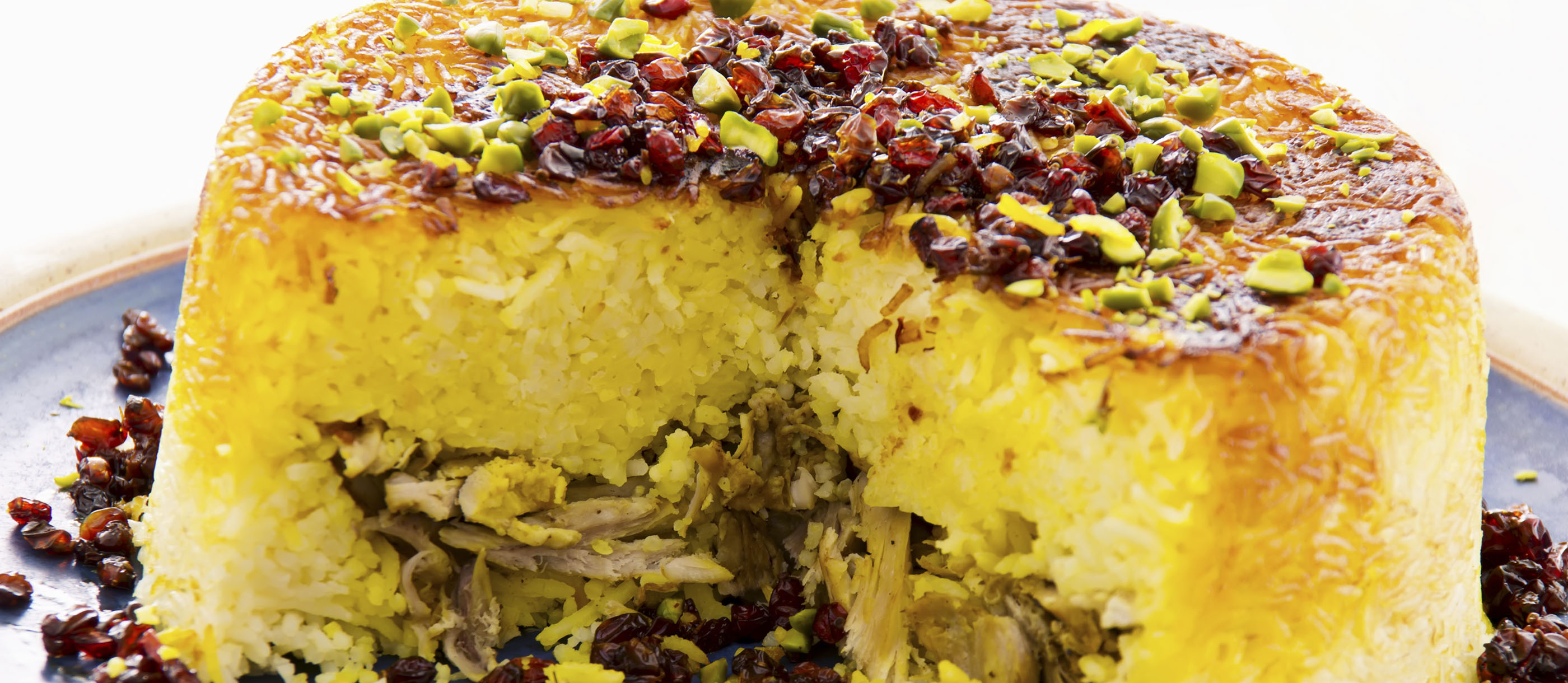
Tahchin combines fragrant rice with saffron, yogurt, eggs, and pieces of chicken or other fillings, baked together until it forms a golden crust. Its name means “arranged at the bottom,” referring to the way the rice and other ingredients are layered and then inverted onto a serving platter so that the crisp bottom becomes the top. Historically, Persian cuisine has emphasized rice dishes that showcase both texture and aroma, and tahchin is considered an example of this culinary approach. While the concept of cooking rice with yogurt and saffron has existed in Iranian cooking for centuries, tahchin evolved into a recognizable form during the Qajar era, when elaborate rice dishes were served in royal courts and gradually adapted for family kitchens. Its distinctive crust, called tahdig, is prized and often considered the most desirable part of the meal. While chicken is the most common filling, some regional variations use lamb, eggplant, or fish layered into the rice. In every version, the defining feature is the bright yellow hue created by saffron, which is dissolved in warm water and mixed into the rice before baking. The inclusion of yogurt and egg yolks gives the crust its tender yet cohesive texture, allowing it to hold its shape when turned out of the pan. Tahchin is served inverted onto a platter, revealing a uniform golden layer on top. It is often accompanied by barberries sautéed with butter and sugar, adding a sweet-tart contrast, and sometimes garnished with slivered pistachios or almonds. In Iran, it is enjoyed both as a centerpiece dish for special gatherings and as a comforting meal in everyday settings. Today, tahchin remains popular in Iranian homes, restaurants, and during festive occasions.
02 / MAIN DISH INGREDIENTS
not yet extracted
03 / RECIPE
There is no recipe in the saved data.
Record · 563