02 / MAIN DISH INGREDIENTS
- Beef
- Vinegar
- Red Wine
- Beer
- Onion
- Bay Leaves
01 / ABOUT THE DISH
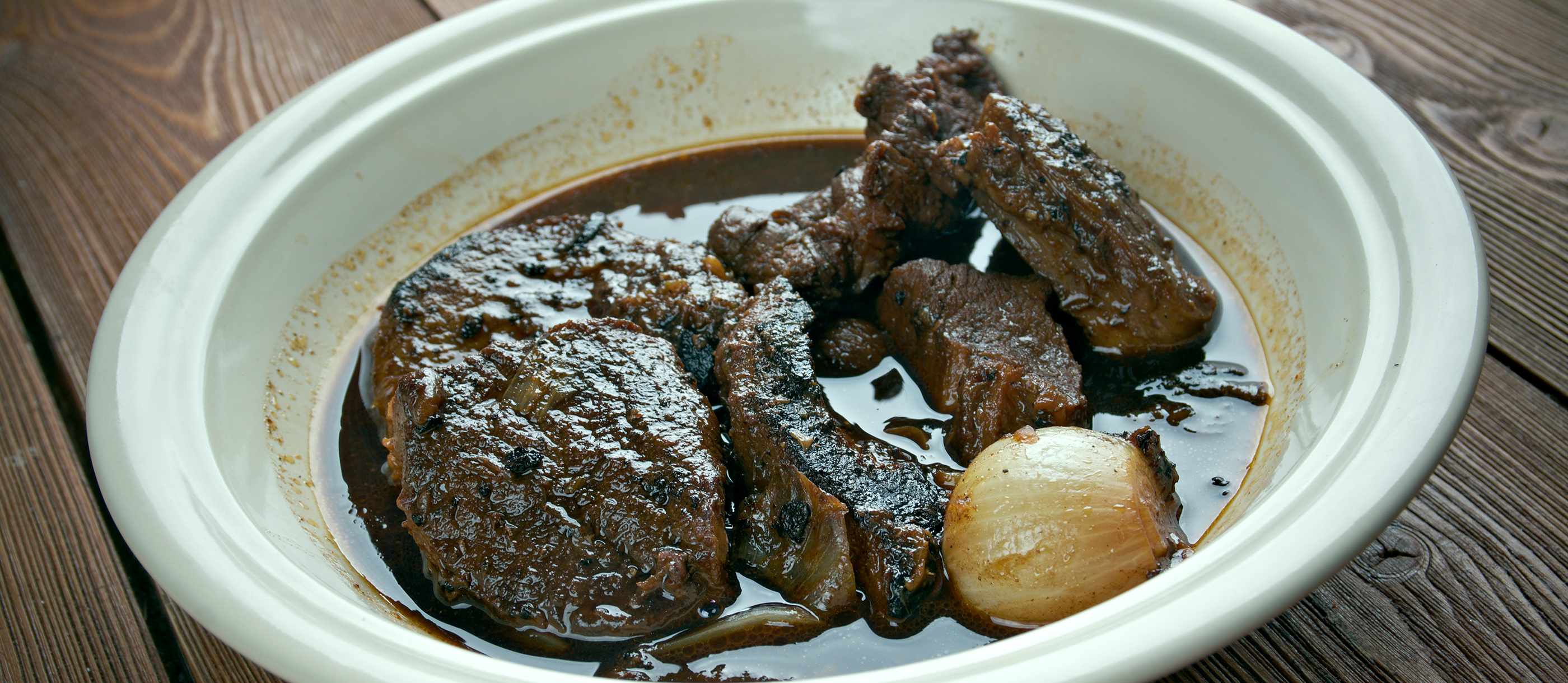
Sudderlapjes are slices of beef slowly braised until extremely tender, usually in a dark gravy flavored with butter, onions, bay leaves, cloves, pepper, and a small amount of vinegar. Cuts such as riblappen, sukadelappen, and runderlappen are especially suitable because their connective tissue softens during several hours of gentle cooking. The result is closely related to draadjesvlees, literally “thread meat,” named for beef tender enough to separate into strands. Slowly braised meat has a much longer history in the Low Countries, and acidic, spiced meat sauces were already familiar in medieval cooking. Pepper, cloves, and nutmeg were also known well before the establishment of the Dutch East India Company. What changed during the seventeenth century was their availability: VOC trade brought much larger quantities of Asian spices into Dutch ports and helped reduce their cost. This makes it reasonable to connect the seasoning of later Dutch braised beef with the country’s long history of spice use, but not to say that VOC shipments directly created sudderlapjes. Seventeenth-century Dutch cookbooks actually show a shift away from some of the extremely heavily spiced combinations of earlier centuries, although nutmeg, mace, pepper, and similar seasonings remained important. There is also no good reason to define the original meat specifically as coming from old dairy cows. Sudderlapjes are made from relatively tough beef cuts containing plenty of connective tissue, particularly cuts from the shoulder, ribs, and front of the animal. Sukadelap comes from the shoulder and contains a distinctive strip of connective tissue, while riblap is generally more marbled and becomes especially succulent after braising. The meat is usually left in fairly large slices rather than cut into the small cubes associated with many other stews. It is seasoned with salt and pepper and browned in butter or another cooking fat until the surface develops a good crust. Onions are commonly softened in the same pan, although the exact amount varies considerably between recipes. The browned meat is then returned, and enough warm liquid is added to allow it to braise without completely drowning it. Water or beef stock is the simplest braising liquid. A splash of vinegar is very common in older-style recipes, while red wine is another option. Bay leaves and whole cloves are characteristic seasonings, and nutmeg, mustard, juniper, or other spices may also appear depending on the household recipe. The vinegar is useful for flavor and provides the slight acidity characteristic of many versions, but it is not required to break down the collagen. The tenderness comes primarily from prolonged moist heat. During slow braising, the collagen-rich connective tissue gradually converts into gelatin, giving the meat its soft texture and adding body to the surrounding gravy. The covered pot is kept at a very gentle simmer for several hours. Three to four hours is common, although tougher pieces can take longer. The liquid should barely bubble rather than boil vigorously, since slow, steady heat produces a much softer result. The braising liquid can be changed considerably. Dark beer is used in some Dutch versions and becomes particularly common as one moves toward Limburg and the related Belgian tradition of beer-braised beef. It gives the gravy a malty sweetness and slight bitterness rather than simply a roasted flavor. Appelstroop, the dark concentrated apple syrup strongly associated with Limburg, can also be stirred into the gravy. It adds sweetness, acidity, and fruitiness and helps create a darker, more rounded sauce. It is a recognized variation but not an essential ingredient in every Dutch sudderlapjes recipe. Another popular way of thickening the gravy is to crumble in ontbijtkoek, a soft Dutch spiced cake. As it dissolves, its flour and sugars thicken the liquid while its spices add sweetness and warmth. This technique appears frequently in modern recipes for draadjesvlees and regional stews, but it should not be presented as something every Dutch household historically did. Mustard is another common addition. It can be spread directly onto the beef before browning or stirred into the liquid, contributing both acidity and a mild sharpness. Some versions combine mustard with appelstroop or ontbijtkoek to produce a distinctly sweet-and-sour gravy. The finished sudderlapjes should be tender enough to cut easily with a fork. In versions cooked to the point of draadjesvlees, the fibers separate into long strands, while other versions are removed slightly earlier so the individual slices remain intact. The braising liquid reduces into a dark, glossy gravy enriched by the butter, meat juices, onions, and gelatin released during cooking. Sudderlapjes are commonly served with boiled or mashed potatoes, which are well suited to the generous gravy. Rode kool met appeltjes, braised red cabbage with apple, is another classic accompaniment, providing sweetness and acidity alongside the rich beef. The gravy is spooned over the meat and potatoes rather than treated as a separate sauce. Other familiar accompaniments include cooked vegetables, apple compote, or pickled vegetables, but potatoes and red cabbage with apple form one of the most recognizable combinations.
02 / MAIN DISH INGREDIENTS
03 / RECIPE
There is no recipe in the saved data.
Record ·