02 / MAIN DISH INGREDIENTS
- Goose
- Apples
- Prunes
- Onion
- Sugar
- Port
- Black Pepper
- Salt
01 / ABOUT THE DISH
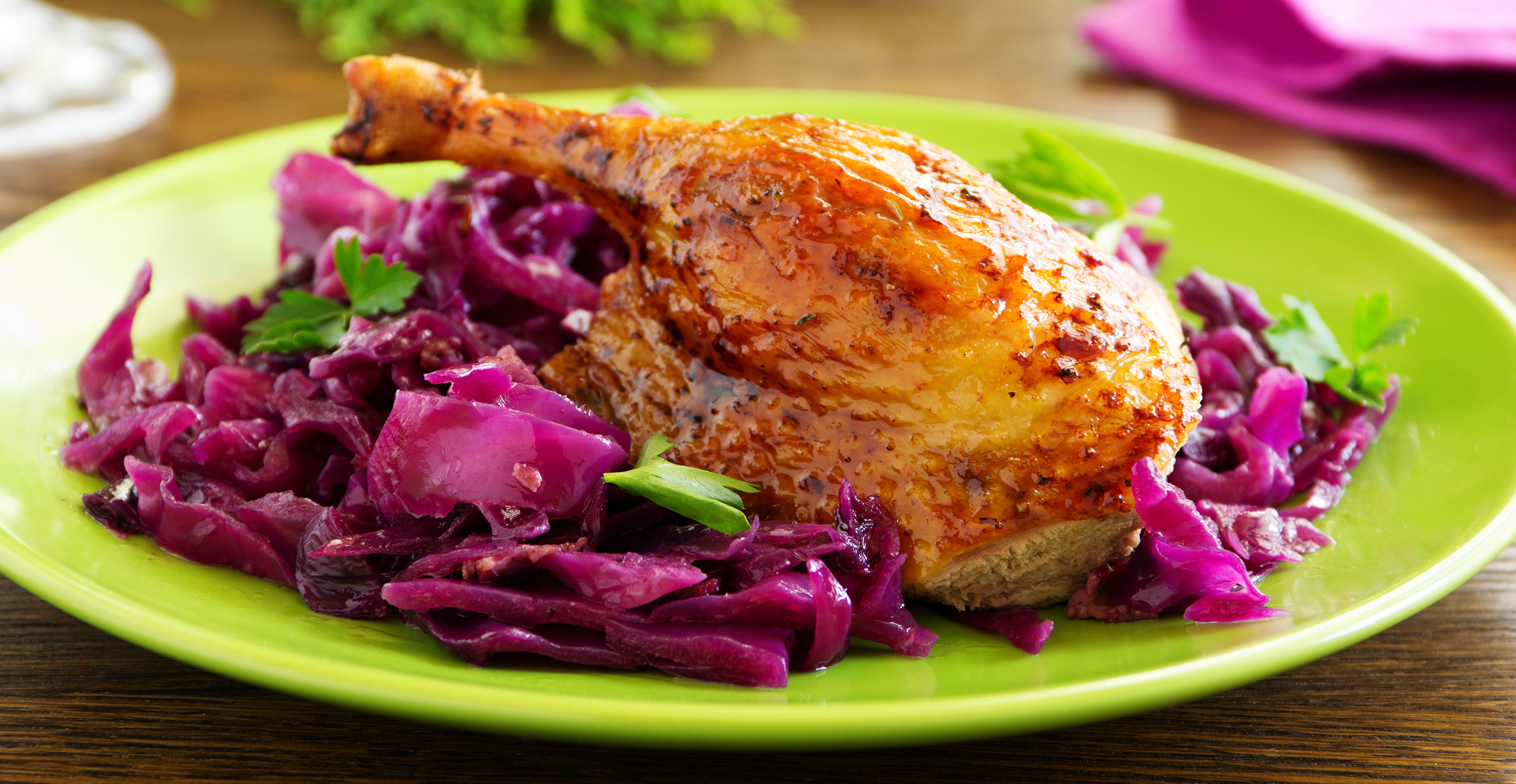
Stegt gås is Danish roast goose, usually filled with tart apples and prunes and roasted until the meat is tender and the skin is deeply browned and crisp. The rich bird is closely associated with Mortensaften, celebrated on November 10, and with the Danish Christmas table. A whole goose commonly weighs around four to six kilograms, although both smaller and larger birds are used. Goose contains considerably more fat beneath the skin than chicken or turkey, and much of this fat renders out during roasting. This leaves the meat rich and succulent while allowing the skin to become crisp. The bird is dried well and seasoned generously with salt both inside and out. The cavity is then filled with peeled apple pieces and pitted prunes. Tart apples work particularly well because their acidity balances the rich meat, while the prunes absorb some of the juices and fat released inside the bird and develop a soft, intensely sweet flavor. The cavity can be closed with poultry skewers, kitchen string, or a needle and thread. Closing it helps keep the fruit inside while still allowing the hot air and steam to circulate through the cavity. The goose is placed on a rack or directly in a roasting pan and cooked slowly at a moderate temperature. Water is often added to the pan beneath it, where it combines with the roasting juices and helps prevent the drippings from burning. As the goose roasts, a substantial amount of clear fat collects in the pan. This is periodically spooned or poured away so that the bird roasts rather than sits in its own fat. The rendered gåsefedt, or goose fat, can be strained and saved for frying potatoes, cooking cabbage, or spreading on bread. The roasting time depends on the size of the bird and the oven temperature, but a large goose generally needs several hours. The meat is ready when the legs move easily at the joints and the thickest parts have cooked through while remaining juicy. The skin can be made particularly crisp by keeping it dry and allowing enough of the underlying fat to render during roasting. Some methods increase the oven temperature near the end to deepen the color and crisp the surface, although a long roast can also produce crisp skin without an extreme final burst of heat. Once roasted, the goose rests before carving. This allows the juices to settle and makes the large bird easier to divide into breasts, legs, wings, and smaller serving pieces. The apple-and-prune filling is served with the meat rather than discarded. By the end of roasting, the apples have softened considerably, and the prunes are saturated with the savory juices from the goose, giving the plate an important sweet-and-sour element. A dark brun sovs is made from the roasting juices. The fat is separated from the concentrated meat juices, which are combined with stock or water and thickened with flour or a roux. Cream may be added for a rounder flavor. Danish kulør, a dark caramel coloring, is sometimes used to deepen the gravy's brown color, but it is not essential. One of the most recognizable accompaniments is brunede kartofler. Small boiled and peeled potatoes are coated in caramel made by melting sugar in a pan and adding butter. The potatoes are turned gently in the caramel until they develop a glossy brown coating. They are sweet rather than simply fried in butter and sugar. Plain boiled potatoes, or hvide kartofler, can also be served alongside the browned potatoes. The dark goose gravy is spooned generously over them and the sliced meat. Rødkål, warm braised red cabbage, provides the main acidic contrast. Finely shredded red cabbage is slowly cooked with vinegar and sugar until tender and sweet-sour. Apple, redcurrant jelly, spices, or fruit juice may also be used, depending on the recipe. The acidity is particularly useful alongside the fatty goose and sweet caramelized potatoes. Other accompaniments can include cooked apples filled with redcurrant jelly, additional prunes, or other sweet-and-sour preserves. The overall meal deliberately combines rich meat and gravy with sweet fruit, caramelized potatoes, and acidic cabbage. The most important seasonal association is Mortensaften on November 10, the evening before St. Martin’s Day. The date also coincided with the period when farm-raised geese had reached a suitable size for slaughter after grazing through the warmer months. Goose therefore already made practical sense as an autumn feast food. The meal became connected with the legend of Martin of Tours, a fourth-century bishop. According to the story, Martin did not want to become bishop and hid among a flock of geese. Their loud honking revealed him, and the legend later explained the annual eating of geese as punishment for betraying his hiding place. The story was first printed in Danish in 1616, although European celebrations of St. Martin with abundant food and new wine are much older, and written evidence connecting the feast specifically with goose appears by the sixteenth century. The custom also fitted the agricultural calendar. November marked the end of the natural rearing season for geese, making St. Martin’s Day a convenient time to slaughter birds that had spent the summer and autumn feeding and gaining weight. Goose was an expensive feast food and was therefore more accessible to larger and wealthier households than to every family. As Danish households became smaller and more urbanized, duck increasingly replaced goose for Mortensaften because a goose was often simply too large. Today, roast duck is far more common on November 10, although the goose remains the bird historically associated with the occasion. Goose also became part of the Danish Christmas meal. From around the middle of the nineteenth century, roast goose, duck, or pork increasingly replaced older Christmas foods such as dried cod. These roasts were served with the combination that still defines much of the Danish Christmas table: apples and prunes, gravy, potatoes, and red cabbage. Goose was therefore an important Christmas centerpiece, but it existed alongside duck and pork rather than universally replacing them. Chestnut stuffing belongs more strongly to other European roast-goose customs and is not one of the defining Danish fillings. Brining and seasonings such as mugwort can also be used, but neither is central to the Danish form. Apples and prunes remain the characteristic filling.
02 / MAIN DISH INGREDIENTS
03 / RECIPE
There is no recipe in the saved data.
Record · 3851