01 / IDENTITY
- Category
- Sweet Soup
- Country
- China
- Region
- Guangdong
ABOUT THE DISH
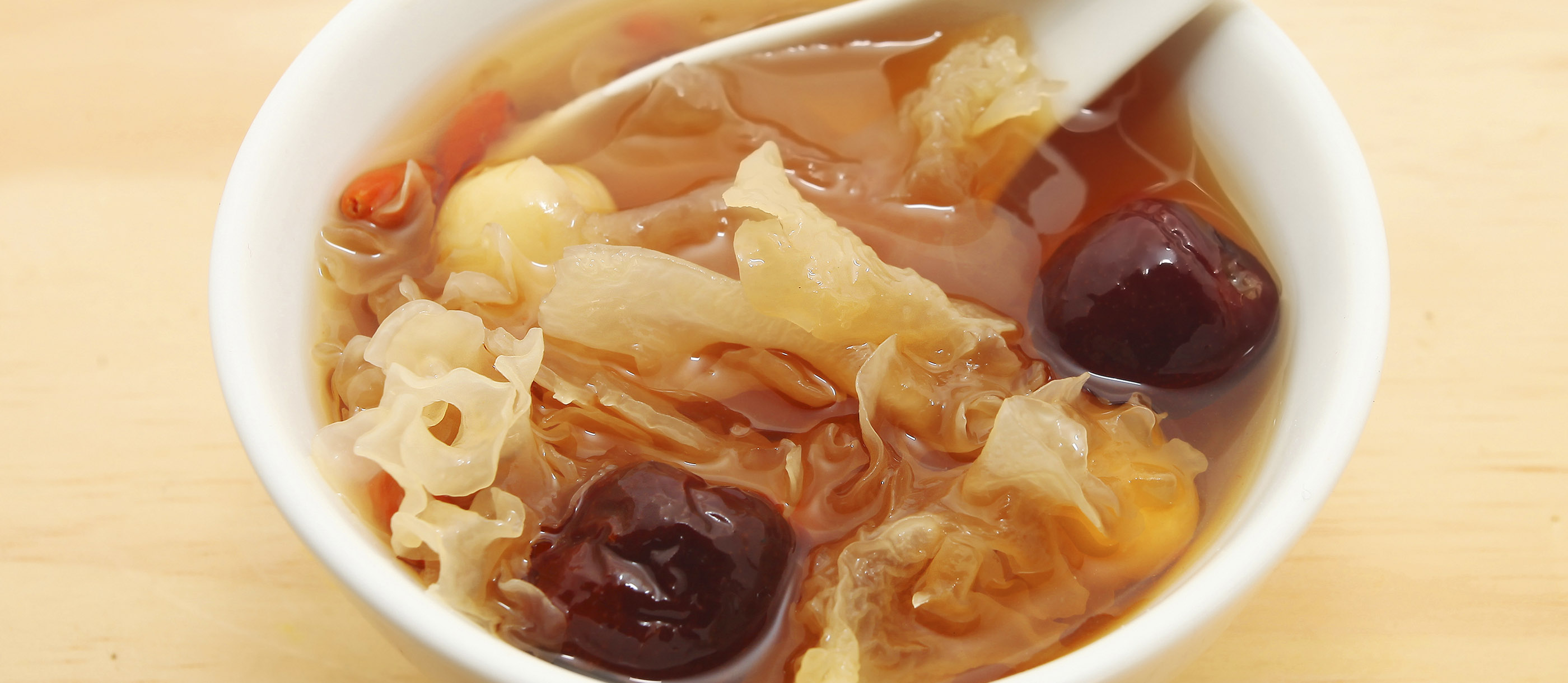
Yin er tang is a sweet dessert soup starring translucent, gelatinous snow fungus slowly simmered in a light syrup alongside dried red jujubes, lotus seeds, and rock sugar, often prepared for Chinese New Year and other festive occasions. The dessert relies entirely on the tremella mushroom, known commonly as silver ear fungus, which grows naturally on the bark of broadleaf trees. Historically, this highly prized ingredient was incredibly scarce and strictly reserved for imperial banquets and nobility as an affordable yet equally luxurious alternative to expensive edible bird's nests. Medical texts from ancient East Asian dynasties heavily documented their consumption, praising the gelatinous properties for supposedly lubricating the lungs and maintaining a glowing complexion. The recipe starts by soaking the dried, tightly clustered fungus exclusively in cold water for several hours until it fully expands into a soft, ruffled sponge. Hot water is strictly avoided during this initial rehydration phase, as it instantly turns the delicate frills into mush and loses their signature crunch. Once fully plumped, the hard, dark yellow root at the base is severed with shears and discarded, while the remaining pale frills are torn by hand into small, bite-sized pieces. These fragments are submerged in a large pot of cold water alongside halved dried jujubes, which naturally sweeten the broth, and handfuls of dried lotus seeds. The entire mixture comes to a rapid boil before dropping to a very low, steady simmer for roughly 45 minutes. This slow heat gradually coaxes out the natural collagens within the mushroom, thickening the surrounding liquid into a slick, clinging syrup while allowing the fungus itself to retain a crisp, snappy bite. In the final moments on the stove, handfuls of dried goji berries and large shards of yellow rock sugar are dropped directly into the pot, dissolving rapidly to finalize the flavor profile without turning the berries overly bitter. Certain households drop massive chunks of Asian pear or ripe papaya directly into the boiling pot to infuse the liquid with heavy fruit nectar, while others incorporate dried longans for a concentrated, musky sweetness. Another heavily textured iteration introduces soaked peach resin and snow lily bulbs, yielding a significantly thicker, almost pudding-like consistency. During the freezing winter months, yin er tang is ladled straight from the steaming pot into deep porcelain bowls, radiating intense warmth. Conversely, when summer arrives, the entire batch is frequently refrigerated overnight and consumed chilled, serving as a deeply refreshing, cooling agent after an intensely spicy meal. It operates flawlessly as a standalone afternoon snack or as the concluding sweet note following a massive, multi-course banquet.
03 / RECIPE
A recipe for this dish has not been added yet.