01 / IDENTITY
- Category
- Dumplings
- Country
- China
- Region
- not specified
ABOUT THE DISH
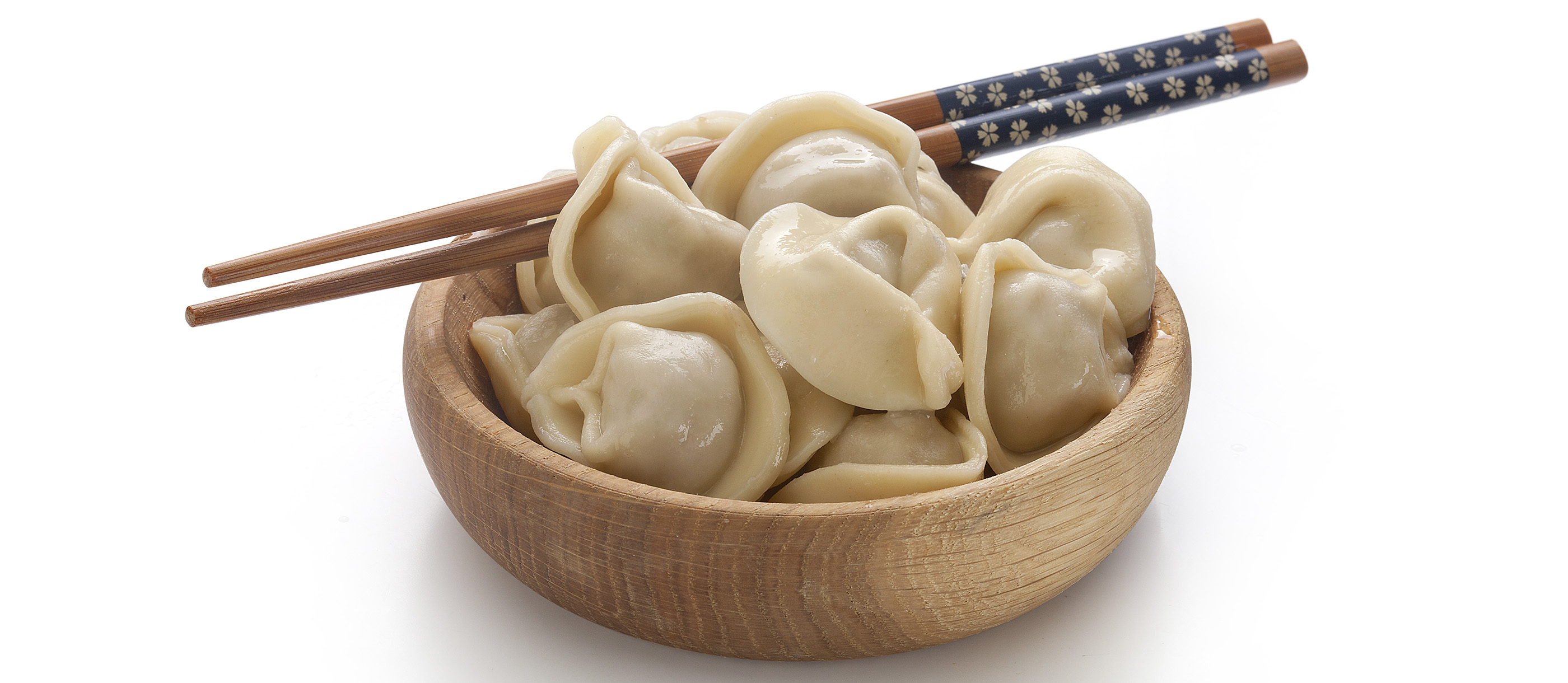
Shuǐjiǎo are boiled dumplings in which an unleavened wheat dough wrapper is folded around a savory filling of minced meat and finely chopped vegetables. The origins date back to the Eastern Han Dynasty and are attributed to the physician Zhang Zhongjing, who formulated it as a medicinal remedy to treat frostbitten ears during severe winters, using warming herbs and mutton wrapped in dough scraps. Over the centuries, this medicinal application evolved into a widespread culinary staple closely associated with the Lunar New Year, as its crescent shape resembles ancient metal ingots, symbolizing prosperity and wealth. The plain wheat flour and water are kneaded into a smooth, elastic dough, which rests briefly before being rolled into long cylinders. These cylinders are cut into small, uniform nubs and flattened with a small wooden rolling pin into thin, circular wrappers, ideally leaving the center slightly thicker than the edges to hold the heavy filling without tearing. A spoonful of the minced mixture—usually seasoned heavily with soy sauce, toasted sesame oil, minced ginger, and white pepper—is placed in the center. The dough is folded in half, and the edges are firmly pinched together to seal the contents, often incorporating multiple tight pleats along the rim for structural integrity. A large pot of water is brought to a rolling boil, and the raw dumplings are dropped inside. As they boil, cold water is added directly to the pot up to three times to lower the temperature slightly; this technique ensures the raw meat inside finishes cooking before the delicate exterior disintegrates into starch. Once they float continuously at the surface and the skins turn slightly translucent, they are scooped out with a slotted spoon. While the base assembly remains uniform, the internal components vary drastically by geographic region and personal preference. Northern areas heavily favor napa cabbage and ground pork, while southern regions often incorporate whole shrimp, garlic chives, or shiitake mushrooms. Vegetarian versions rely entirely on pressed tofu, glass noodles, and wood ear mushrooms to provide bulk and texture. Regardless of the interior, they hit the table steaming hot on large communal plates. They are immediately consumed after being dunked into small, individual bowls containing a sharp, customizable mixture of black rice vinegar, light soy sauce, raw crushed garlic, and roasted chili oil.
03 / RECIPE
A recipe was found and is awaiting download.