01 / IDENTITY
- Category
- Pork Dish
- Country
- Germany
- Region
- Palatinate
ABOUT THE DISH
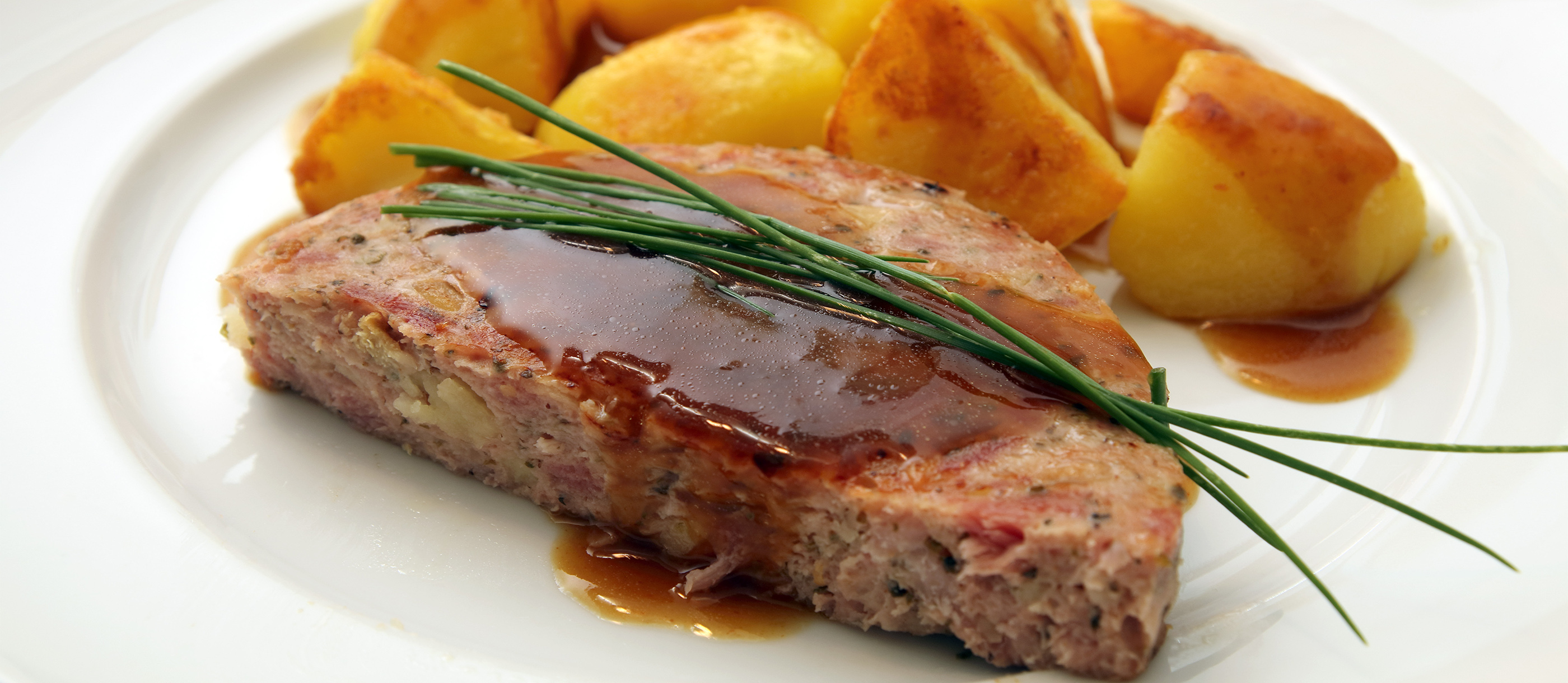
Saumagen is a large, intact pig’s stomach, densely packed with pork, diced potatoes, and sharp spices. The stomach is not merely a casing but an essential structural part of the meal. Unlike thin artificial casings or standard intestines, it is a thick, resilient, muscular organ that can hold a substantial amount of chopped meat and starch. During the final cooking stages, its outer wall forms a dense, crisp crust around the softer filling. Because of the organ’s size and toughness, the preparation requires considerable manual labor, from cleaning and processing the stomach to filling and securely sealing it. The stuffing depends on precise dicing and a broad mixture of aromatics, partly to balance the strong offal notes of the raw casing. The base is built from equal ratios of lean pork and firm, waxy potatoes, both chopped into small, even cubes. Some recipes also add minced beef to deepen the savoriness. The main seasoning blend is assertive, with generous amounts of white pepper, freshly grated nutmeg, dried marjoram, and sharply flavored chopped onions. In addition to the typical seasonings, many versions also add a more complex layer of aromatics, including whole cloves, crushed coriander seeds, fresh thyme, minced garlic, dried bay leaves, ground cardamom, sweet basil, earthy caraway seeds, sharp allspice, and flat-leaf parsley. Once the raw ingredients are fully mixed, the stuffing is packed tightly into the cleaned stomach cavity. Both open ends are tied firmly with heavy butcher’s twine to prevent leakage. Cooking the stuffed stomach requires strict temperature control. It is lowered into a wide vat of hot water kept just below the boiling point. A rolling boil must be avoided, because excessive turbulence and heat can rupture the muscular wall and spill the meat-and-potato filling into the cooking water. After a long period of poaching, the stuffed stomach is cooled completely. It is then placed on a heavy wooden block and sliced crosswise into thick slabs, usually measuring between half an inch and one inch. These large circular slices are fried in an open pan coated with rendered fat until the exposed potatoes turn dark golden brown and the outer ring of stomach tissue blisters into a hard, brittle shell. The history of saumagen is closely tied to the Palatinate. Two main theories explain its origins. One documented theory connects it to 18th-century agricultural workers who developed the stuffed stomach as a practical way to use slaughtering leftovers, stretching scraps of meat and fat with cheap potato starch. A second documented theory holds that it served as the centerpiece of the local Schlachtfest, the ceremonial autumn pig slaughter festival marking the end of the grape harvest and the beginning of winter. During the early 20th century, Luise Wilhelmine Henninger helped bring the preparation back from obscurity. She ran Weinhaus Henninger in the municipality of Kallstadt from 1871 to 1951 and refined the ingredient ratios, elevating saumagen to a celebrated regional specialty. Her success directly prompted a nearby Riesling vineyard in Kallstadt to adopt the permanent name “Saumagen Kallstadt.” Saumagen gained a much wider international profile in the late 20th century through Helmut Kohl, who served as Chancellor from 1982 to 1998 and had a strong attachment to this specialty from his native Palatinate. He regularly placed saumagen on state dinner menus, serving thick slices of stuffed stomach to visiting heads of state, including Margaret Thatcher, Mikhail Gorbachev, Ronald Reagan, and Bill Clinton. Although domestic critics dismissed the menu choice as intensely provincial, local butchers saw a major rise in sales during and immediately after these state visits. Across the Atlantic, immigrant settlers from the Palatinate carried the concept of saumagen into Pennsylvania Dutch communities in the United States. There, the dish is known as seimaage, hogmal, stuffed hog maw, or “Dutch goose.” Unlike the poached version from the Palatinate, this adaptation skips the water bath entirely. The raw stuffed stomach is placed directly into a hot oven and baked for several hours. It historically served as the main course for Thanksgiving harvest meals, taking the place of roasted turkey. Modern culinary competitions, especially the Internationale Pfälzer Saumagen-Wettbewerb held in Landau, have pushed the filling in more unconventional directions, including versions made with chopped deer meat or freshwater fish. In Schifferstadt, the Schlotte Carnival society has also awarded a literal Order of the Saumagen every year since 1992. At the table, the sizzling pan-fried slices are served straight from the skillet on a wide ceramic plate. A large, steaming mound of sharp fermented sauerkraut and a heavy scoop of smooth mashed potatoes sit beside the meat. In the eastern wine-growing districts of the Palatinate, the rich pork and starches are usually paired with a tall glass of completely dry white wine. Farther west, toward the dense Palatinate forest, large mugs of cold locally brewed beer replace the wine.
03 / RECIPE
A recipe for this dish has not been added yet.