02 / MAIN DISH INGREDIENTS
- Wheat Berries
- Wheat Flour
01 / ABOUT THE DISH
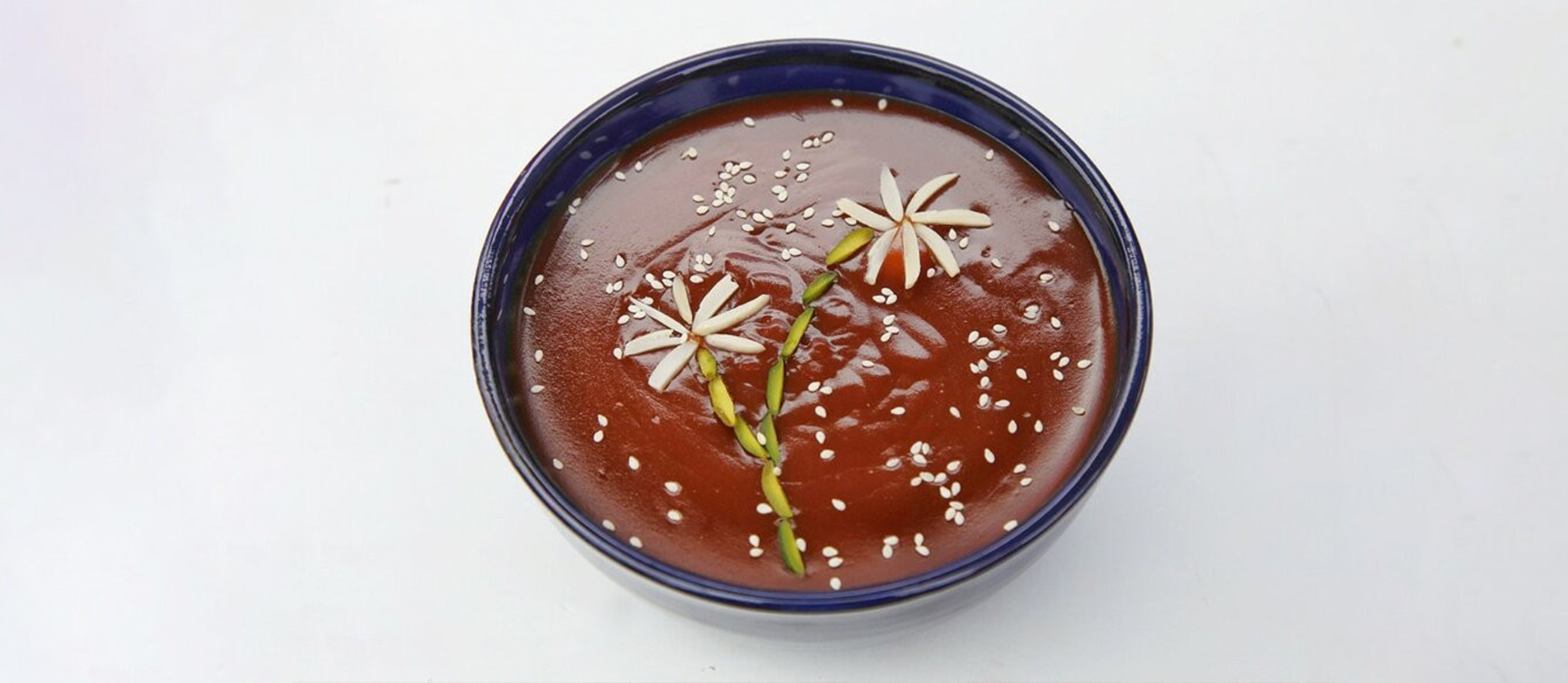
Samanu is a sweet dessert made from wheat germ, akin to pudding, commonly prepared in Iran, Afghanistan, and Central Asian countries, especially during Nowruz (Persian New Year). It symbolizes abundance, sweetness, and prosperity and is often shared among family and friends. The dish is made by sprouting wheat germ, grinding it, and cooking it slowly with water and wheat flour. The natural sugars from the sprouted wheat give samanu its sweet taste, requiring no additional sugar. It has a thick, pudding-like consistency and a rich, caramel-like flavor. The cooking process can take up to 24 hours and requires continuous stirring. Traditionally, women gather to prepare samanu together, singing songs and making wishes for good fortune. As a Nowruz tradition, samanu is one of the seven symbolic items on the Haft-Seen table, representing patience and strength. In countries like Iran, Tajikistan, and Uzbekistan, making samanu a group activity reinforces bonds of friendship and family. Some believe that the slow cooking process carries blessings and positive energy. It is widely enjoyed in Iran, Afghanistan, Tajikistan, Uzbekistan, Turkmenistan, and Kyrgyzstan, where it is often prepared in large communal gatherings before Nowruz. More than just a dish, samanu is a symbol of renewal, perseverance, and community spirit, deeply rooted in Persian and Central Asian traditions.
02 / MAIN DISH INGREDIENTS
03 / RECIPE
There is no recipe in the saved data.
Record · 11929