01 / IDENTITY
- Category
- Noodle Soup
- Country
- Vietnam
- Region
- not specified
ABOUT THE DISH
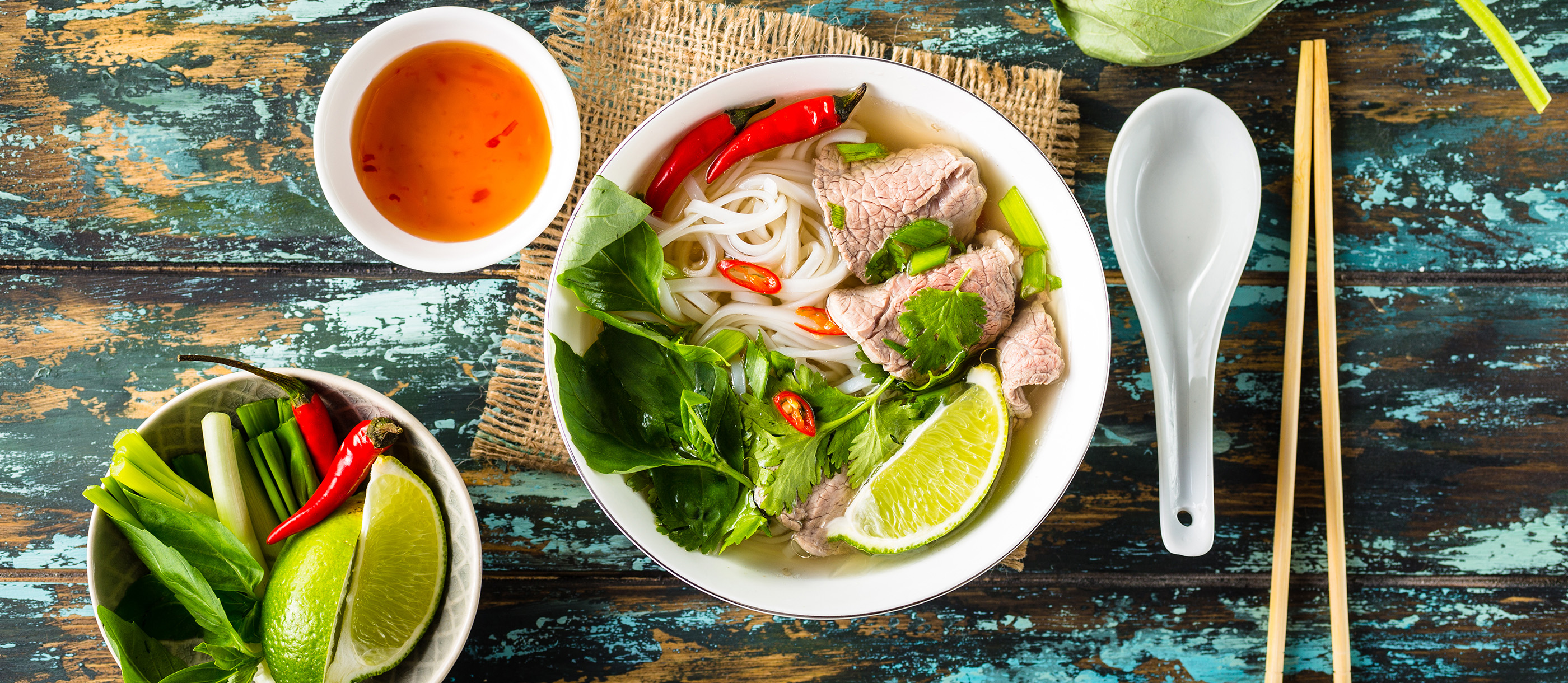
Pho is a noodle soup consisting of a clear, long-simmered bone broth, flat rice noodles, various herbs, and thinly sliced meat. The origins of this soup trace back to the early twentieth century in the Nam Dinh province and the city of Hanoi. Historical records indicate that the soup emerged during the French colonial period, blending local ingredients with foreign culinary techniques. French settlers popularized the consumption of beef, a meat previously used primarily for agricultural labor in the region. The availability of beef bones and scraps intersected with the culinary practices of Chinese immigrants who sold noodle soups from mobile street carts. The name itself likely derives from the French beef stew pot au feu, because both soups use the technique of charring onions and ginger to sweeten the broth, or from the Chinese word fen, which refers to flat rice noodles. A bowl of this soup relies entirely on the quality of its liquid base. Building this broth requires simmering beef knuckles, marrow bones, and oxtail for three to twelve hours. The slow-boiling process extracts collagen and marrow from the bones, thickening the liquid and creating a deep, savory foundation. Charred onions and charred ginger go directly into the simmering pot alongside a specific blend of toasted spices. Star anise, cinnamon sticks, black cardamom pods, cloves, coriander seeds, and fennel seeds infuse the liquid with a distinct aroma. Skimming the surface of the pot removes impurities and fat. This step keeps the final liquid translucent and clean. Flat rice noodles, known locally as banh pho, sit at the bottom of the serving bowl. Thin slices of raw beef, such as eye of round, flank, or fatty brisket, rest on top of these noodles. Pouring the boiling, spiced broth over the bowl instantly cooks the raw meat. Fresh herbs and aromatics go on top of the liquid to provide a sharp textural and flavor contrast to the rich stock. Regional variations dictate the exact flavor profile and presentation of the soup. The northern version, Pho Bac, features a savory, clear broth paired with wider noodles and minimal garnishes. People eating Pho Bac add only a squeeze of lime, a splash of vinegar, or a few slices of fresh chili to the bowl to maintain the pure flavor of the beef stock. The southern version, Pho Nam, incorporates a sweeter, bolder broth seasoned with more spices. A bowl of Pho Nam arrives with a large plate of fresh garnishes like Thai basil, mint, saw leaf coriander, crunchy bean sprouts, and lime wedges. People eating the southern style often mix dark, sweet hoisin sauce and salty fish sauce directly into the liquid. The 1954 partition of the region caused a massive migration of northern residents to the south. These migrants brought the soup with them and developed the sweeter, herb-heavy southern adaptation. The end of the regional conflict in 1975 sparked another wave of migration. This movement carried both soup styles across the globe. Today, street vendors and restaurants sell hot bowls from early morning until late at night, making it an everyday staple.
03 / RECIPE
A recipe for this dish has not been added yet.