01 / IDENTITY
- Category
- Stir-fry
- Country
- Philippines
- Region
- not specified
ABOUT THE DISH
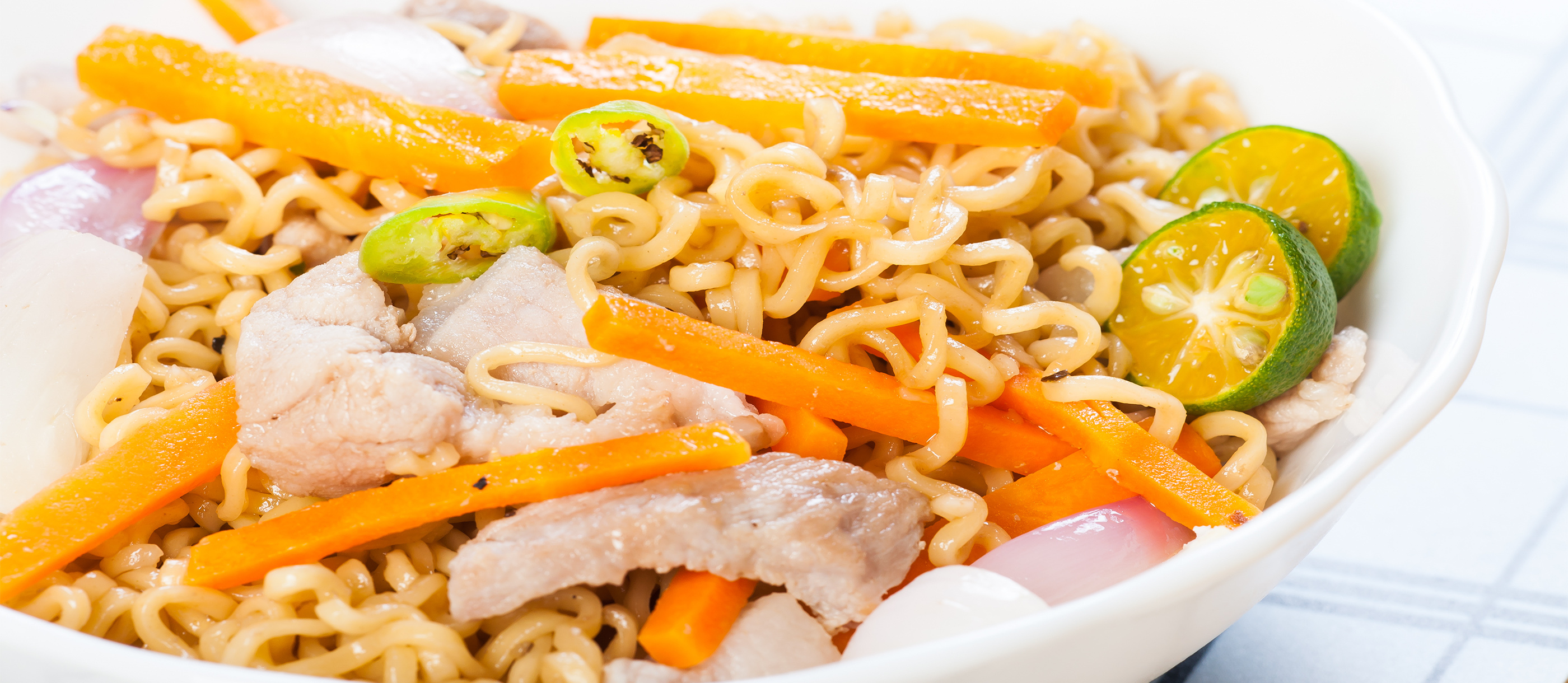
Pancit canton is a savory stir-fried noodle dish consisting of thick, dried egg noodles tossed in a rich soy-and-oyster sauce broth with shredded vegetables, pork, and seafood. Hokkien traders from Fujian province introduced foundational frying and boiling methods to the Philippine archipelago during the Spanish colonial period, with practices accelerating throughout the 17th and 18th centuries as maritime trade expanded. The word "pancit" stems directly from the Hokkien phrase "pian e sit," which translates strictly to "convenient food." The identifier "canton" refers directly to the specific type of extruded, dried egg noodle used in the wok, mirroring the exact wheat-and-egg dough formulas prominent in Guangdong province. Pancit canton requires rendering fat from diced pork belly before tossing in minced garlic and chopped white onions. Once the aromatics soften, peeled shrimp, sliced chicken thigh, and thin slices of pork liver are added to the hot oil and fried until the proteins are completely browned. A heavy liquid base of chicken stock, dark soy sauce, thick oyster sauce, and a small dash of sesame oil floods the pan, coming to a rapid boil. The dry, brittle blocks of yellow egg noodles drop directly into the bubbling liquid. They remain in the wok without boiling them first in separate water, actively absorbing the seasoned broth as it reduces into a sticky, glossy glaze that coats every single strand. In the final minutes, julienned carrots, crisp snow peas, small florets of cauliflower, and chopped green cabbage fold into the softening noodles, ensuring the vegetables retain a firm, raw crunch. Adjusting the internal ingredients drastically shifts the flavor profile. A strictly seafood-focused adaptation completely omits the pork belly and liver, relying on massive quantities of squid rings, peeled mussels, and fermented fish paste to build a pungent oceanic brine. Another prominent modification introduces sliced Chinese sausage, known as lap cheong, and peeled, boiled quail eggs to increase the overall caloric density and inject distinct bursts of sweet, cured meat fat into the salty soy broth. Certain coastal municipalities intentionally scatter heavily toasted garlic bits, fresh chopped scallions, or crushed pork cracklings directly on top of the wet noodles just before eating to ensure a sharp, brittle textural contrast against the soft wheat strands. The massive pile of hot, glossy noodles moves straight from the cast-iron wok to a wide ceramic platter. Freshly halved calamansi, a sharply acidic local citrus, always surrounds the outer rim of the plate. Squeezing the sour juice directly over the savory egg noodles instantly cuts through the heavy soy and animal fats. It routinely anchors massive birthday celebrations to symbolize a long life, but also serves strictly as a daily mid-afternoon snack, frequently sandwiched between two thick slices of soft white bread to form a dense, carbohydrate-heavy meal.
03 / RECIPE
A recipe for this dish has not been added yet.