02 / MAIN DISH INGREDIENTS
- Wheat Flour
- Sourdough Starter
- Yeast
- Salt
01 / ABOUT THE DISH
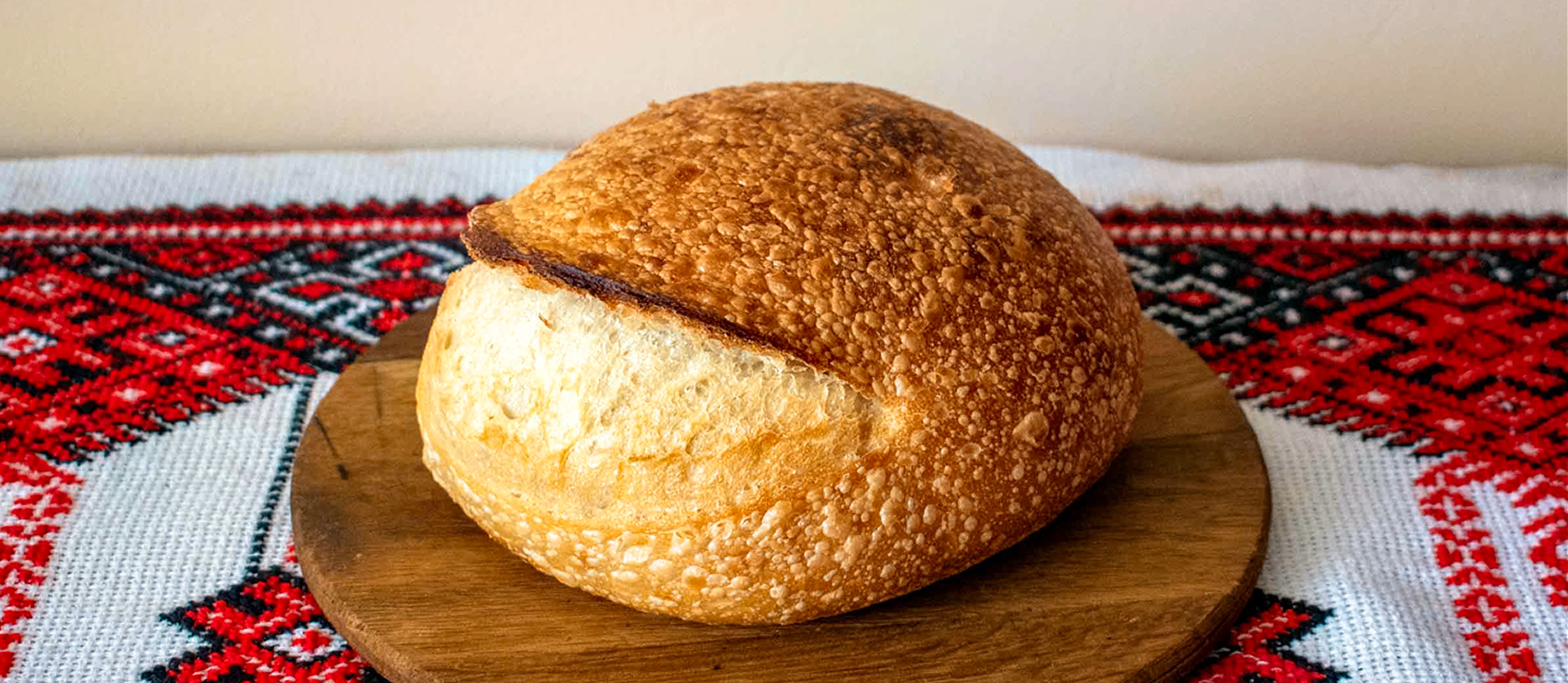
Palyanytsia is a dense, round wheat bread loaf recognized by a prominent semi-circular slash across its upper surface that bakes into a raised, crispy ridge. The linguistic roots of the term stem from the Ukrainian verb "palyty," meaning "to burn" or "to smoke," and directly reference the hardened, toasted exterior produced by the intense heat of the masonry stoves where it was initially developed. Rural agricultural communities relied on this bread as a primary dietary staple, using locally milled wheat rather than rye, which was common in neighboring northern regions. To produce the loaf, high-protein wheat flour is mixed with water, salt, and a leavening agent, which can be either a fermented starter or commercial yeast. The dough undergoes vigorous kneading to establish a strong gluten network before being shaped into a flattened sphere. The defining structural element occurs just before baking, when a shallow, horizontal cut is executed across the top third of the dough mass. During the high-temperature bake, the dough beneath this cut expands rapidly and pushes upward, generating a distinctive overhang of crust. Also, due to this phonetic complexity, the word palianytsia serves as a linguistic shibboleth, reliably distinguishing native speakers from non-native speakers who consistently mispronounce the final syllable. Palyanytsia primarily serves as a sturdy vessel for absorbing rich broths, making it a standard pairing for beet-based soups like borsch. Slices of this bread are also often topped with cured pork fat called salo, raw garlic cloves, and various pickled vegetables.
02 / MAIN DISH INGREDIENTS
03 / RECIPE
There is no recipe in the saved data.
Record · 12771