02 / MAIN DISH INGREDIENTS
- 00 Flour
- Olive Oil
- Salt
01 / ABOUT THE DISH
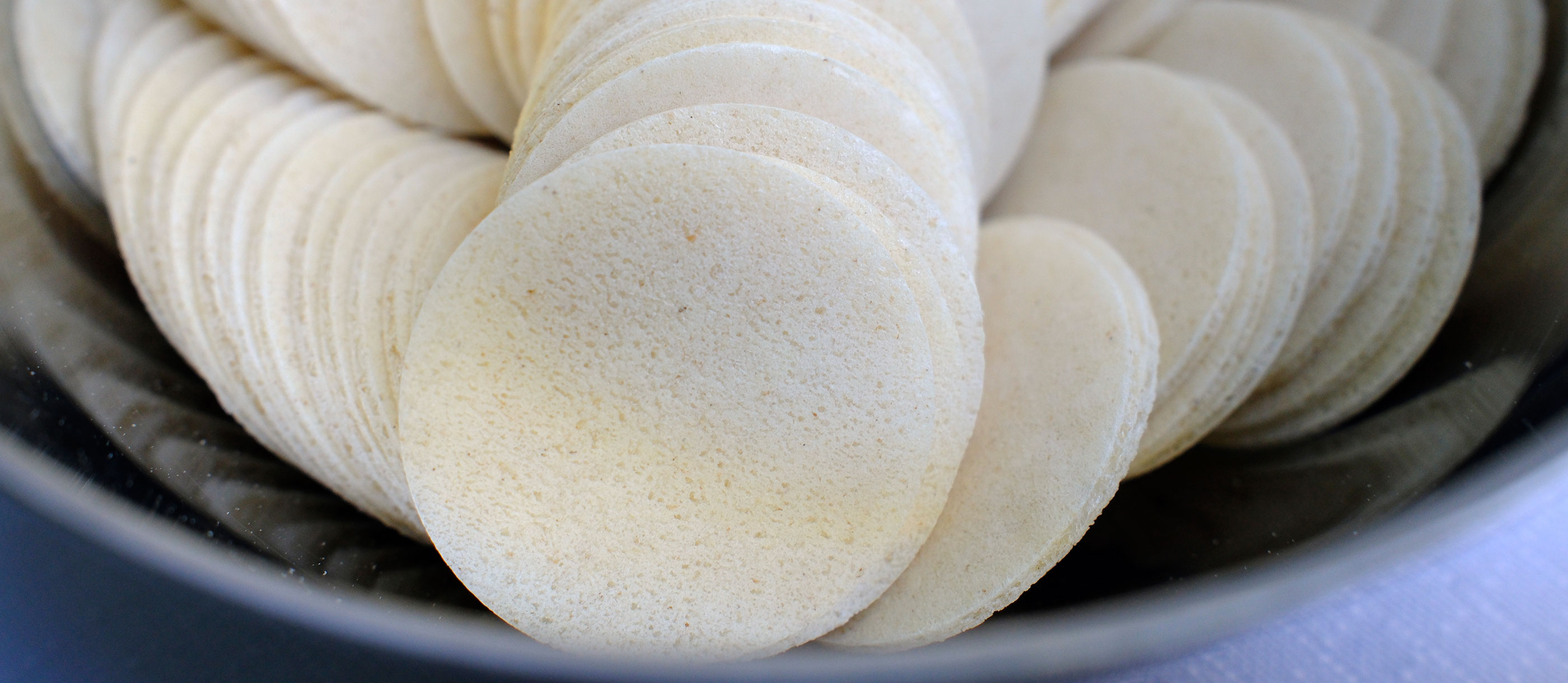
Ostie are thin, unleavened wafers composed of wheat flour and water, produced throughout Italy with historical concentrations in Lombardy and Piedmont. They are physically defined by a paper-thin, brittle texture and a neutral flavor, serving as a structural barrier for high-sugar confections. The item emerged from ecclesiastical baking practices for the Eucharist, with standardized production involving heated iron plates appearing by the 12th century. Confectioners later integrated these wafers into the production of honey-based sweets to prevent the sticky masses from adhering to surfaces or hands. Preparation involves a liquid batter poured onto specialized iron presses engraved with geometric or symbolic patterns. The batter is baked briefly until the moisture evaporates, creating a crisp sheet that is then stamped into circular or rectangular shapes. A unique technical requirement for confectionery-grade ostie is a specific degree of flexibility, allowing the wafer to be pressed onto hot, expanding nougat paste without fracturing. A unique application exists in the ostie ripene of Agnone, where the wafers are used as the primary casing for a dense honey-and-nut filling. Ostie are primarily eaten as a structural component of desserts like torrone and panforte.
02 / MAIN DISH INGREDIENTS
03 / RECIPE
There is no recipe in the saved data.
Record · 12766