02 / MAIN DISH INGREDIENTS
not yet extracted
01 / ABOUT THE DISH
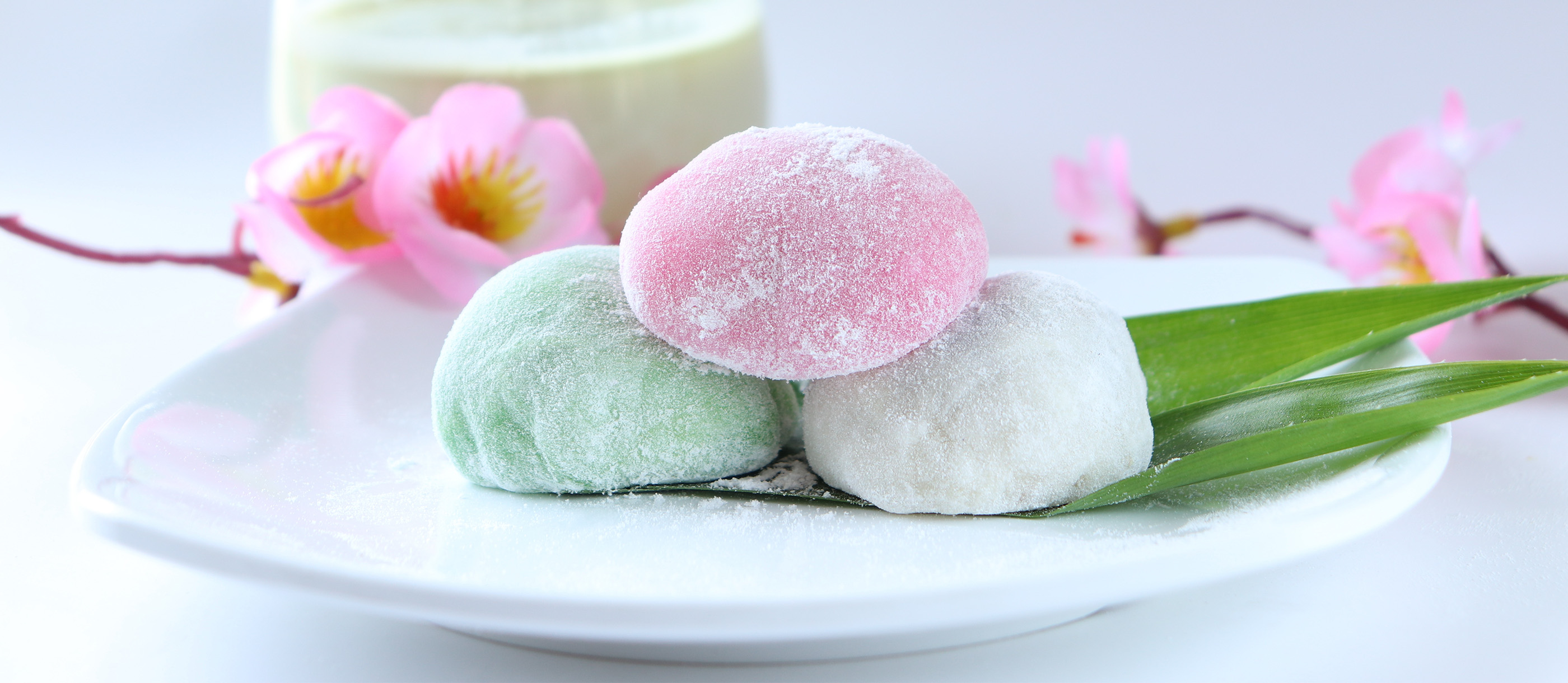
Mochi, the tiny cakes made out of glutinous rice, are an important part of Japanese cuisine and culture. The preparation of mochi starts with a time-consuming process of pounding boiled or steamed rice, usually the glutinous mochigome variety until it forms into a thick and homogenous paste. Later it is rolled and shaped into small circular forms. Although its origins might be in China, mochi has been associated with Japan for centuries. It initially appeared during the Yayoi period, when it was only enjoyed by the aristocracy, up until the Heian period, when it became a food that was commonly prepared and served during religious festivities, as people believed it brings fortune and health. Mochi can be incorporated in savory dishes, usually soups and snacks, but most commonly it is made into a confectionery item. In its dessert form, mochi is usually dressed up with food coloring, creating a myriad of delightful color combinations. The most common confectionery is referred to as daifuku - round cakes filled with different ingredients such as the traditional red bean paste, strawberries, or ice cream. Due to its chewy texture, it is important to be extra careful and attentive while eating mochi and to take tiny bites of this glutinous treat.
02 / MAIN DISH INGREDIENTS
not yet extracted
03 / RECIPE
There is no recipe in the saved data.
Record · 1277