01 / IDENTITY
- Category
- Meat Dish
- Country
- Mexico
- Region
- not specified
ABOUT THE DISH
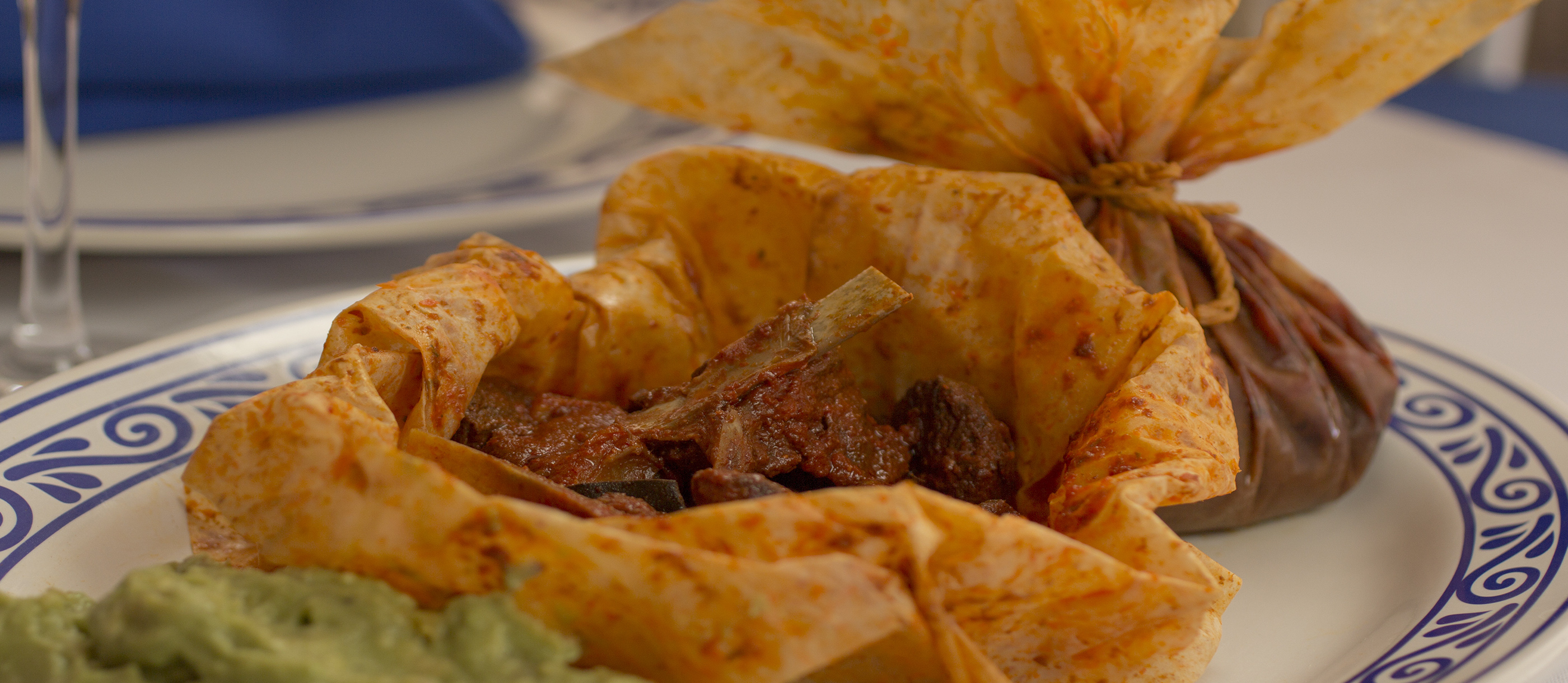
A complex, deep-red adobo paste provides the flavor for the meat. Creating the marinade starts with a variety of dried chilies, most commonly guajillo, ancho, and pasilla. The stems and seeds are removed, and the brittle pods are briefly toasted on a hot cast-iron griddle until fragrant and releasing their essential oils. Once toasted, the chilies are submerged in boiling water to soften. These rehydrated pods go into a blender alongside raw garlic cloves, white onion, cumin seeds, whole cloves, allspice berries, dried oregano, and bay leaves. A generous splash of white vinegar or bitter orange juice is added to the mix, resulting in a thick, vibrant paste that carries an earthy, smoky heat. The acidity of vinegar or citrus serves a vital dual purpose: it flavors the sauce while breaking down the tough muscle fibers in the raw meat. Lamb and mutton remain the most highly prized choices for this meal, offering a rich, gamey flavor that pairs perfectly with the strong, aggressive spices. However, rabbit, chicken thighs, and fatty chunks of pork shoulder function as incredibly common and popular alternatives. The meat is cut into large, uniform chunks—often with the bone left in to enrich the broth—and completely coated in the red adobo. The marinated meat rests in a cold environment for several hours or overnight to allow the spices to penetrate deeply. When it is time to assemble the pouches, a soaked, pliable sheet of maguey skin is laid flat on a work surface. A hefty portion of the coated meat is placed directly in the center. Small, cubed white potatoes and diced nopales—the firm, green pads of the prickly pear cactus—are frequently added to the mound to absorb rendered animal fat during cooking. For an extra layer of herbal depth, a fresh avocado leaf or a sprig of pungent epazote is tucked inside the meat. The edges of the transparent sheet are gathered at the top and tied tightly shut with agave fiber or cotton string, sealing the raw contents into a watertight sack. The sealed bundles were originally buried in large underground earth ovens lined with intensely hot volcanic stones, then covered with broad agave leaves and packed with dirt. Today, large, multi-tiered metal steamer pots placed over an open gas flame are the standard tools. The pouches rest on a perforated metal rack suspended above a pool of boiling water. As steam engulfs the bundles for several hours, the tough connective tissue within the meat breaks down. The flesh becomes incredibly soft, and a rich, highly concentrated broth pools at the bottom of the sealed bag. The maguey skin acts like a miniature pressure cooker, preventing any moisture from escaping while infusing the meat with a faint, earthy aroma entirely unique to the agave plant. Different regions have adapted the core ingredients to fit their local environments and seasonal availability. Coastal towns frequently swap heavy meats for thick white fish fillets and fresh shrimp, which drastically reduce the required steaming time and yield a much lighter broth. Another prominent variation changes the meal's visual identity by abandoning the red dried chilies in favor of a bright green adobo made from freshly roasted tomatillos, fiery serrano peppers, and generous handfuls of fresh cilantro. The environmental impact of harvesting the maguey skin has reshaped how the meal is made in modern kitchens. Stripping the protective cuticle from wild maguey plants frequently exposes the succulent to disease, causing the entire plant to rot and die. To combat this agricultural damage, strict conservation laws currently restrict leaf peeling in many regions. To protect agave populations, heavy parchment paper, thick aluminum foil, or pliable banana leaves can be used to wrap the meat. While they lock in the steam perfectly, they lack the subtle botanical flavor of the original membrane. The finished, steaming hot pouches are served directly on wide plates. The string is untied at the table, and the edges of the wrapper are pulled back to release a thick cloud of spiced steam. The wrapper functions strictly as a cooking vessel and is never eaten. A stack of warm corn tortillas sits nearby, serving as the utensil for the meal. The slow-cooked meat is easily shredded with a fork and scooped into the folded tortillas along with the infused vegetables and the oily broth from the bottom of the pouch. To balance the heavy rendered fats, bright, acidic garnishes are essential. Pickled red onion rings, fiery habanero salsas, and fresh lime wedges are squeezed directly over the meat immediately before the first bite, cutting through the richness and highlighting the complex layers of the adobo.
03 / RECIPE
A recipe for this dish has not been added yet.