02 / MAIN DISH INGREDIENTS
not yet extracted
01 / ABOUT THE DISH
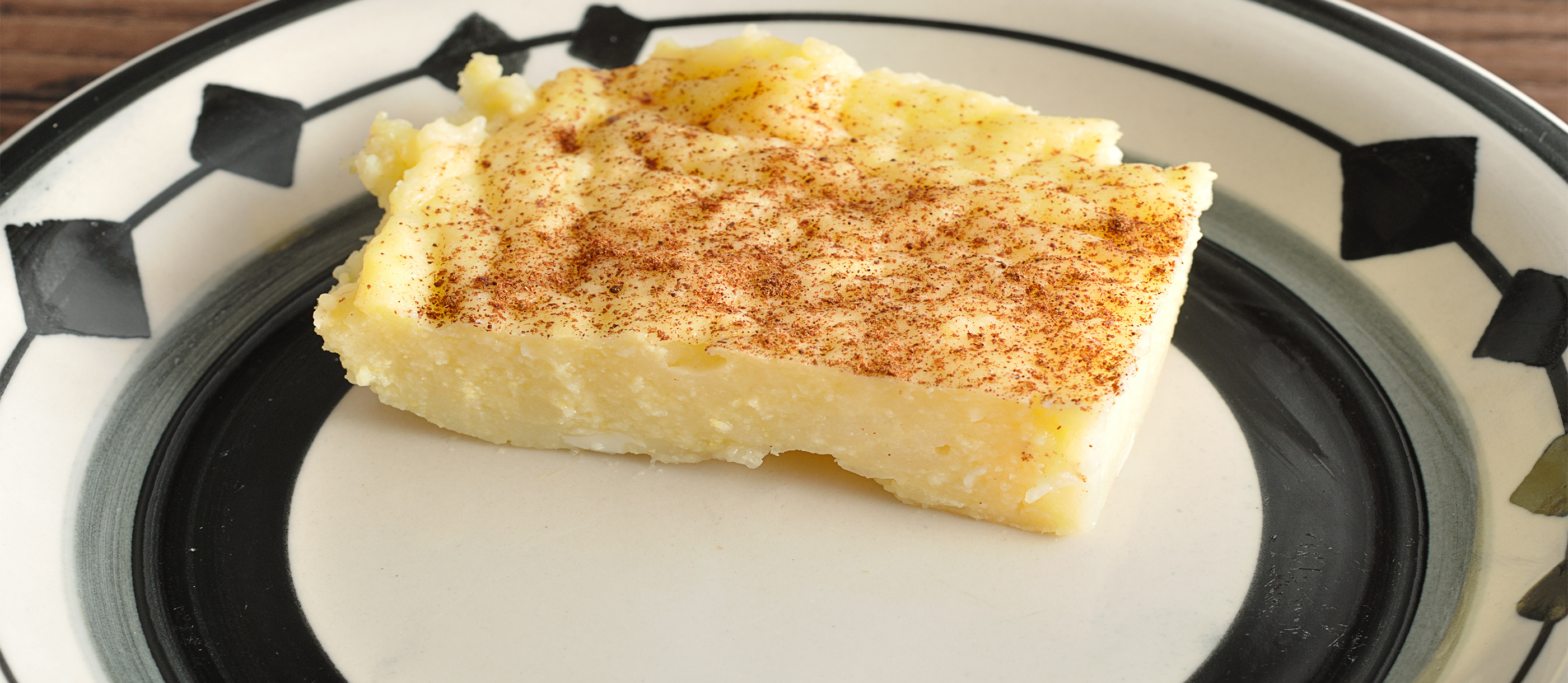
Melktert is a sweet milk tart with a pastry crust, a smooth custard filling made primarily from milk, sugar, eggs, and flour or cornstarch, and a generous dusting of ground cinnamon. Its Afrikaans name means “milk tart.” The filling contains a relatively high proportion of milk to egg, giving it a lighter texture and a more pronounced dairy flavor than many egg-rich custard tarts. Depending on the recipe, the center may be softly set and slightly wobbly or firm enough to hold a clean slice. Melktert is closely associated with the Cape and is generally traced to the culinary culture that developed after the Dutch East India Company established its refreshment station at the Cape of Good Hope in 1652. Dairy farming expanded as the settlement grew, making fresh milk, butter, and eggs increasingly accessible. Recipes brought from Europe were gradually adapted through local agriculture, colonial trade, migration, enslavement, and exchange between several communities. Historical research therefore treats melktert as a dessert with multiple roots rather than the product of one inventor or one isolated culinary lineage. The tart is often described as a descendant of mattentaart, a Flemish pastry filled with sweetened milk curds. Cinnamon became one of melktart’s defining flavors. The Cape occupied a central position in the Dutch East India Company’s maritime network, through which spices from Asia moved into local kitchens. Cape Muslim culinary influence also helped establish aromatic versions containing cinnamon, cardamom, naartjie peel, bitter almonds, peach or apricot kernels, and other gentle flavorings. These additions did not necessarily appear simultaneously, and the idea that Indonesian cinnamon alone transformed mattentaart into melktert is too simple. Melktert now comes in two broad forms. In one, the milk filling is poured into pastry and baked until set. In the other, the custard is thickened on the stovetop and transferred to a fully baked shell, then chilled. Both are well established. The baked form is often lighter and more delicate, while the stovetop-set form tends to be smoother, creamier, and easier to slice neatly. A sweet shortcrust shell begins with cold unsalted butter worked into wheat flour and sugar until the mixture resembles coarse crumbs. Egg binds it into a cohesive dough. A small amount of cold water may be added if needed, but excessive liquid or handling can make the crust tough. The dough is chilled, rolled or pressed into a shallow round tart tin, and trimmed along the rim. It is then lined with baking paper and filled with ceramic weights or dried beans. Blind baking sets the walls and base before the moist custard is added. The weights are removed near the end so the base can dry and develop a light golden color. A shell that remains pale and damp is likely to soften rapidly beneath the filling. The filling usually starts with whole milk heated gently with one or more cinnamon sticks. The milk may also be infused with vanilla, cardamom, naartjie peel, lemon rind, peach leaves, or a few apricot or peach kernels. The milk should become hot and fragrant, but a violent boil is unnecessary and increases the risk of scorching or overflowing. Egg yolks or whole eggs are whisked separately with white sugar and flour, cornstarch, or a mixture of both. Cornstarch gives a smooth, cleanly set filling, while flour can produce a softer, more pudding-like body. A portion of the hot milk is gradually whisked into the egg mixture to raise its temperature without curdling it. The tempered mixture is returned to the remaining milk and heated gently while being stirred continuously. It thickens as the starch absorbs liquid and the egg proteins set. The finished custard should be smooth enough to pour but thick enough to coat a spoon. It should not be boiled aggressively until severely dense, since excessive heat can produce lumps, an eggy flavor, or a rubbery final texture. Some recipes separate the eggs and fold stiffly beaten whites into the warm custard. The trapped air gives the filling a lighter, almost soufflé-like quality. Other versions use whole eggs or yolks without whipped whites, especially when the custard is thickened before being placed in the crust. For a stovetop-set melktert, the hot custard is poured into the fully baked pastry shell and smoothed across the surface. For a baked version, a more fluid filling is poured into a raw or partly baked shell before the tart returns to the oven. The heat must remain moderate so the center sets gradually without curdling, cracking, or becoming dry. The finished tart needs time to cool and stabilize. A stovetop-set version is left briefly at room temperature and then refrigerated for several hours, often overnight. A baked version can also benefit from chilling, although it may be served slightly warm or at room temperature. The filling should become sliceable but not form a rigid block. Its texture is usually soft, creamy, and tender. Ground cinnamon is scattered over the pale surface once the filling has set or shortly before serving. The coating may range from a light veil to a dense brown layer that almost completely covers the custard. Cinnamon can also be infused into the milk, giving the filling a warmer flavor beneath the powdered surface. A crustless melktert omits the pastry entirely. The milk mixture is thickened or baked directly in a buttered tart plate, where flour or cornstarch helps it hold its shape. Some versions form a faintly firmer layer around the edges while remaining soft in the center. It resembles a baked milk pudding more than a pastry tart and requires less work, but it retains the characteristic milk-and-cinnamon profile. Crustless versions have a long recorded history rather than being solely a recent shortcut. Puff pastry is another common base. It creates thin, crisp, buttery layers around the soft filling and produces a sharper textural contrast than shortcrust. The pastry may be blind baked first or filled and baked with the custard, depending on the formula. Careful baking is needed so the center of the base does not remain wet beneath the milk filling. Modern versions also use crushed Tennis biscuits, digestive biscuits, or similar sweet biscuits mixed with melted butter. This produces a crumb crust that requires little or no baking. It is especially common with chilled, stovetop-set fillings, although it creates a distinctly different texture from shortcrust or puff pastry. Citrus is one of the most established flavor variations. Long strips of naartjie peel can be infused in the hot milk and removed before the custard is thickened. Lemon or mandarin peel provides a similar effect, adding fragrance and mild bitterness without turning the tart sharply acidic. Fresh zest may also be used in small amounts. Almond extract gives the filling a more concentrated marzipan-like aroma. Older recipes sometimes achieved a related flavor by heating the milk with peach or apricot kernels, bitter almonds, or blanched almonds. Almond extract should be used sparingly, since an excessive quantity can overwhelm the milk and cinnamon. Vanilla is often added alongside it to soften the flavor. Other variations add cardamom, nutmeg, coconut milk, sweet wine, lemon rind, or fresh fruit. Contemporary forms also reinterpret the flavor in cakes, doughnuts, trifles, ice cream, liqueurs, and hybrid puddings. These adaptations extend the milk-cinnamon profile beyond the tart without changing the identity of the original pastry. Once thoroughly set, melktert is cut into wedges with a sharp knife. Cleaning the blade between cuts helps preserve the smooth custard surface and prevents cinnamon and pastry crumbs from marking each slice. The tart can be served cold, at room temperature, or slightly warm, though the chilled version gives the neatest wedges.
02 / MAIN DISH INGREDIENTS
not yet extracted
03 / RECIPE
There is no recipe in the saved data.
Record · 3018