02 / MAIN DISH INGREDIENTS
not yet extracted
01 / ABOUT THE DISH
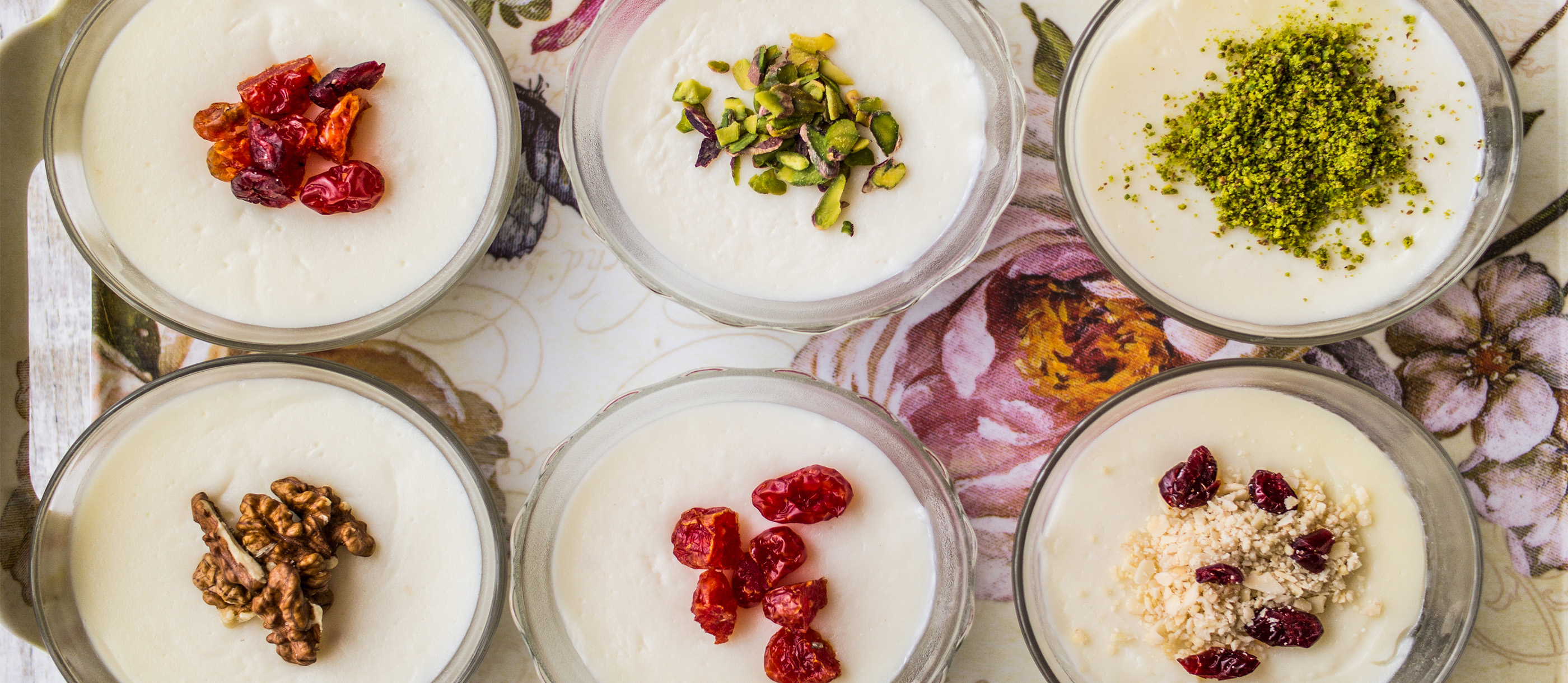
Muhallebi is a milk-based dessert widely known across the Middle East, Eastern Mediterranean, and North Africa. It is a smooth, lightly sweetened pudding made from milk thickened with rice flour, cornstarch, or semolina, and flavored with ingredients such as rosewater, orange blossom water, or mastic. The dessert has deep roots in Ottoman and Arab cuisines, where it became a staple of both palace and household cooking. Variations exist throughout the region under different names, including malabi in Israel, mahalabia in Egypt, and mahalabiyeh in Lebanon and Syia, all sharing a similar base of milk and starch with slight differences in flavoring and garnish. Muhallebi developed within the culinary traditions of the eastern Mediterranean, influenced by Persian and Arab sweet-making practices that emphasized dairy-based desserts flavored with floral essences. It became especially prominent in the Ottoman Empire, where palace chefs refined the recipe into a smooth, delicate pudding served chilled. Over time, it spread throughout the empire’s territories, blending with local ingredients and preferences. In Turkey, muhallebi remains part of daily dessert culture, sold in dessert shops and restaurants specializing in milk-based sweets, known as “sütlü tatlılar.” Preparation begins by mixing starch or rice flour with a portion of cold milk until smooth. The remaining milk is heated with sugar over medium heat, and the starch mixture is slowly whisked in to avoid lumps. The pudding is cooked until it thickens to a creamy consistency and begins to coat the spoon. At this point, flavorings such as rosewater, orange blossom water, or mastic are added, and the mixture is poured into bowls or molds to cool and set. Once firm, it is typically chilled before serving. The texture should be silky and light, with a mild sweetness balanced by the fragrance of the added flavoring. Muhallebi is often garnished with ground nuts such as pistachios or almonds, shredded coconut, or a thin layer of syrup. In some versions, a fruit compote or rose-flavored syrup is spooned on top to add color and acidity. Turkish-style muhallebi is commonly unflavored and served plain or dusted with cinnamon, while Levantine and Egyptian versions lean toward floral and aromatic notes. A baked variation, known as “fırın muhallebi,” develops a golden crust on top while maintaining a soft center. It is eaten year-round, often as a light dessert after meals or as a refreshing treat during warm weather. It is served in cafés, sweet shops, and homes, especially during religious festivals and gatherings. Muhallebi pairs well with Turkish tea, mint tea, or lightly roasted coffee, which balance its sweetness. Its simplicity, gentle flavor, and adaptability have made it one of the most enduring dairy desserts of the Eastern Mediterranean, linking diverse regional cuisines through a shared culinary foundation.
02 / MAIN DISH INGREDIENTS
not yet extracted
03 / RECIPE
There is no recipe in the saved data.
Record · 1881