01 / IDENTITY
- Category
- Snack
- Country
- India
- Region
- Maddur
ABOUT THE DISH
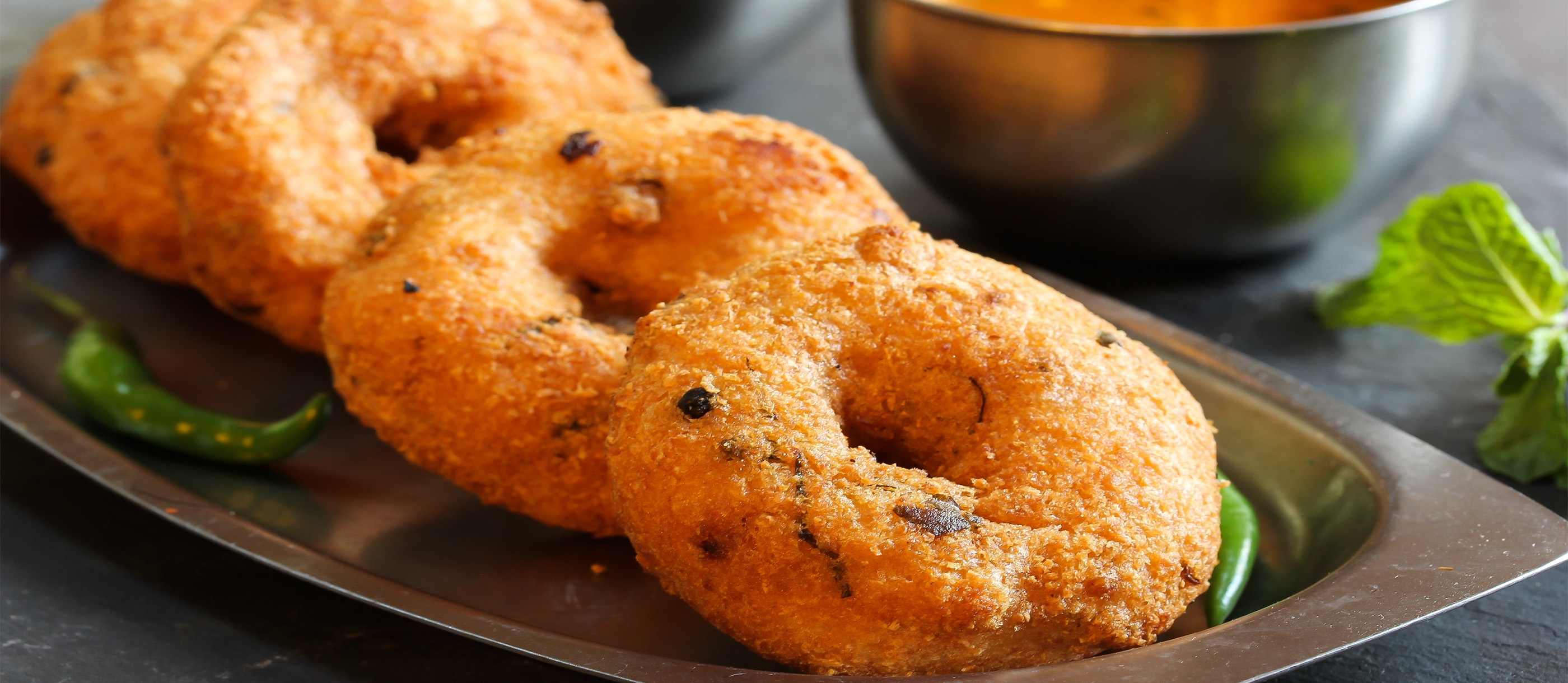
Medu vada is a savory, deep-fried, donut-shaped fritter made from a thick, heavily aerated batter of ground black gram. Creating this crisp snack begins by submerging skinned urad dal in cold water for several hours until the lentils swell and soften completely. The drained legumes go into a heavy wet grinder with a strict, minimal splash of water. The grinding action introduces a large amount of air into the mixture, transforming the dense lentils into a light, fluffy paste. Finely chopped green chilies, minced fresh ginger, crushed black peppercorns, cumin seeds, torn curry leaves, and diced shallots fold directly into the whipped batter to introduce sharp, aromatic heat. Shaping the batter requires wet hands to prevent sticking. A small portion is rolled into a sphere, pierced straight through the center to form a ring, and immediately dropped into a deep vat of hot vegetable oil. The central hole ensures even cooking, allowing the hot oil to crisp the entire exterior while leaving the interior crumb soft and spongy. Medu vada traces back to the southern regions of the Indian subcontinent. Concrete historical records point to the 12th-century Sanskrit encyclopedia Manasollasa, compiled by King Someshvara III, which provides a detailed recipe for "vataka" involving soaking, grinding, and deep-frying black legumes. Over the centuries, it evolved into a staple across Karnataka and Tamil Nadu, serving primarily as a breakfast item. One widespread adaptation replaces the lentil base with coarse semolina and yogurt, yielding an instant, highly brittle fritter. Another variant involves dropping the hot, freshly fried lentil rings directly into a vat of cold, seasoned yogurt, softening the crisp exterior and creating a tart, spongy appetizer. Leafy greens like chopped amaranth, spinach, or grated cabbage are sometimes mixed into the raw batter to introduce extra moisture and an earthy crunch. The medu vada are served hot, arriving stacked on a metal plate. A hot, thin tamarind-and-lentil stew known as sambar, along with a cold, creamy bowl of freshly ground coconut chutney, universally accompanies the fritters. Eating the snack requires tearing the hot ring apart by hand and submerging the spongy interior directly into the hot stew and cold chutney to absorb the heavily spiced liquids.
03 / RECIPE
A recipe was found and is awaiting download.