02 / MAIN DISH INGREDIENTS
- Hare
- Bacon
- Foie gras
- Truffle
- Armagnac
- Cognac
- Pork Fat
- Carrot
- Onion
- Shallots
- Garlic
- Gelatin
- Red Wine
- Butter
- Bouquet garni
- Black Pepper
- Salt
01 / ABOUT THE DISH
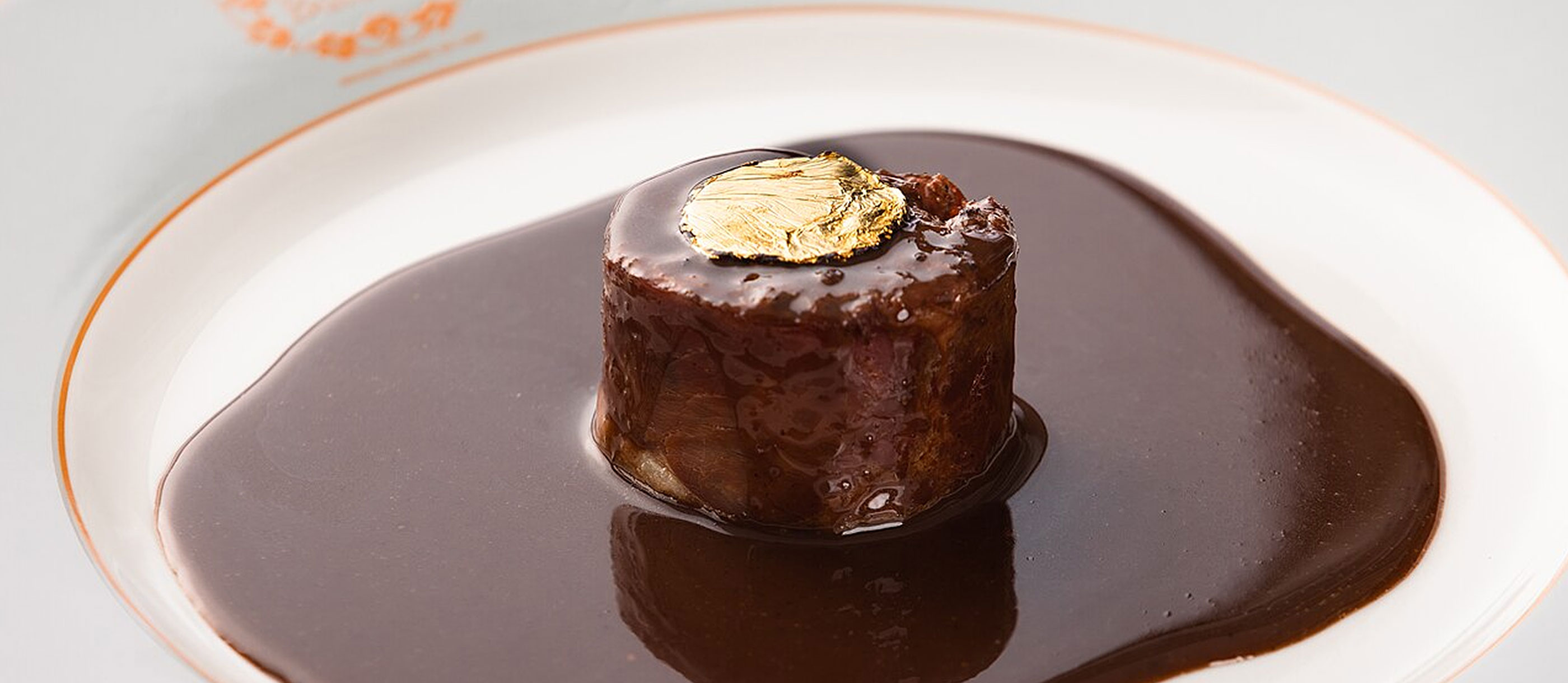
Lièvre à la royale is a distinguished game dish from France that features whole hare braised and served in a rich red-wine sauce. Its origins reach into the country’s haute cuisine heritage, where chefs and gastronomes refined preparations of prized wild game for banquets and elite tables. One of the versions known as the “façon Aristide Couteaux,” published in 1898, presents the hare cooked étouffée-style with garlic and shallots, then shredded into a sauce of red wine and its own blood. Another version, attributed to Henri Babinski in 1928, treats the hare as a galantine: the carcass is deboned, stuffed with foie gras and truffles, rolled, poached or braised, then served in slices topped with a red-wine sauce enriched with blood and the hare’s offal. In the more commonly executed recipe the hare is cleaned with its offal reserved; the meat is larded, marinated or poached in red wine with bacon, garlic, carrots, shallots and herbs. The hare is then gently cooked, removed while tender, and the offal and blood are incorporated into the cooking liquid along with cognac or armagnac, reduced into a deep, glossy glaze. The meat is either returned to the sauce whole or served in slices if treated as a galantine. The reduction is carefully seasoned, emulsified with butter and the dish is served hot and saucy. Variations include using other game such as venison or roe deer instead of hare, substituting chocolate, foie gras or truffle accents for added depth, or replacing part of the red wine with fortified wine. One striking feature of Lièvre à la royale is its integration of the hare’s blood and offal into the sauce, which amplifies flavour and creates a uniquely rich texture and colour that sets this dish apart from simpler game stews. This dish is served in winter, typically during the game season and at formal dinners, accompanied by sautéed mushrooms, button onions or root vegetables, and it pairs excellently with full-bodied red wines like Châteauneuf‑du‑Pape, Côte‑Rôtie or a mature Pomerol. Its intense, deep flavour also responds well to a fortified wine or aged port if served after the meal.
02 / MAIN DISH INGREDIENTS
03 / RECIPE
There is no recipe in the saved data.
Record · 12330