01 / IDENTITY
- Category
- Snack
- Country
- Hungary
- Region
- not specified
ABOUT THE DISH
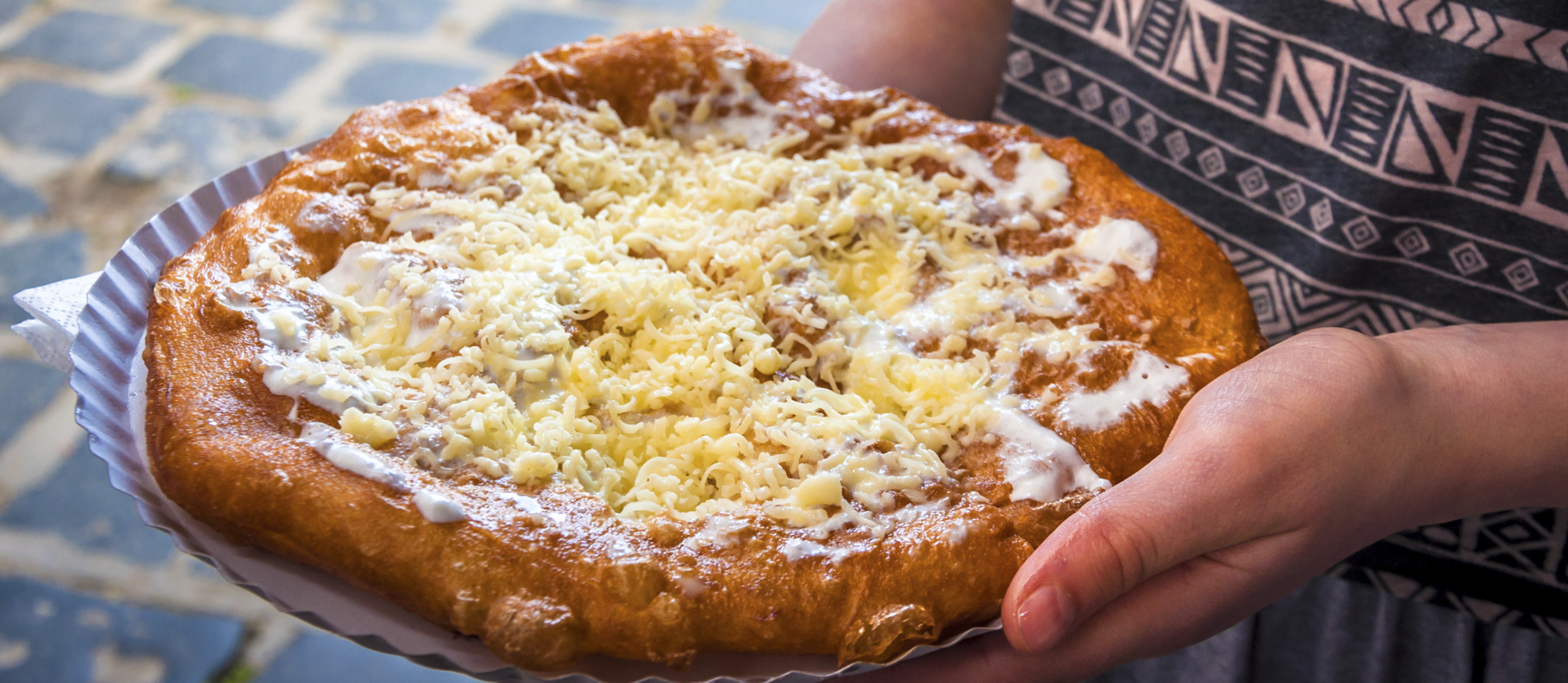
Lángos is a thick, yeast-leavened flatbread that is stretched by hand and deep-fried in hot fat until the exterior forms a crispy, blistered crust while the interior remains soft and airy. Its name originates from the word "láng," meaning "flame," reflecting its earliest form as a simple morning snack baked at the very front of a wood-fired brick oven, alongside glowing embers. Before the 1950s, making this bread was closely tied to the weekly routine of baking large household loaves. Bakers scraped the sticky leftover dough from the sides of large wooden kneading troughs, a practice that earned the scraps the slang term "vakolat," which translates to plaster. These days it can be found throughout Hungary, Austria, Croatia, and Romania. These flattened pieces were baked quickly in the receding heat and consumed fresh with butter, animal fat, or sour cream for breakfast on baking days. As rural households urbanized and domestic bread-making declined rapidly during the mid-20th century, the item shifted from a baked household good into a ubiquitous commercial street food submerged entirely in large vats of boiling oil or pork lard. The dough is made by dissolving active yeast in warm milk with a pinch of sugar to activate it, then thoroughly kneading it with wheat flour, salt, and lukewarm water. After the mixture rests in a warm environment until it doubles in size, individuals coat their hands in oil to effortlessly tear off small portions, stretching them into wide circles with slightly thinner centers before dropping them into the hot frying fat. The heavily favored standard topping involves brushing the hot, blistered surface with crushed raw garlic or garlic water, then heavily blanketing it with thick sour cream and piling on a massive mound of grated yellow cheese. More modern takes include toppings such as chopped fresh dill, pungent sheep's milk cheese, sliced sausages, roasted bell pepper stews, or bits of ham. Entirely different structural variations include potato lángos, which have boiled, mashed tubers mixed into the raw flour mixture to create a denser, heavier bite, and cabbage lángos, which feature braised cabbage incorporated into the batter before frying. Vendors also offer a folded version in which savory meat fillings are encased entirely within the dough, creating a sealed pocket. Older baked variations resembling thick, rustic pizzas still exist under regional names like langalló, kenyérlángos, or töki pompos, heavily topped with bacon and onions, and baked in an oven rather than deep-fried. The freshly fried discs function strictly as immediate, calorie-dense meals, primarily purchased at summer lakeside resorts, outdoor markets, and busy transit hubs, eaten exclusively by hand while standing or walking. Because the fried structure degrades and turns rubbery rapidly as it cools, consuming it steaming hot straight from the oil is absolutely mandatory.
03 / RECIPE
A recipe was found and is awaiting download.