02 / MAIN DISH INGREDIENTS
- Chicken
- Scallions
- Sichuan pepper
- Chinese sesame paste
- Garlic
- Ginger
- Sesame Seeds
- Peanuts
- Black rice vinegar
- Chili Oil
- Soy sauce
- Shaoxing wine
- Chicken Stock
- Salt
01 / ABOUT THE DISH
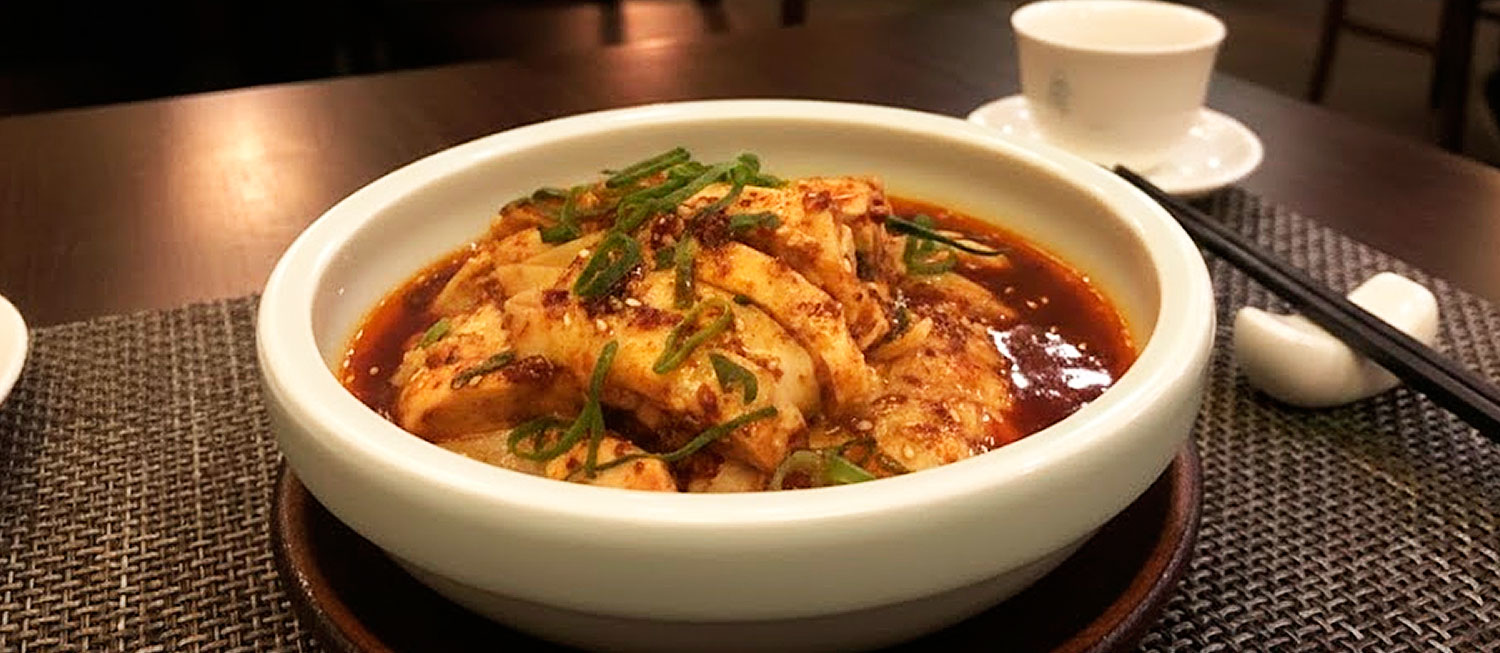
Kǒushuǐjī is a cold chicken dish from Sichuan, recognized for its rich and numbing chili sauce that combines heat, fragrance, and spice with a clean finish. The name means “mouth-watering chicken,” a reference to its ability to stimulate appetite through aroma and balance rather than heaviness. The origins of the dish trace back to home kitchens and small eateries in Sichuan, where poached chicken served with chili oil became a favored preparation, especially in the warmer months. Over time, chefs refined the sauce, adjusting its proportions to achieve a harmony that would later make it one of the most recognizable cold appetizers in Chinese cuisine. Its name was popularized during the twentieth century in Chengdu, when versions of the dish began appearing on restaurant menus under that title, emphasizing not just taste but the sensory anticipation that preceded it. Preparation starts with a whole chicken, often poached gently in seasoned water with scallion, ginger, and a pinch of salt until the meat is just cooked through and still moist. After cooling, the chicken is chopped into bite-sized pieces and arranged on a plate, sometimes over a bed of cucumber or bean sprouts for freshness. The defining element is the sauce, made from chili oil infused with crushed Sichuan peppercorn, soy sauce, vinegar, garlic, sesame paste, sugar, and a touch of cooking wine. The mixture is poured over the cooled chicken, coating it evenly without soaking it. Roasted sesame seeds, chopped peanuts, and scallions are usually sprinkled on top, completing the contrast of smooth, spicy, and nutty textures. The flavor develops as the oil spreads across the surface of the meat, releasing aroma and gentle heat that lingers but does not overpower. Kǒushuǐjī is eaten throughout China, often as the opening dish of a Sichuan meal, served before hot dishes to awaken the palate. It pairs naturally with plain rice or light noodles, which help absorb the sauce, and with mild drinks such as jasmine tea or cold beer that temper the spice.
02 / MAIN DISH INGREDIENTS
03 / RECIPE
There is no recipe in the saved data.
Record · 12178