01 / IDENTITY
- Category
- Cookie
- Country
- Iran
- Region
- not specified
ABOUT THE DISH
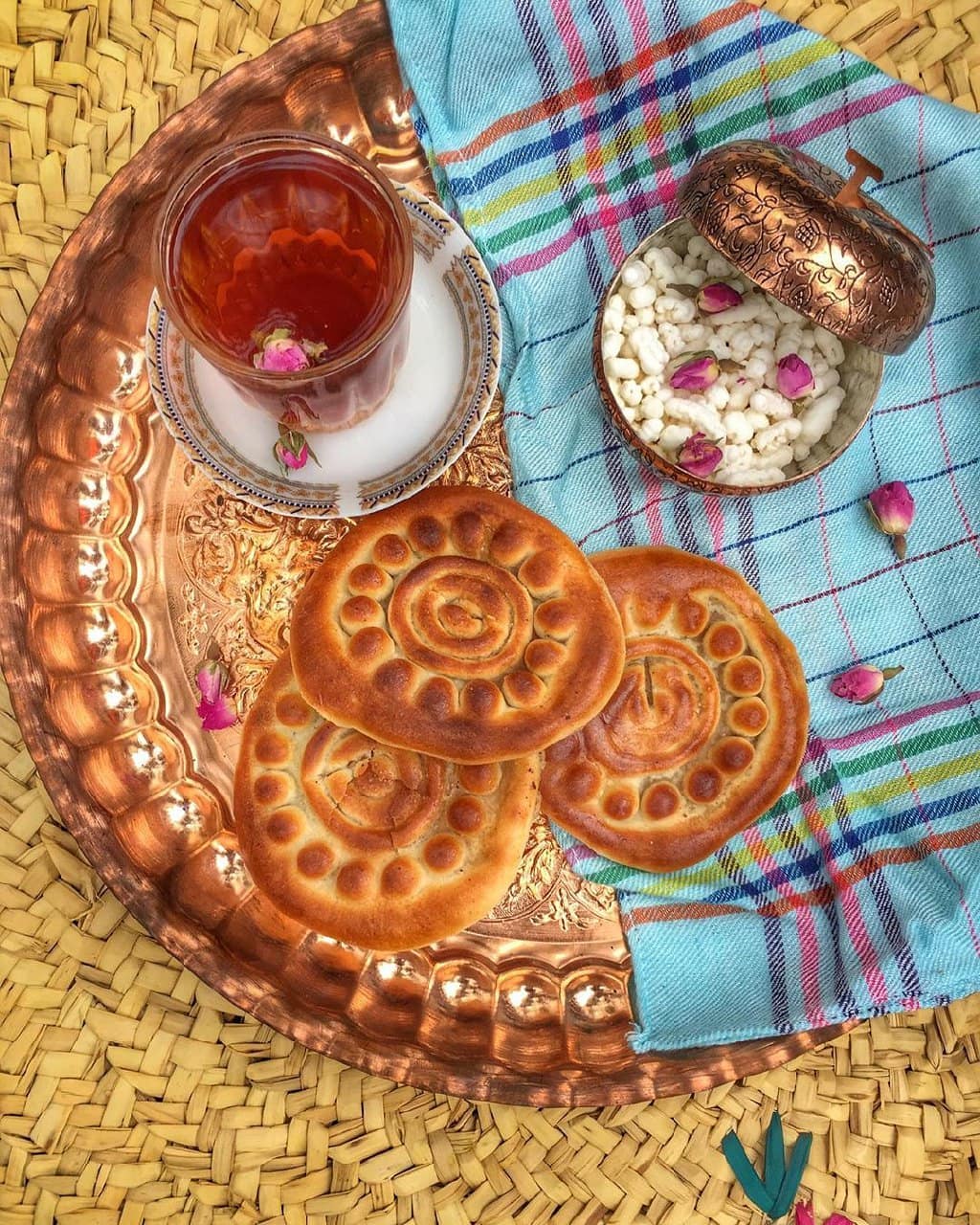
Koloocheh is a filled Persian cookie that comes from northern Iran, especially the provinces of Gilan and Mazandaran along the Caspian coast, where it holds a distinct place in local baking culture. The pastry is known for its round shape, soft crumb, and aromatic fillings that often combine crushed nuts, sugar, cinnamon, and sometimes ground cardamom. Over centuries, koloocheh evolved from early flatbreads and sweetened doughs that were baked in communal ovens for festive occasions or as offerings. In its modern form, it gained popularity as a recognizable specialty sold in bakeries and markets of Lahijan and Rasht, cities particularly renowned for their refined variations of the cookie. Preparation begins with an enriched yeast dough made of wheat flour, milk or water, a little oil or butter, sugar, and leavening agents. Once risen, the dough is divided and rolled into disks. Each portion is topped with a layer of filling—typically a paste of finely ground walnuts or other nuts mixed with sugar and spices—and then sealed to enclose the filling. The tops of the cookies are stamped with decorative patterns using a carved wooden mold or a simple fork. After a light egg wash, they are baked until golden and slightly firm. Koloocheh are often served freshly baked, sometimes warm, though they keep well for several days. In addition to being a popular snack and souvenir, koloocheh has long been prepared for Nowruz, the Persian New Year, and other celebrations. Each city has its own slight variation in dough texture, sweetness, and filling composition, with some bakers also incorporating dates or coconut. The cookies are typically eaten alongside tea, offered to guests, or packed into gift boxes. In the Caspian provinces, bakeries often specialize only in koloocheh production, making it an everyday staple and an emblem of regional hospitality.
03 / RECIPE
A recipe for this dish has not been added yet.