01 / IDENTITY
- Category
- Rice Dish
- Country
- South Korea
- Region
- not specified
ABOUT THE DISH
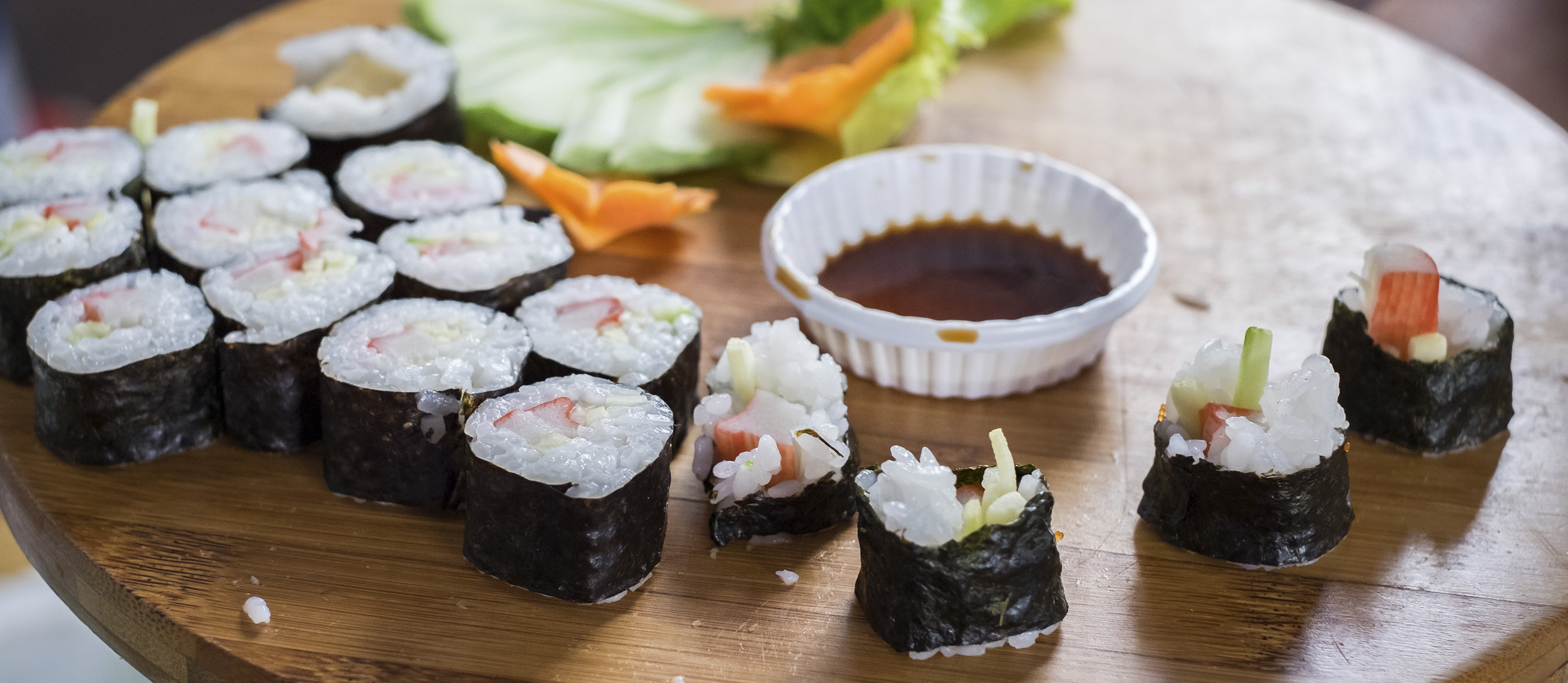
Gimbap is a savory roll made from cooked short-grain white rice and various pre-cooked fillings wrapped in a sheet of dried seaweed. The rice forms the foundation and requires seasoning with toasted sesame oil and salt rather than vinegar. Building the roll involves placing a sheet of seaweed, known as gim, on a bamboo mat. A thin, even layer of the sesame-seasoned rice is spread across the seaweed, leaving a small margin at the top. The core ingredients are cut into long, uniform strips and stacked horizontally across the lower third of the rice. Standard fillings usually include sautéed carrots, blanched spinach, long strips of yellow pickled radish, heavily seasoned ground beef or sliced fish cake, and ribbons of rolled omelet. The bamboo mat is then used to lift and tightly fold the seaweed over the ingredients, compressing everything into a firm, solid cylinder. Once sealed, a sharp knife is brushed with sesame oil to slice the long cylinder into bite-sized circular pieces. Roughly speaking, there are three main styles of gimbap with variations within each. Traditional gimbap with seaweed, rice, and fillings; French or nude gimbap with seaweed on the inside and rice on the outside; and samgak gimbap, shaped like a triangle and sold in many South Korean convenience stores. Tuna mixed with mayonnaise and perilla leaves creates a highly popular creamy variant, while a miniature version known as mayak gimbap consists of tiny, thin rolls filled only with carrots, spinach, and radish, specifically designed to be dipped in a mustard-and-soy sauce mixture. Another distinct style is chungmu gimbap, which leaves the rice unseasoned and entirely bare inside the seaweed wrapper, providing spicy radish salad and marinated squid on the side instead of rolling them within. The origins of rolling rice in seaweed date back to the Joseon era, where historical records mention wrapping rice and side items in gim as a portable meal. Many believe that it is a Korean take on Japanese sushi. Others say it is a variation of gimssam, a wrap made with rice and seaweed. During the early 20th century, the introduction of commercial bamboo rolling mats influenced the exact cylindrical shape recognized today, merging local ingredients with new assembly techniques. Because they hold their shape perfectly without refrigeration and require no utensils, the sliced rolls are packed tightly into lunch boxes and eaten by hand during picnics, long train rides, and school field trips. This portable meal is almost always consumed at room temperature alongside a simple bowl of warm broth or spicy pickled cabbage.
03 / RECIPE
A recipe was found and is awaiting download.