01 / IDENTITY
- Category
- Noodle Dish
- Country
- Japan
- Region
- Sendai
ABOUT THE DISH
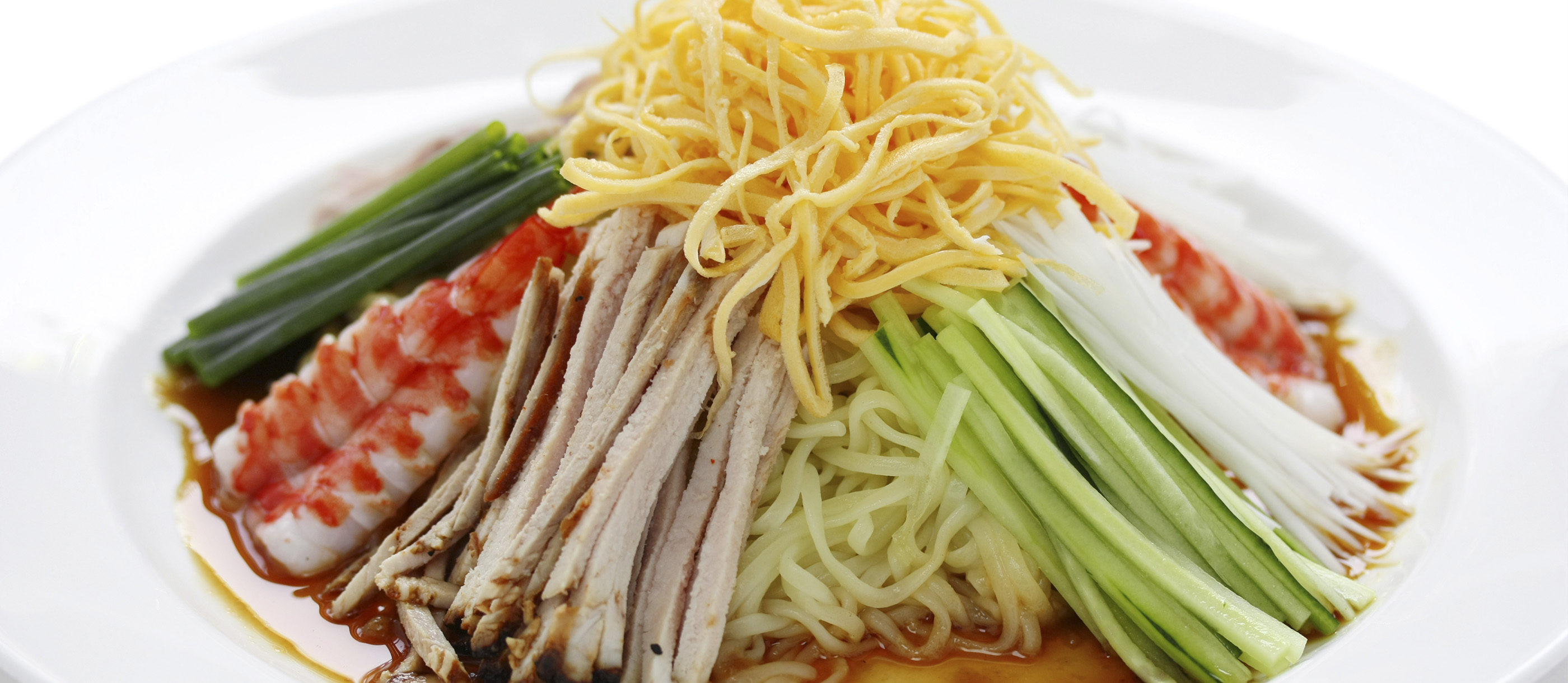
Hiyashi chūka is a chilled summer noodle meal consisting of cold ramen noodles topped with a colorful array of thinly sliced ingredients and dressed in a tart, chilled sauce. Despite the name containing a geographic reference to China, the item was entirely invented within Japan during the Showa period. Two distinct origin stories exist, both stemming from the need to combat the severe decline in hot soup noodle sales during the sweltering summer months. In 1933, the Yosuko Saihankan restaurant in Kanda, Tokyo, launched a menu item called Gomoku Hiyashi Soba, which arranged ten different toppings to visually resemble the slopes of Mount Fuji. A few years later, in 1937, the Sendai-based restaurant Ryutei created a similar cold item called Ryang-ban-men, utilizing cabbage, carrots, and a soy-vinegar dressing to provide nutritional balance in the extreme heat. Following World War II, the item gained massive nationwide popularity, eventually becoming synonymous with the arrival of summer. Establishments famously hang specific paper banners reading "Hiyashi chūka hajimemashita," signaling to the public that the hot weather has arrived and the cold noodles are finally available for purchase. Constructing the meal begins by boiling fresh wheat ramen noodles. Immediately after boiling, the hot strands are plunged directly into an ice-water bath or rinsed vigorously under cold running water. The chilling removes the sticky surface starch and tightens the wheat structure, resulting in a highly firm, chewy texture. The cold noodles are completely drained and placed in the center of a wide, shallow dish, frequently made of clear glass to emphasize the cooling aesthetic. The toppings are cut into thin, matchstick-like strips to blend seamlessly with the noodles' shape when lifted with chopsticks. Standard additions include thin strips of golden egg crepes known as kinshi tamago, pink boiled ham, roasted char siu pork, imitation crab sticks, crisp green cucumbers, blanched bean sprouts, and red tomatoes. The ingredients radiate outward from the central mound of noodles, creating a bright, high-contrast color palette. The entire assembly is generously drenched in a chilled dressing just before serving. The most widespread dressing combines soy sauce, water, rice vinegar, sugar, and sesame oil, yielding a sharp, sweet-and-sour profile. Another highly favored sauce variation relies heavily on rich, creamy sesame paste, creating a denser, nuttier flavor. A dollop of spicy yellow mustard is almost always placed on the rim of the plate, to be mixed into the liquid according to individual heat preferences. Across the Kansai region, the dish is simply referred to as reimen, which translates directly to "cold noodles," while the northern island of Hokkaido categorizes it as hiyashi ramen. In the Tokai region, particularly around Nagoya, a massive squirt of mayonnaise is mandatory, heavily squeezed directly over the arranged ingredients to add extra fat and tang. In Yamagata Prefecture, ice cubes are sometimes placed directly on the noodles to keep the temperature near freezing throughout the meal. Consuming the bowl of hiyashi chūka requires using chopsticks to vigorously mix the neat arrangement, ensuring the cold sauce thoroughly coats every strand and slice of vegetable before eating. The transition from a restaurant exclusive to a home staple occurred in 1960, when the Daikyu noodle company in Sendai began selling the first instant chilled noodle packs, which included a pre-mixed liquid soup sachet, thereby cementing cold noodles as a ubiquitous summer staple across the country.
03 / RECIPE
A recipe for this dish has not been added yet.