01 / IDENTITY
- Category
- Stir-fry
- Country
- China
- Region
- Hangzhou
ABOUT THE DISH
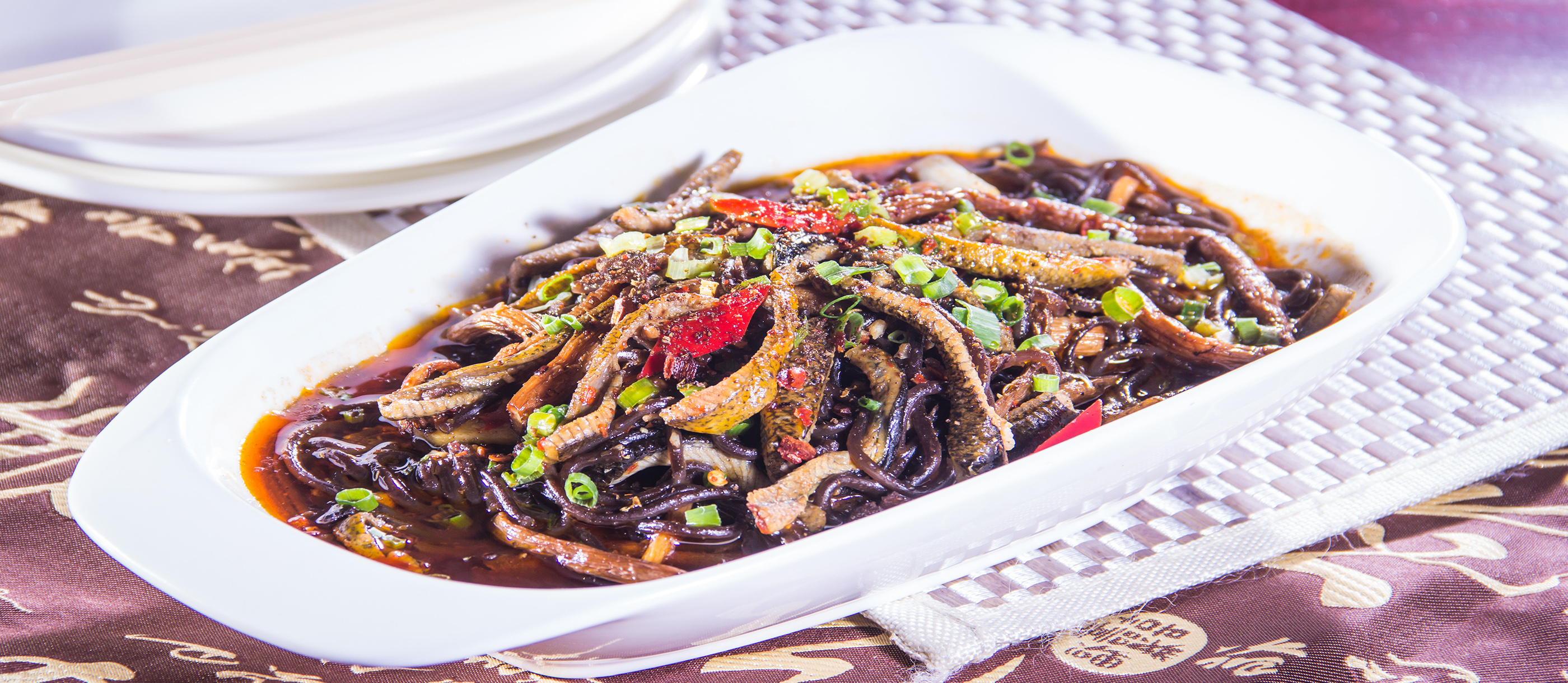
Sheng bao shan pian is thinly sliced, rapidly wok-fried freshwater swamp eel coated in a sweet, sharply acidic, and highly aromatic garlic sauce. Directly out of the blistering wok, this dish is served hot on a communal plate, demanding immediate consumption to experience the fleeting, delicate crunch of the eel's skin before the thick sauce softens the starch coating. Waiters in high-end Jiangnan banquets rush it to the table precisely for this reason, placing it at the center as a star course accompanied by a simple bowl of steamed white rice to absorb the intense, dark glaze. The origins of this culinary staple lie in the water towns and dense network of rivers across the Yangtze River Delta, particularly around Hangzhou, Suzhou, and Shanghai, where freshwater swamp eels thrive in the muddy banks of rice paddies. Historical records indicate that chefs during the Qing Dynasty perfected the intense high-heat cooking method necessary to transform the naturally muddy, firm flesh of the wild eel into a refined delicacy. Executing the recipe requires immense skill and speed, beginning with live eels that are swiftly dispatched, deboned, and cut into uniform rectangular strips. The raw meat is coated with a fine dusting of cornstarch or potato starch before being submerged in smoking-hot cooking oil for just a few seconds. This flash-frying technique blisters the skin and seals the juices inside. The oil is drained, leaving only a tablespoon in the wok to rapidly bloom minced garlic, ginger, and scallions. A pre-mixed liquid composed of dark soy sauce, aged Chinkiang black vinegar, white sugar, Shaoxing rice wine, and white pepper hits the hot metal, instantly reducing into a sticky syrup. The fried eel slices are tossed back into the wok for a final few seconds to catch the glaze before being plated. While the sweet-and-sour garlic profile is the more common option, variations exist. In Ningbo, chefs apply a much heavier hand with raw garlic and often incorporate yellow chives for an astringent bite. Shanghai iterations lean significantly more heavily on sugar and dark soy sauce, creating a sweeter, almost black, molasses-like coating, while cooks in inland Jiangsu might add shredded bamboo shoots and bell peppers to add contrasting crunch and vibrant visual appeal to the final plate.
03 / RECIPE
A recipe for this dish has not been added yet.