01 / IDENTITY
- Category
- Cake
- Country
- France
- Region
- not specified
ABOUT THE DISH
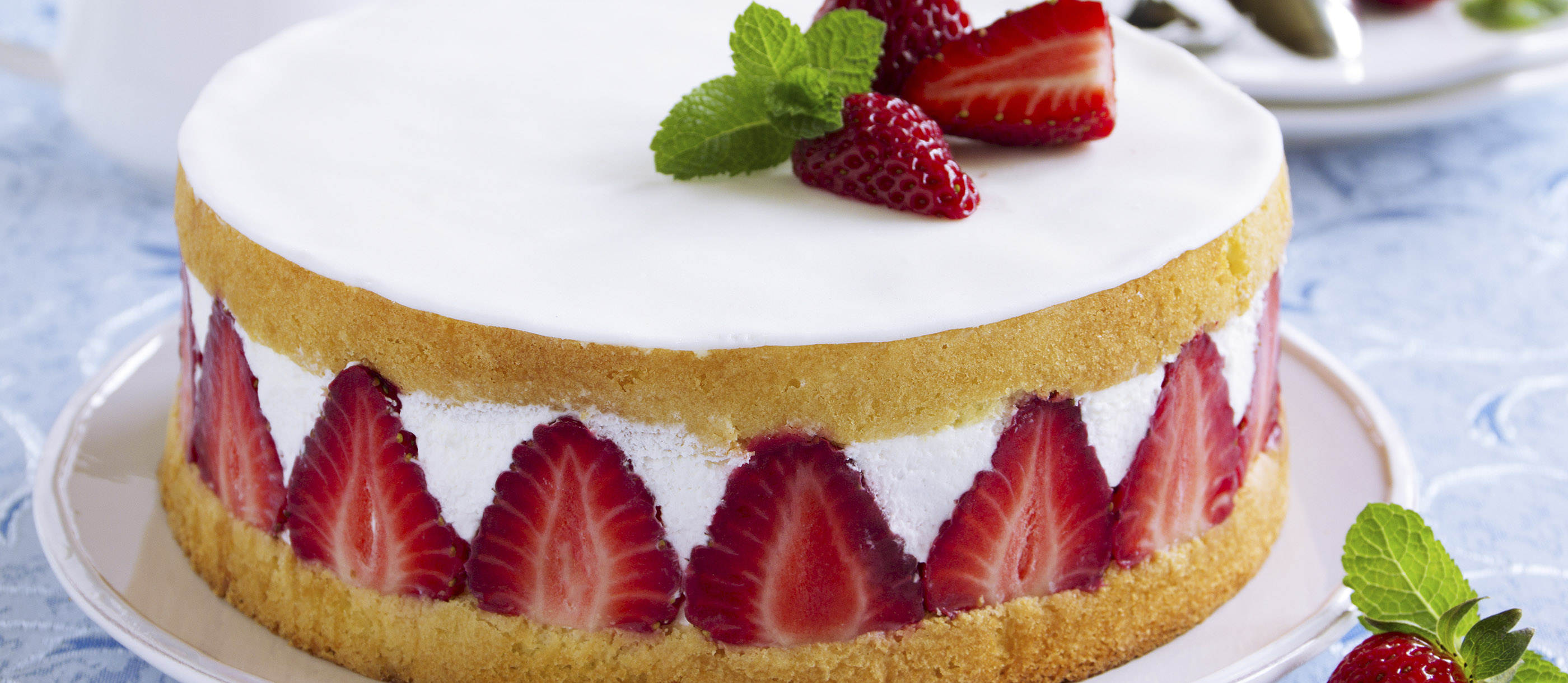
Fraisier is a highly structured, visually striking French dessert composed of two layers of kirsch-soaked génoise sponge, a rich vanilla crème mousseline, and a meticulously arranged border of fresh, halved strawberries, all sealed beneath a smooth layer of tinted almond paste, originating in France. Culinary precursors to the dessert emerged at the end of the 19th century when Auguste Escoffier codified a fresh strawberry cake in his seminal text Le Guide Culinaire. The recipe was subsequently advanced in the early 20th century by Pierre Lacam, who incorporated a sponge base and a distinct touch of kirsch liqueur. The definitive modern architectural construction was formally established in 1966 by the renowned Parisian pastry chef Gaston Lenôtre, who initially named his creation the Bagatelle in homage to the Bagatelle Gardens, explicitly replacing heavy traditional buttercream with a lighter, aerated mousseline to better showcase the delicate fresh fruit. The recipe begins by baking a light, airy vanilla génoise sponge cake, then slicing it horizontally into two even discs. A metal pastry ring is lined with a clear acetate collar to support the delicate internal components and ensure pristine visual edges upon unmolding. The bottom sponge layer is positioned inside the base of the ring and heavily saturated with a sweet, simple syrup infused with clear cherry liqueur. Fresh, uniformly sized strawberries are washed, hulled, cut exactly in half, and arrayed tightly against the interior wall of the collar, with the flat sides facing outward to create a graphic perimeter. A thick crème mousseline, formulated by vigorously whipping traditional vanilla pastry cream with softened butter until completely aerated, is piped meticulously between the standing berries and across the soaked foundation. The central cavity is filled entirely with additional chopped strawberries, which are completely enveloped by the remaining volume of the rich butter-based cream. Pressing the second sponge disc gently over the filling eliminates internal air pockets before the exposed cake surface is brushed generously with the remaining kirsch syrup. The entire assembly is refrigerated for several hours to thoroughly set the butterfat and stabilize the vertical structure. A thin, smooth disc of sweet almond paste, traditionally colored pale green or soft pink, is rolled out and pressed over the top surface to seal the dessert. Peeling away the metal ring and acetate band directly before serving exposes the striking cross-section of embedded red fruit. The chilled cake is sliced cleanly into sharp wedges and consumed in large quantities throughout the spring and summer harvest months. The intricate confection serves as a mandatory centerpiece for Mother's Day celebrations, warm-weather garden parties, and formal afternoon tea services.
03 / RECIPE
A recipe for this dish has not been added yet.