02 / MAIN DISH INGREDIENTS
not yet extracted
01 / ABOUT THE DISH
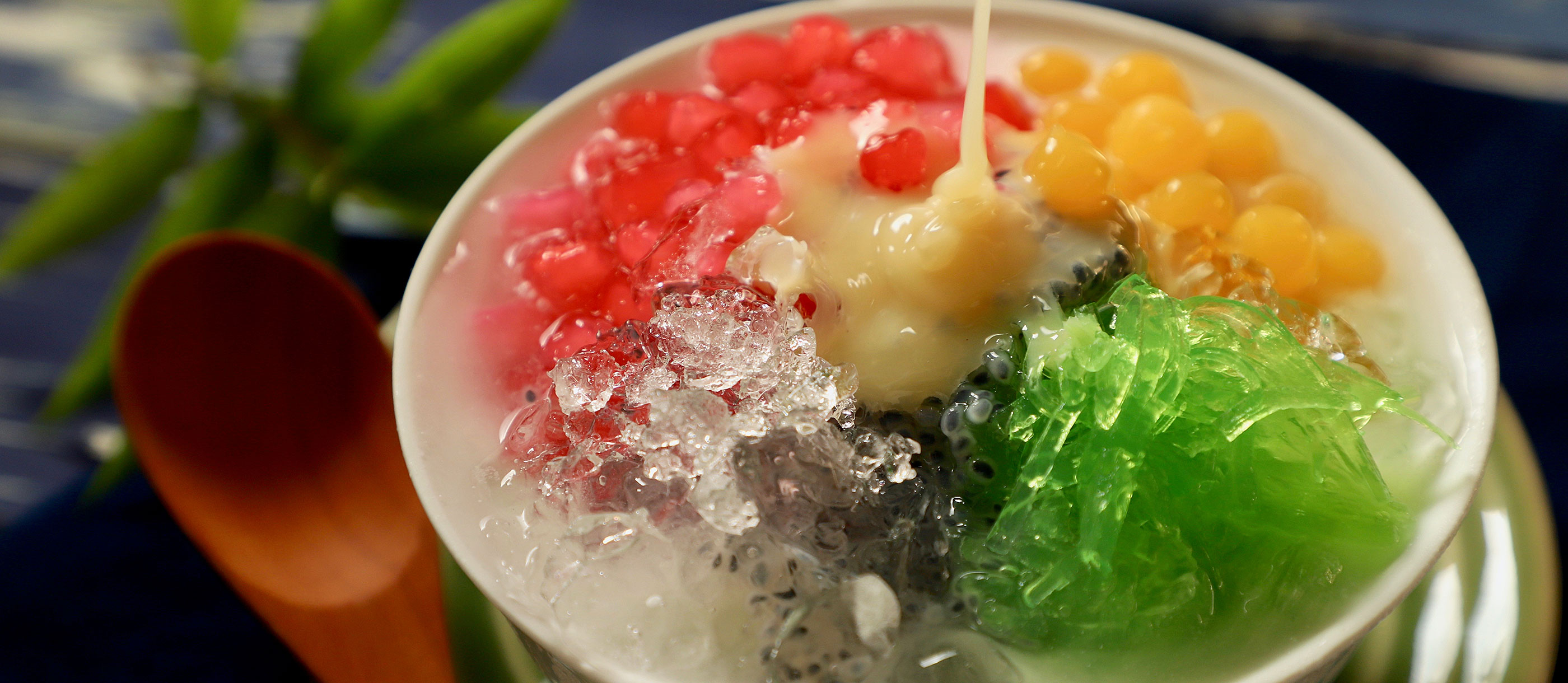
Es campur is a cold mixed dessert made with shaved ice, fruit, jellies, coconut, syrup, and often sweetened condensed milk. Its name literally means “mixed ice,” reflecting its flexible structure: there is no single fixed recipe, and the ingredients change considerably by region, vendor, and season. Common additions include jackfruit, young coconut, avocado, black grass jelly, agar-agar, tapioca pearls, kolang-kaling, fermented cassava, basil seeds, and various syrups. The exact origin of es campur is not documented. It developed within the wider Southeast Asian culture of shaved-ice sweets, where ice was combined with syrups, jellies, beans, coconut products, and tropical fruit. Chinese culinary influence probably contributed to this wider shaved-ice culture, particularly through ingredients such as grass jelly and red beans. Still, there is no firm evidence linking es campur itself to one specific immigrant group, inventor, city, or date. The frequently cited 1954 Bandung origin belongs to Es Oyen, a specific variation of es campur. Haji Bashar Sudjana began selling iced sweets from a mobile cart in Bandung in 1954 and later established a permanent location on Jalan Sukajadi in 1962. His mixture became known as Es Oyen and typically included avocado, jackfruit, young coconut, kolang-kaling, tapioca pearls, shaved ice, syrup, and condensed milk. It became one of the best-known named versions of es campur, but it did not mark the invention of es campur itself. A basic bowl begins with a mixture of fruit and chewy ingredients arranged in a glass or shallow bowl. Jackfruit, young coconut, avocado, grass jelly, agar-agar, tapioca pearls, fermented cassava, and basil seeds are common, although none is mandatory. Finely shaved ice is piled over or among the ingredients, followed by syrup and often sweetened condensed milk. Bright red or pink cocopandan syrup is common, but palm sugar syrup, simple syrup, coconut milk, fruit syrups, and other sweeteners are also used. Es campur Medan commonly combines red beans, sweet corn, jackfruit, fermented cassava or glutinous rice, cendol, and chewy sago pearls. Coconut milk and pandan-scented palm sugar syrup give it a richer, deeper flavor than versions based mainly on condensed milk and brightly colored syrup. Pontianak-style mixtures often place greater emphasis on chewy and gelatinous ingredients. Red and mung beans, agar-agar, grass jelly, basil seeds, cendol, longan, nata de coco, and other jellies may appear together, usually with shaved ice, coconut milk, milk, and palm sugar syrup. Barley and seaweed also occur in some versions, but they are not defining ingredients of every Pontianak bowl. Versions served in Jakarta frequently combine young coconut, fermented cassava, black grass jelly, kolang-kaling, shaved ice, red syrup, and sweetened condensed milk. Other local servings add avocado, jackfruit, seaweed, agar-agar, or black glutinous rice, reinforcing the loose structure of the dessert rather than following one fixed city formula. The bowl is served immediately after assembly. A long spoon is useful for mixing the shaved ice into the fruit, jelly, syrup, and milk underneath. As the ice melts, the separate layers gradually become a cold, sweet liquid filled with pieces of fruit and chewy ingredients, making the texture change continuously while it is eaten. Es campur is especially popular as an afternoon refreshment in hot weather and during Ramadan, when it is commonly served at iftar.
02 / MAIN DISH INGREDIENTS
not yet extracted
03 / RECIPE
There is no recipe in the saved data.
Record · 12983