02 / MAIN DISH INGREDIENTS
Street Food
- Ground Beef
- Yeast
- Onion
- Parsley
- Vinegar
- Salt
- Black Pepper
- Vegetable Oil
01 / ABOUT THE DISH
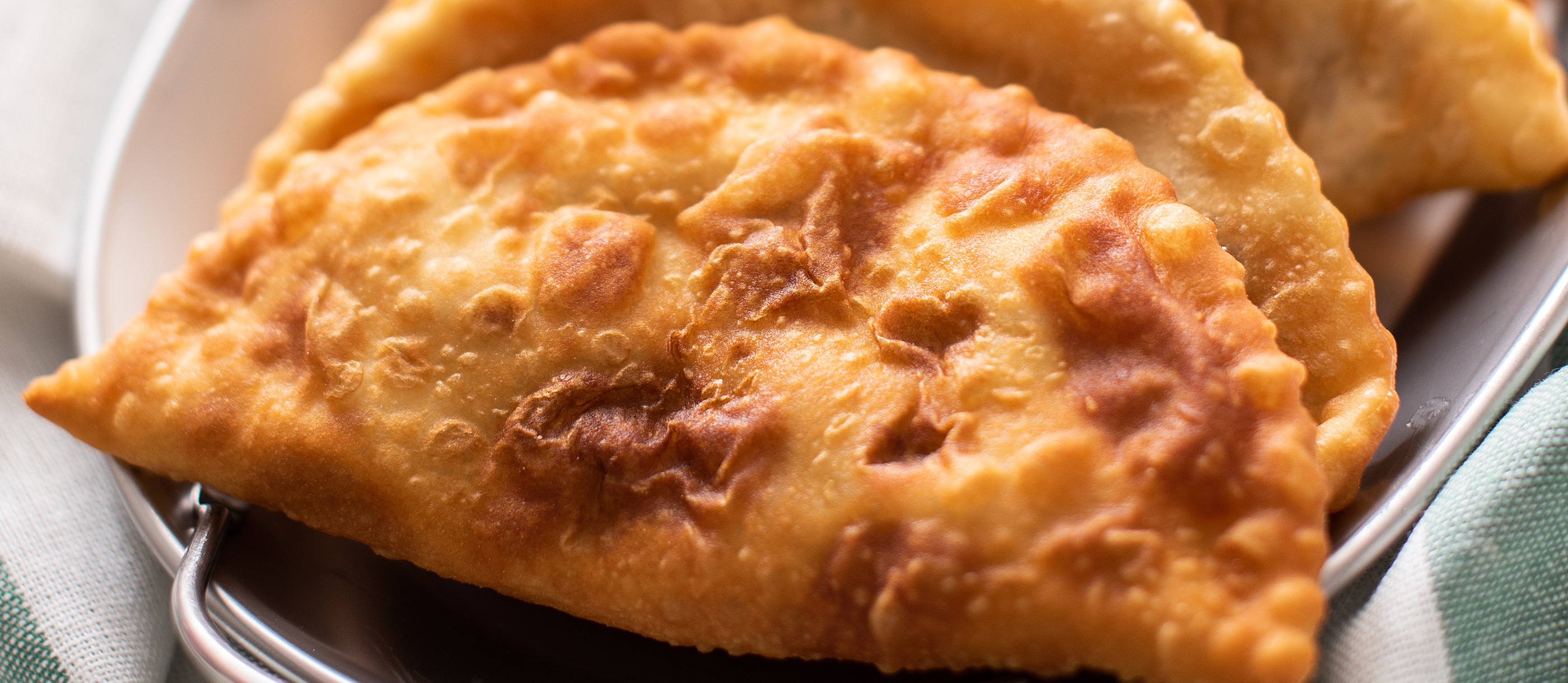
Chebureki, known in Türkiye and among the Crimean Tatar diaspora as çiğ börek, is a deep-fried, unleavened turnover filled with a seasoned mixture of ground meat and onions. It is the national dish of the Crimean Tatars, originating from the Crimean Peninsula along the northern coast of the Black Sea. The name is derived from the Crimean Tatar word "çiberek," which was later adapted into the Russian "chebureki." The development of this food is tied to the nomadic and pastoral history of the Crimean Khanate, where the reliance on sheep and cattle necessitated recipes that could turn flour and meat into calorie-dense, portable meals. As the Crimean Tatar population moved through Central Asia, the Caucasus, and into Anatolia, the dish became a common fixture in the culinary landscapes of the former Soviet Union and Türkiye, specifically becoming a localized specialty in the city of Eskişehir. The preparation begins with a dough consisting only of flour, water, and salt, which is rolled out until it is thin and translucent. The filling is composed of ground beef or lamb, a high volume of finely minced or grated onions, and a purposeful addition of water. This water is critical because it ensures the meat stays moist and creates a pressurized steam pocket during the frying process. The meat mixture is placed raw onto the dough, which is then folded into a half-moon shape and sealed tightly using a fork or a crimping tool. The pastry is submerged in a large volume of hot oil, where the high heat causes the water in the filling to vaporize instantly. This steam forces the dough to puff outward, creating a hollow interior while the exterior develops a signature blistered and bubbly texture. A unique physical property of chebureki is the savory broth that collects inside the pastry as the raw meat and onions cook in their own steam. Because the meat is not pre-cooked, the juices are trapped entirely within the dough, resulting in a distinct liquid center. It is eaten by hand, usually starting at the top corner to allow the steam to escape slowly and to prevent the hot internal juice from spilling. In street food kiosks and specialized restaurants, it is typically served as a standalone item or as part of a light meal. The most common beverage pairing is ayran, a chilled, salted yogurt drink, which helps to neutralize the richness of the fried dough. In some regions, it is also served with a side of spicy tomato sauce or hot black tea to contrast the savory profile of the lamb or beef.
02 / MAIN DISH INGREDIENTS
Street Food
03 / RECIPE
There is no recipe in the saved data.
Record · 7646