01 / IDENTITY
- Category
- Stir-fry
- Country
- Japan
- Region
- Tokyo
ABOUT THE DISH
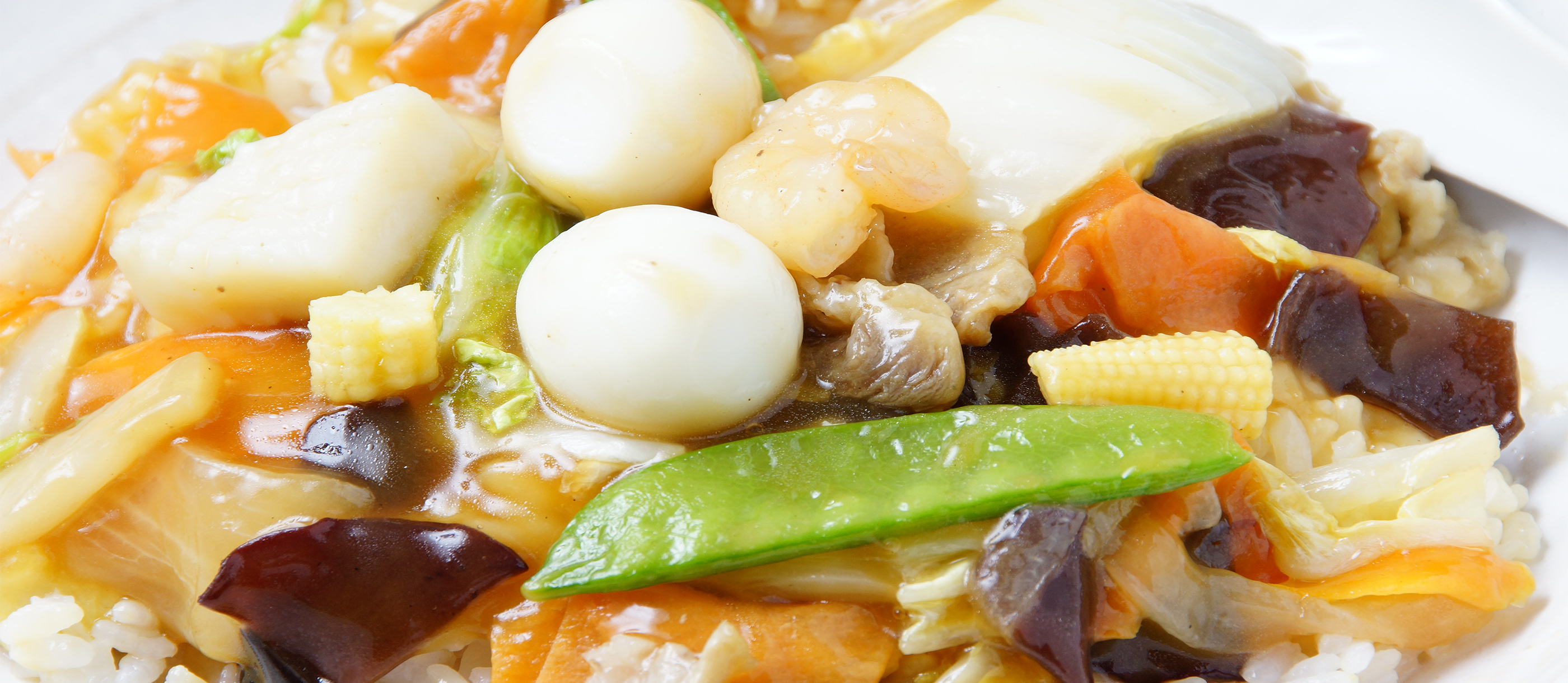
Chūkadon is a hearty rice bowl made with steamed white short-grain rice topped with a thick, glossy mixture of stir-fried vegetables, sliced meat, and seafood. The topping is bound together with a soy-based gravy thickened with starch, giving it a heavy, shiny texture that coats both the ingredients and the rice underneath. The dish is said to have originated in the early Showa period, around the 1930s, in Chinese immigrant-run restaurants in Tokyo. At first, it was a practical staff meal eaten during short work breaks. Restaurant workers poured leftover happosai, a rich stir-fry traditionally made with eight ingredients, over plain rice to create a fast, filling meal. Regular customers eventually noticed the off-menu combination and began asking for it themselves. The name chūkadon means “Chinese bowl,” reflecting its connection to Chinese-style urban restaurant cooking adapted for Japanese diners and laborers who needed cheap, quick calories. The topping usually begins with pork belly, raw shrimp, and scored squid, all sliced into uniform bite-sized pieces. These are stir-fried in a very hot wok coated with sesame oil. Harder vegetables, such as sliced bamboo shoots, raw carrots, and rehydrated wood ear mushrooms, are added next. Softer greens, usually Napa cabbage or snow peas, go in last so they keep some of their crisp texture. A liquid base of chicken stock, dark soy sauce, oyster sauce, and rice wine is then poured into the wok. Once the liquid comes to a rolling boil, a slurry of potato starch and cold water is added to the center of the pan. This quickly changes the thin broth into a thick, translucent glaze that clings tightly to every piece of meat, seafood, and vegetable. Boiled, peeled quail eggs are added just before the finished mixture is poured over the waiting bowl of rice. Ingredient substitutions can change the flavor and appearance of the dish. In a salt-based version, dark soy sauce and oyster sauce are omitted entirely. Instead, clear chicken stock, ginger, and sea salt are used to make a pale white gravy that allows the delicate seafood flavors to stand out. More economical versions often omit the expensive squid and shrimp, replacing them with thick slices of kamaboko fish cake or extra strips of inexpensive pork shoulder. In some regional versions, a raw egg is scrambled directly into the boiling sauce just before it thickens, forming soft ribbons of cooked egg white and yolk that make the gravy even richer. Chūkadon is served hot in a large, deep ceramic bowl. Because the thick sauce holds heat extremely well, the dish usually arrives at the table steaming. It is typically eaten with a large ceramic spoon rather than chopsticks, since the gravy soaks deeply into the rice. A small side dish of sharp pickled mustard greens is often served alongside it to cut through the richness of the oyster sauce, together with a simple, clear chicken broth seasoned only with white pepper and scallions.
03 / RECIPE
A recipe for this dish has not been added yet.